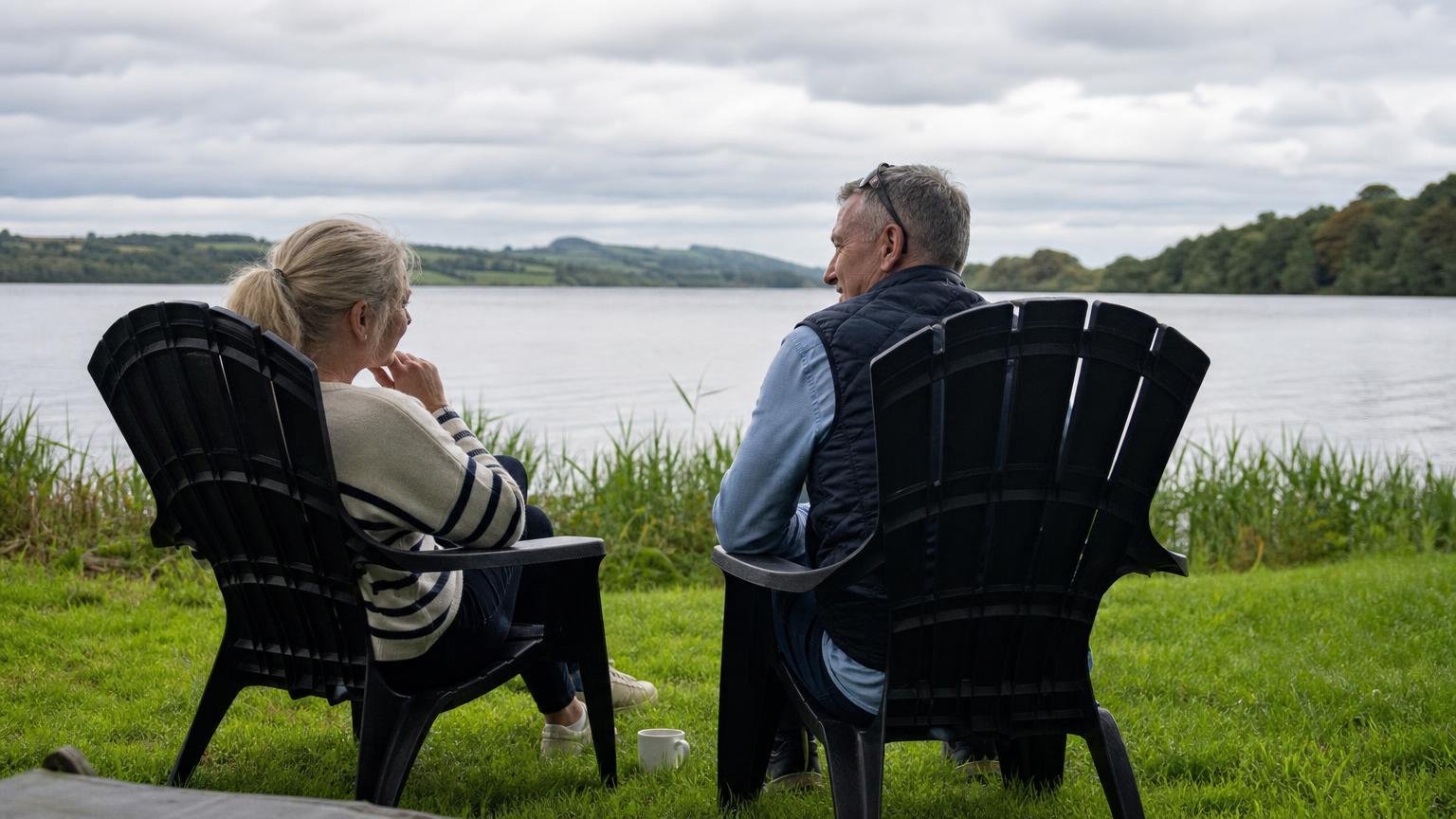
They packed the car with plants, books, and a kettle that whistles like a train, and pointed it northwest. Three summers on, their days are edged by reeds, not granite piers; by curlews, not car alarms. The move was meant to be a one-year experiment, a pause long enough to breathe in quiet and see what surfaced. It became a life, stitched by water that doesn’t heave, only holds.
Trading the pier for the peninsula
They remember the exact evening they knew they could leave: dusk along the East Pier, gulls mobbing a chip bag, a wind that bit through coats. “We loved the harbour’s rituals,” Maeve says, “but our weeks felt like sprint repeats.” Brendan nods: “Every hour had a meter, like we were keeping time for somebody else.”
On the Erne, the ferry to Devenish glides past their cove, and a heron lifts like a folded piece of paper. “Here, the clock is the light,” Maeve says, smiling. “And the lake is always the first word.”
A small house with a wide view
They found a cottage that once stored oars, its stone cool and the roof honest with slate. The kitchen windows are a movie, flickering with weather, boats, and sometimes an otter. They kept the footprint modest and let the shoreline do the talking.
“Every change we made had to listen,” Brendan explains. “We stripped back to lime, kept the boards bare, and let the rooms feel porous to the outside.” In winter, a peat stove murmurs, and the lake breathes mist through the hedges like a slow parade.
Work that fits like a cardigan
Neither of them retired; they just rearranged. Maeve edits manuscripts for small presses, trading conference halls for a desk facing water. Brendan shifted from site management to joinery, building benches that quote the shoreline in their grain.
“Connectivity is a thread, not a chain,” Maeve jokes. “A weak signal can be a gift, especially when you have to finish a paragraph.” They learned to schedule calls between squalls, to send big files while the moon is high, to lean into the rhythm of a place that dislikes hurry.
Neighbours measured in fields, not floors
Community arrived like a breeze, unannounced and kind. The woman who sells eggs also knows every jetty. A retired angler taught Brendan to read wind as if it were a second map. Nights sometimes end with six people around a table, bowls of chowder and a fiddle’s lilt.
“When something breaks, you don’t google, you call,” Maeve says. “And when the rain is a drum, someone texts to say the road at the bend is a river.” It’s slower and more woven than the apartment-block nods they used to trade in town.
Weather as a second language
Living by the Erne is learning to translate. Summer arrives in shards: ten minutes of sun, a page of rain, then a sky that can’t decide which story to tell. The lake is a barometer, a long silver sentence that changes its verb hourly.
They keep jackets by the door, torches in the drawer, and a short mental list of sheltering piers. “We don’t fight the elements,” Brendan says. “We count them, and then we join in.”
What they actually miss
They don’t pretend it’s a swap without a seam. “We miss the sea, in a way that sits in the bones,” Maeve admits. “The brine, the hit of iodine, the big weather that stands up to you.” The lake can be vast, but it doesn’t roar.
They also miss the Thursday-night cinema, the last-minute gig, the bakery that did kouign-amann with gloss. “Sometimes I want to walk until my feet are tired of pavement,” Brendan says. “Sometimes I want to be anonymous again.”
Gains that surprised them
- A calendar shaped by light instead of traffic; friendships made by knocking on an actual door; hobbies that began as chores and ended as small joys.
Boats, not buses, and a different pace
Their commute, when they have one, is a punt to a jetty and a short drive past cattle staring like mild inspectors. Grocery trips happen in clusters, lists pinned to the fridge with found shells from their coastal past.
They measure progress in the garden by the stubbornness of mint, by how long the wild strawberries fool the birds. Weekends might mean paddling to a cut between reeds just to see what the light is doing there. “You start keeping track of small things,” Maeve says. “And the small things become daily victories.”
Advice for the almost-ready
“Don’t come to escape a self,” Maeve warns. “Come to meet a place.” Brendan suggests renting first, in all seasons, to learn your own thresholds for silence, damp, and the quick company of midges.
They also urge patience with infrastructure. Roads will puddle, deliveries will wander, and plumbers keep their own time. “But if you match your stride to here,” Brendan says, “you’ll find that not much is truly urgent.”
Three summers later, their photo albums smell faintly of peat, their playlists drift toward fiddle tunes, and their windowpanes host a rotating cast of weather. They say the only ache that lingers is salt, the kind you taste on your lips just after a wave has spoken. And sometimes, on still nights, when the lake is a polished coin, they swear they can hear the sea breathing beyond the dark, patient hills.

Contact details
Address:
Farmers Forum,
36, Dominick Street,
Mullingar,
Co. Westmeath,
Ireland
Phone:
+353 (0)44 9310206
Or email us:
For technical issues please check out our FAQ's page or email - [email protected]
For general Queries email - [email protected]
Request to add event to our Calendar - [email protected]
Send us your mart reports - [email protected]
Suggestions and feedbacks - [email protected]
News Items / Press Release - [email protected]
To Advertise on Farmers Forum - [email protected]