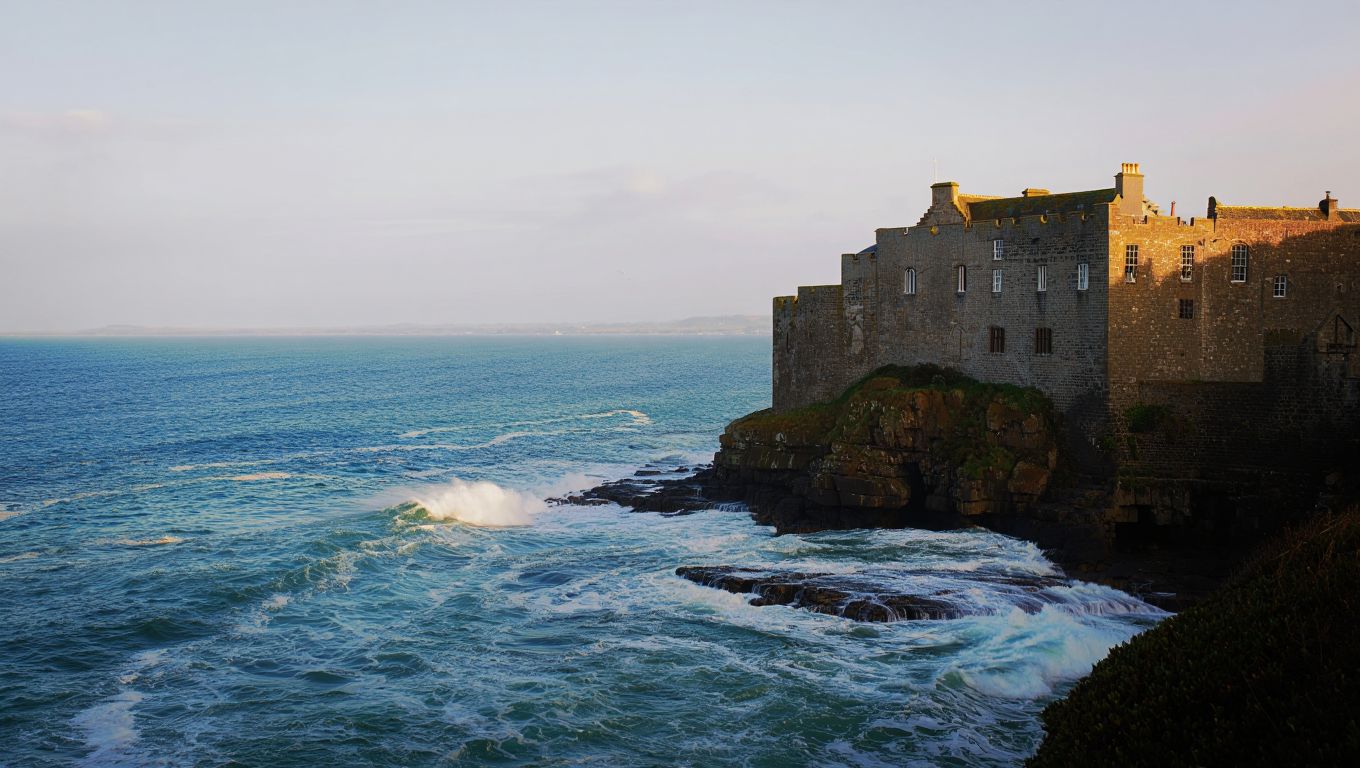
Atlantic gusts still rattle the ancient battlements, but now they carry the scent of fresh paint and polished oak. After a quiet, meticulous pause, an Irish coastal fortress has readied its grand suites for guests arriving in late spring 2026. The setting is elemental—storm-sculpted cliffs, white arcs of foam, and gulls that trace wild spirals overhead—yet the mood indoors is all soft light, silken throws, and fires that crackle like old stories.
“Come for the sea, stay for the stillness,” says the property’s discreet general manager. “We’ve restored the suites to honor the bones of the castle, but every comfort is decidedly modern.” That balance—heritage and now—gives the reopening an almost ceremonial feel.
A new chapter in old stone
The renovation kept faith with the building’s soul. Masons re-pointed weathered limestone, joiners coaxed centuries-old timber into smooth, warm planes, and artisans layered textiles as if dressing a living character. You read the passage of time in the slant of narrow windows, the cool hush of granite stairs, the way the wind carries a faint saline whisper even by the library’s peat fire.
“Nothing here was rushed; sea and stone set the tempo,” one craftsperson notes, describing weeks spent hand-finishing a curved banister so the grain looks like ripples in an incoming tide. The result is less about spectacle and more about refined, quiet craft.
Suites designed for the edge of the world
The revived suites look outward to horizons that seem to breathe. Glass panes are deep-set like ship portholes, framing light that changes tone hour by hour. Interiors lean tactile—tufted wool, brushed brass, linen the color of oyster shells—with palettes tuned to kelp-green, cloud white, and dusk blue.
A shortlist of what’s new underscores thoughtful luxury:
- Window seats built for lingering with a book and the breakers below
- Stone showers that keep warmth like a sunlit harbor
- Hand-thrown ceramics by coastal artists
- Understated tech, hidden until you actually need the convenience
At night, breeze moves the drapes like slow tidewater, and the room takes on that absorbent quiet you only get in buildings older than anybody’s great-grandparents. Wake early, and the ocean performs its private rehearsal—first pewter, then silver, then a pale gold that softens the masonry’s sharp edges.
Slow rituals, spirited days
Days here tilt toward unhurried rituals. Walk the cliff path and hear your footfall sync with your breath. Slip into a cedar tub steeped with Atlantic seaweed, skin blissfully buoyant and faintly salted. Learn a knot or a cast with a ghillie who reads water like a language, or paddle a sheltered cove where seals rise with curious eyes.
Inside, the drawing room hums with low-voiced conversation—maps unfurled, a chess set mid-campaign—while a tray delivers small, necessary comforts: oat biscuits, smoked butter, and a tea that tastes like mist on wet grass. “Travel should slow your pulse, not quicken it,” murmurs a staffer polishing a bar spoon to mirror-bright.
For the energetic, wind-whipped routes lace the headlands in soaring loops, and for the contemplative, there are corners built for letter-writing and the kind of reading that absorbs a whole afternoon.
Dining that honors the tide
The kitchen cooks as the shoreline dictates. Lobsters arrive with barnacled authority, oysters smell faintly of green rain, and sea vegetables bring briny snap to plates that glow like wet pebbles. Expect broths layered with patience, breads whose crusts crack like driftwood, and desserts that borrow smoke, honey, and orchard shade.
“Our larder begins where the waves break,” says the head chef. “We don’t chase novelty; we refine what the coast already offers.” Watch the sun withdraw beyond the horizon and you’ll understand why candlelight feels like not just ambiance, but kinship.
The bar favors peat-rich whiskies, citrine gins infused with shore-botanicals, and quietly confident martinis chilled to small, deliberate silence. Raise a glass in a window embrasure and the whole room becomes a soft-voiced toast.
When and how to be there
Reservations are open, with first stays welcome from May of 2026. Those who book early tend to claim the suites that face both sunrise and storm, catching copper mornings and theatrical late-afternoons. The team recommends a car for handsome detours along fuchsia-lined lanes, though transfers can be arranged from nearby regional airports.
Packing is simple: layers for mercurial weather, sturdy boots for paths etched by wind and hooves, a notebook for sudden lines of poetry. “Arrive curious, depart a little more yourself,” says the manager with a half-smile.
What lingers after departure is strange and welcome: a steadier heartbeat, a palette of sea-tones, the memory of stone that feels both shelter and story. In a world that asks for speed, this place answers with depth, and a horizon broad enough to hold whatever you bring to its restless, consoling edge.

It would help if we knew the name and location of this hotel!!??
As far as I can see you have not given the name of the castle?
And the hotel is ….
Lovely article, no mention of the hotel or location though unfortunately.
I don’t understand why the name and address aren’t in the article