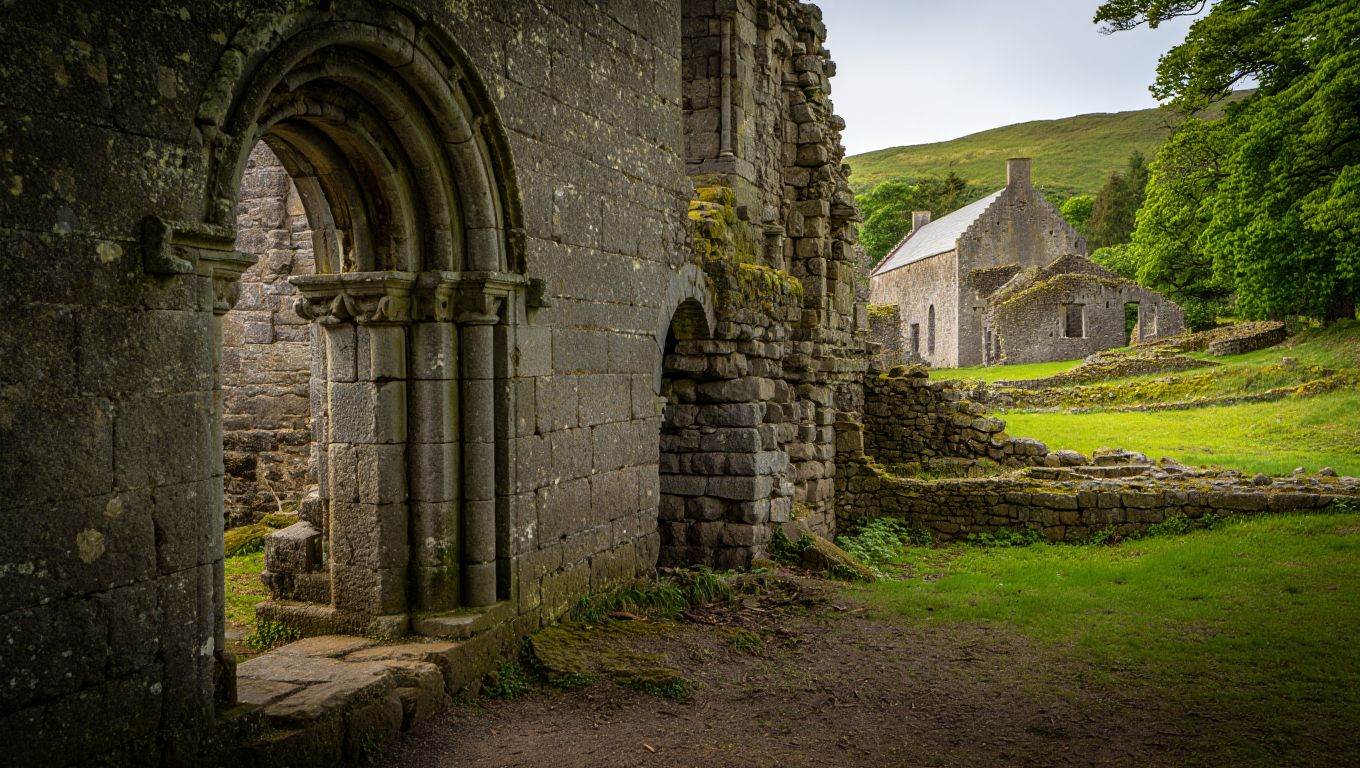
Mist rides the hedgerows, and the river keeps a soft secret. In the fold of a Tipperary valley, a small road loosens its grip on time. The fields feel older than their grass, the air cooler than the season allows. Then the track dips, and the stones of a monastery appear like memory made visible.
Where the valley keeps watch
The first shapes are low, moss-sweet, and quiet as sleep. Carrion crows make a theatre of the sky; cattle watch with mild attention. "It feels like time is gentler here," a local farmer once told me. He was right; even your breath slows, and your steps turn careful on the earth.
A rough arch frames the world like a painter’s study. Through it, you catch a glint of water and a spill of ash leaves. The stones are pitted but still polite to the hand, warm where the sun has stayed, cool where shade has nested.
A thousand years of ordinary miracles
This house of prayer began as a knuckle of cells, a school for silence, and a workshop for grace. Monks farmed the slopes, kept bees for light, copied psalters with patience shaped like winter. Their days were threaded by bells, not by clocks, and their nights were the length of the stars.
If you listen, the walls invent a music of absence. Wind catches the chancels and hums along the ruined aisle. Lichens map a cartography of time, and each flake of plaster is a season that would not leave. "There is a hush here that teaches you to be small," whispers a guide who loves this place.
What the stones still say
Look at the door’s jambs, their tool-marks delicate as buttered cuts. Run a finger over crosses carved like little rivers frozen in mid-turn. The chancel arch leans with a seafarer’s poise, as if still steering a crew of voices into morning psalms. On one window, the splay is wide, distributing light like alms into the nave’s bare palm.
Underfoot, grave-slabs mutter, names thinned by weather, but steadied by community memory. A holy well hides nearby, its water tasting of iron and rain. Coins lie quiet in the basin, and the hawthorn keeps watch, stitching white blossom to the air.
Why it was almost forgotten
History in Ireland is busy, and memory is crowded. Great castles roar, famous cathedrals sing, and small places like this go to ground in the maps. Roads were moved, bridges failed, and the bell of this valley sank beneath the centuries.
But neglect can be a gardener, and the site kept its temper. No ticket booth, no fenced path, no amplified story polishing every edge. Just a gate, a stile, and the patience of grass doing its ancient work.
Reading the site like a book
Arrive with pockets empty of hurry, and let the plan unfold. The nave is plain, almost stubborn, the choir narrower and more intimate. You notice how light behaves, how stones borrow warmth from one another, how birds take possession of the clerestory’s lost height. Each corner argues softly with the wind, then makes peace.
- Trace the doorway’s worn threshold, find the bee-loud hedge, circle the holy well, and stand where the dawn would enter the nave.
Craft in the grain of things
Pick any stone, and you meet a mind across a millennium. The mason’s chisel bit here, then paused there, considering the grain and the task of light. The mortar is coarse, certainly, but honest, like bread baked for work rather than a winter feast. These walls were not built to impress, but to endure, and they have done their patient job.
Sometimes a swallow will score the air, and your heart will brighten. Sometimes a shower will rush through, and everything will darken to a deeper, more saturated green. In both, the place breathes, and your own lungs answer without thought.
People who keep it alive
There is always a someone who mows the verge, who clears a fallen bough, who leaves flowers for a name that weather tried to erase. "We come because they came," a neighbor told me, setting a small candle in the lee of a stone. Tradition here is not a costume, but a way of holding a quiet tune until night has passed.
Pilgrims still arrive, less in crowds, more in twos and threes. Their footsteps make a rhythm, their whispers make a veil, and their leaving makes a promise: to remember by returning, to bless by looking well.
If you go
Come early, when mist is a script the sun can read. Wear boots that don’t mind story, and bring pockets for light rather than for things. Leave what you find, take what you can carry only in spirit. Close gates with care, greet cattle with calm, and let the valley have the last word.
Stand in the doorway and taste the stillness like bread. Say nothing, or say a single thank-you, quiet as a feather. When you walk back, watch how the fields tilt toward you, as if the landscape itself were pleased to have told you a story.

A lovely article to read. I’m not a farmer but adore and respect the countryside…