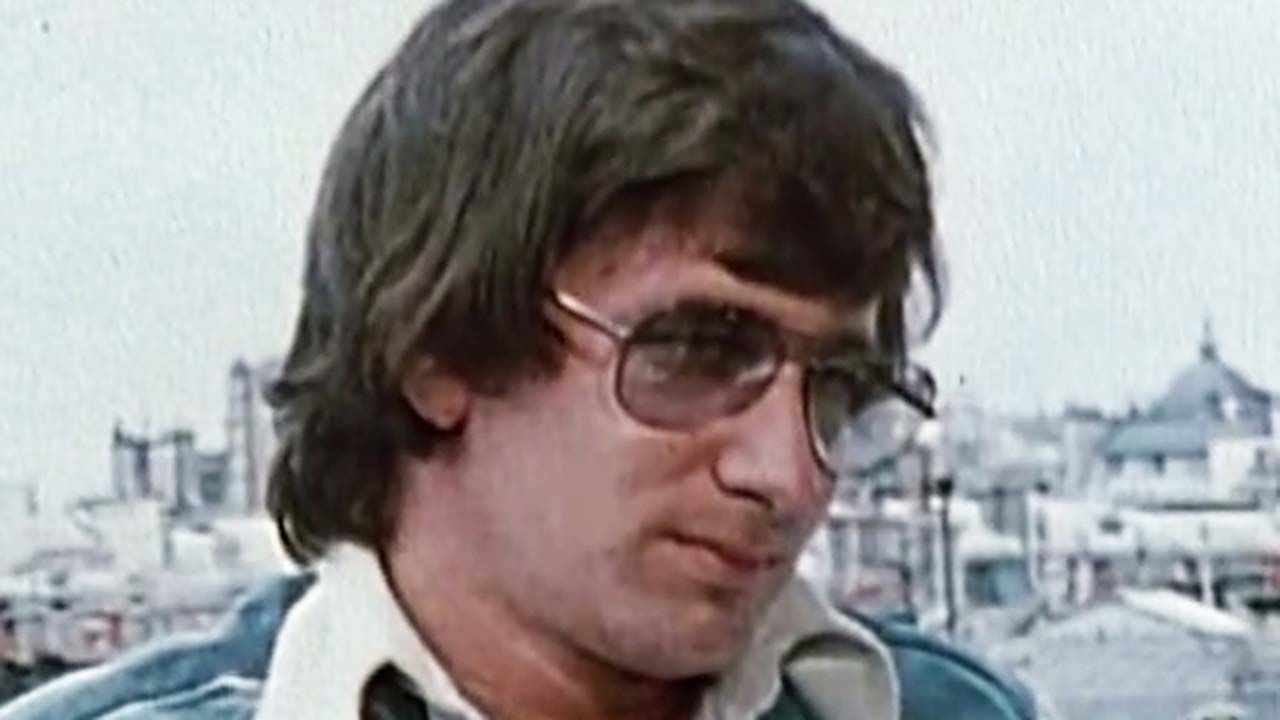
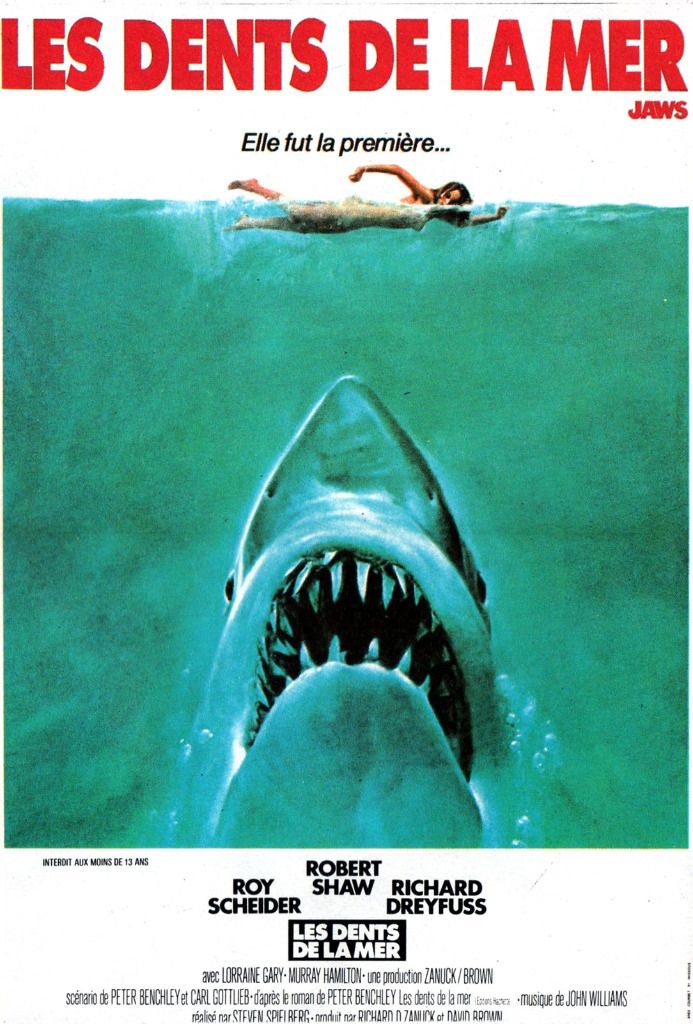
In 1975, a young American director slipped onto French television and calmly explained why his new movie had terrified an entire country. Five decades later, that appearance plays like a time capsule, capturing Steven Spielberg at 29, sharp, curious, and already formidable. The film, of course, was Jaws—released in France as Les Dents de la mer—and its shadow still stretches long across cinema.
A 29-Year-Old Director Meets France
The archival clip, resurfaced by INA, shows Spielberg fielding pointed questions with disarming poise. A journalist invokes the film’s mythic dread, and Spielberg nods toward the pull of the unknown. He frames the movie not as a creature feature, but as a confrontation with something primal and implacable.
“What attracts me is the unknown enemy,” he explains, suggesting that fear becomes sharper when the threat can come from anywhere and look you in the eyes.
The Shark You Rarely See
What made Jaws uniquely terrifying was not gallons of gore, but the carefully rationed glimpse. The mechanical shark famously malfunctioned, pushing Spielberg toward a strategy of withholding and implication. That constraint proved revolutionary, turning the ocean into a void and the audience into co-conspirators with their own imaginations.
Every ripple became a signal, every empty horizon a kind of loaded silence. By barely showing the predator, the film invited viewers to complete the horror with their own fears, a creative gamble that became its greatest weapon.
Man Versus Nature, Not Monster Versus Man
Spielberg’s comments on French television clarified his philosophy: the shark was not evil, just inevitable. It eats because that is its nature, not from malice or human-like motivation. His interest lay in humans meeting a force beyond negotiation—an encounter with a vast, indifferent world.
In that reframing, the story becomes less about vengeance and more about humility, courage, and hard limits. The result is a thriller with a soul, one that respects the scale of the natural order.
Numbers That Reshaped the Industry
Commercially, Jaws was seismic. Against a modest budget of roughly $7 million, it earned about $490 million worldwide and redefined success. In France alone, the film drew 6.2 million spectators after its January 1976 release, proving that fear—and craft—travel with remarkable ease.
More than a hit, it became the template for the summer blockbuster: broad release, sharp marketing, and communal, edge-of-seat exhilaration. The industry learned a new rhythm, and studios never fully went back.
What the TV Moment Reveals
Watching the INA archive today, you can see a filmmaker building his language. He speaks about scale, suspense, and the choreography of fear with a clarity that feels both intuitive and rigorously earned. The poise is there, but so is the genuine, 29-year-old curiosity.
He is neither lecturing nor hedging—he is testing ideas in real time, as if still on the Amity Island dock, measuring rope and horizon.
Why It Still Resonates
- It shows a future legend grappling with first principles of storytelling.
- It crystallizes the shift from monster shock to atmospheric dread.
- It elevates “man versus nature” above “man versus monster.”
- It hints at the blockbuster era without the cynicism of later formulas.
- It reminds us that constraints can become creative compasses.
The Craft of Fear
What remains striking is the film’s elegant economy. Jaws counts on composition, sound, and absence as much as action and spectacle—choices that make the final confrontations feel hard-won and earned. Even the famous, minimalist musical language heightens the unseen, letting two notes carve a corridor through open water.
Spielberg’s philosophy—less showing, more suggesting—proved a masterclass in collaborative imagination. Rather than overpowering the audience, he gives them space to scare themselves.
The Human Scale
At its heart, the film returns to a handful of faces: Brody, Hooper, and Quint, each wrestling a personal knot of fear, pride, and duty. That focus anchors the spectacle in something recognizably human, so that every lurching boat and snapped line lands with extra weight. The predator may be indifferent, but the people are painfully, beautifully not.
Their struggle makes the final sunrise feel both earned and strangely sober, like the morning after a storm.
From Archive to Memory
Fifty years on, that French TV appearance does more than celebrate a classic—it reveals the temperament behind the craft. Calm, analytical, and quietly audacious, Spielberg describes not a gimmick, but a worldview that trusts tension, patience, and clarity.
The clip reminds us that great films are built on clear questions, brave choices, and the humility to let the unknown do its work. And sometimes, the scariest sight of all is the ocean, rolling on, indifferent—and infinitely, cinematically, inviting.

Contact details
Address:
Farmers Forum,
36, Dominick Street,
Mullingar,
Co. Westmeath,
Ireland
Phone:
+353 (0)44 9310206
Or email us:
For technical issues please check out our FAQ's page or email - [email protected]
For general Queries email - [email protected]
Request to add event to our Calendar - [email protected]
Send us your mart reports - [email protected]
Suggestions and feedbacks - [email protected]
News Items / Press Release - [email protected]
To Advertise on Farmers Forum - [email protected]