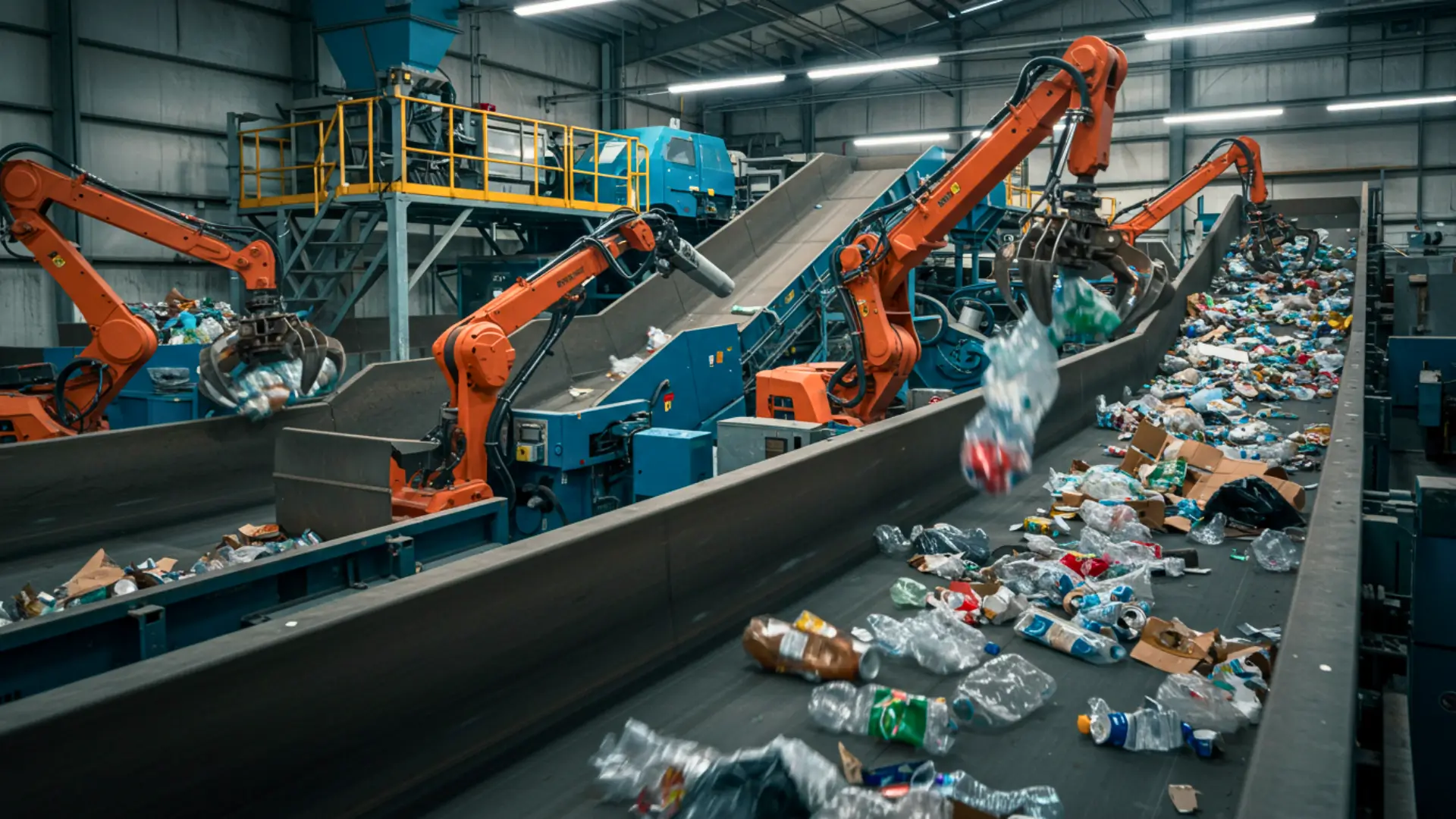
In the United States, a new generation of sorting centers is transforming waste management. Thanks to artificial intelligence, machines capable of recognizing and separating materials promise to improve recycling quality while speeding up the processing of tons of waste.
AI-Based Material Recognition Using Cameras and Algorithms on Sorting Lines
In this new sorting facility, high-definition cameras scrutinize every item that travels along the conveyor belts. First, the artificial intelligence algorithms examine shapes and textures. Then, they detect certain chemical signatures in order to accurately identify the recyclable materials present in the waste.
Once the materials are detected, ultra-fast robotic arms spring into action. The robotic arms grip the objects in a fraction of a second and then route them to the correct stream. As a result, this precision significantly boosts the purity of recycling streams and limits contamination.
Automation of Waste Sorting to Speed Up Recycling and Reduce Human Error
In a traditional sorting facility, a substantial portion of the work still relies on human observation. Specifically, operators must rapidly recognize the materials passing along the conveyors. This repetitive task can induce fatigue and errors, thereby lowering the quality of waste sorting.
With an AI-driven automated system, the machines operate without interruption and maintain a constant degree of precision. Moreover, sensors and algorithms continuously learn. Gradually, they improve the recognition of objects that are complex or poorly positioned on the line.
The project leaders explain that this kind of installation could process several tens of tonnes of waste per hour. In this way, the speed and reliability of sorting rise markedly. In the end, the industry can produce and reuse more recycled materials.
The Importance of Extremely Precise Sorting to Produce High-Quality Recycled Materials
In recycling, the quality of sorting plays a decisive role. Indeed, when different materials are mixed, they often become difficult to reuse properly. For example, some industrial streams reject plastic contaminated by other substances.
Artificial intelligence technologies applied to recycling enable much cleaner streams. With this precision, recycling becomes more efficient. Thus, sorting centers can produce secondary raw materials that closely resemble those derived from natural resources.
Autonomous Sorting Centers, a New Infrastructure to Handle the Urban Waste Surge
Cities generate enormous amounts of waste each year. Moreover, rapid urbanization and the multiplication of disposable packaging intensify the pressure. Consequently, communities must progressively modernize their collection and treatment infrastructures.
Autonomous sorting centers could help communities manage these volumes more effectively. Indeed, automating a large portion of operations reduces certain costs. At the same time, these facilities increase the quantity of waste that is actually recycled.
In the longer term, these technologies could transform the way societies view their waste. No longer mere refuse, waste becomes a valuable resource thanks to data, robotics, and artificial intelligence.

Contact details
Address:
Farmers Forum,
36, Dominick Street,
Mullingar,
Co. Westmeath,
Ireland
Phone:
+353 (0)44 9310206
Or email us:
For technical issues please check out our FAQ's page or email - [email protected]
For general Queries email - [email protected]
Request to add event to our Calendar - [email protected]
Send us your mart reports - [email protected]
Suggestions and feedbacks - [email protected]
News Items / Press Release - [email protected]
To Advertise on Farmers Forum - [email protected]