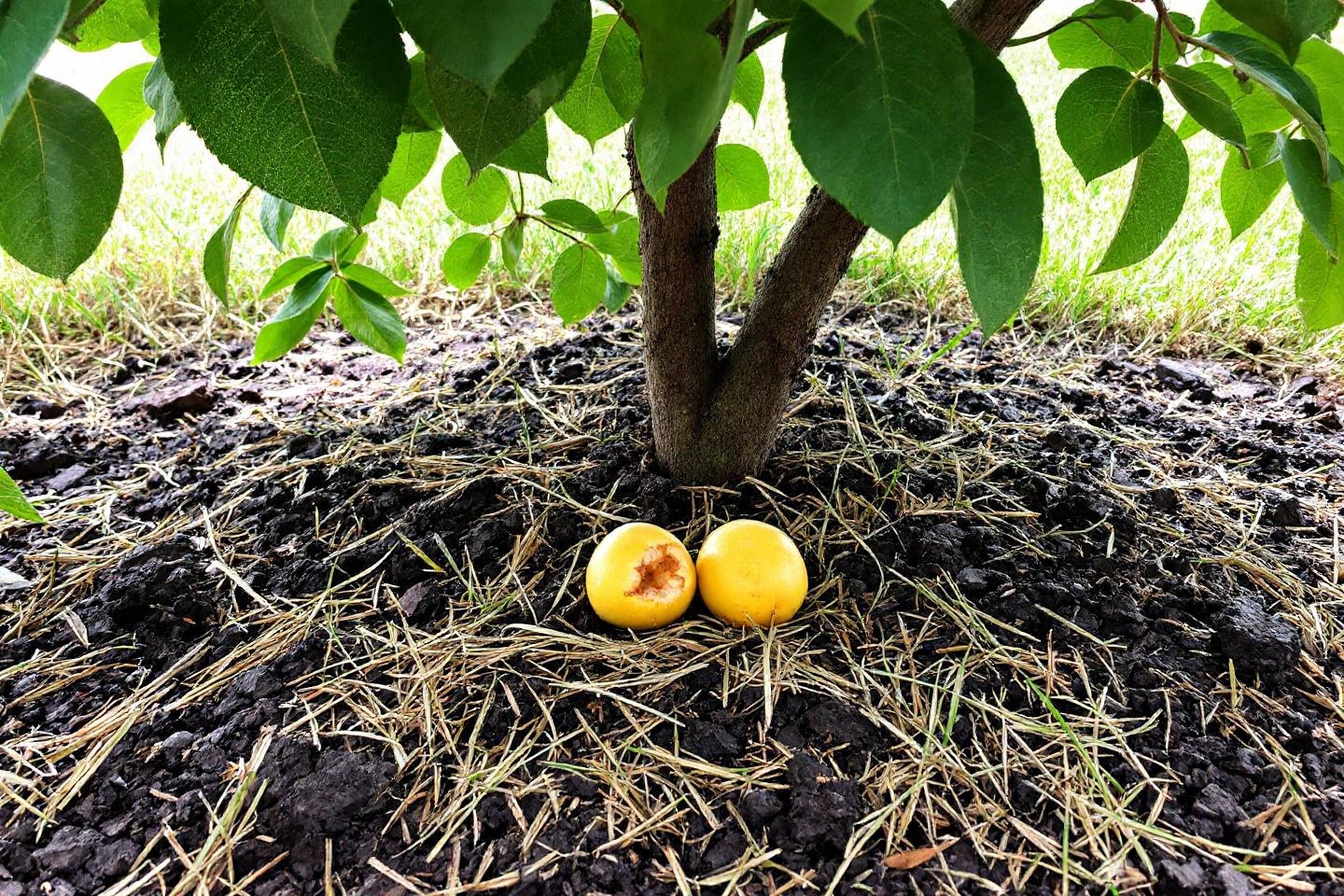
Why fruit trees thrive with natural mulch in summer
When heat waves strike, exposed soil bakes and stresses tender roots. A layer of natural mulch restores a cooler, moister microclimate that trees can actually use. The result is less stress and more steady growth.
Mulch mimics a forest floor, turning bare ground into a living sponge. It shelters beneficial microbes, feeds earth worms, and slows erosion while building humus. That living web translates into richer sap and better fruit.
Sun-scorched ground also fuels weed pressure that robs water and nutrients. By blocking light, mulch suppresses unwanted sprouts and curbs evaporation near the trunk. With less competition, trees channel energy into blossom set and ripening.
Compost and dried clippings: two simple powerhouses
Mature compost is the slow-release superfood your orchard craves. It’s dark, crumbly, and nutrient dense, improving structure and fertility with every rain. Expect steadier bloom, sturdier growth, and more flavorful, juicy harvests over time.
Sun-dried grass clippings are the fast, featherlight shield you can spread in minutes. After 24–48 hours of drying, the clippings become a breathable blanket that cools the soil and slows evaporation. They add a touch of nitrogen while keeping the surface pleasantly moist.
Choose based on your resources and the season’s needs. Use compost to enrich established trees in spring and early summer; switch to dried clippings for quick, protective cover during hot spells. Alternating both creates a resilient, well-fed rhizosphere all season.
The easy method that pays off fast
Start by lightly weeding under the canopy’s dripline, then water thoroughly if the ground is dry. Spread your mulch in a neat ring, keeping a small air gap around the trunk to prevent trapped moisture. This simple spacing guards the bark and reduces disease risk.
Aim for a 4–7 cm (1.5–3 in) layer, which is thick enough to cool the topsoil without suffocating fine roots. Replenish lightly and regularly through the hot months, matching additions to weather and supply. Consistency beats bulk every single time.
- Keep mulch away from the trunk to avoid rot and pests
- Never use fresh, wet clippings that can heat and ferment
- Don’t exceed about 10 cm (4 in) total depth
- Renew only when the surface is dry, especially after heavy rain
The hidden life beneath the blanket
Under a calm, cool cover, soil organisms get to work. Earthworms pull fragments down, fungi weave networks, and microbes transform residue into plant‑available nutrients. That silent industry fuels resilience and steady fruiting.
Balanced moisture and moderated temperatures stabilize sap flow and reduce heat‑shock spikes. Expect earlier, more uniform sets, fewer drop‑offs, and improved flavor as sugars and acids develop at the right pace. Healthy roots, happy canopy, tastier harvests.
Save water, gain time
A well‑mulched orchard can use up to half the usual water during scorching weeks. Less evaporation means deeper, more efficient uptake instead of shallow, wasteful soaks. You water more wisely, and the trees stay calmer.
With the soil buffered from extremes, you dodge daily crisis watering and focus on timely pruning, training, and pest checks. Mulch turns survival mode into steady momentum, keeping you comfortably ahead of summer.
Make it a weekly ritual
Small, regular top‑ups beat occasional heavy applications. On your weekend round, toss a handful of compost or a light layer of dried clippings beneath each tree’s canopy. This rhythm locks in moisture and feeds the soil food web.
Watch for clear signs of success: fewer weeds, crumbly texture under the foot, and cleaner, better‑colored fruit at picking time. Year after year, you’ll notice stronger bloom, less drop, and longer‑lived, more productive trees.
“As one seasoned grower puts it, ‘Mulch is a quiet partner—you don’t see the work, you just taste the results.’”
Pro tips to amplify results
- Match mulch type to current goals: compost for nutrition, clippings for cooling
- Extend the ring to the canopy edge to feed the full root zone
- Refresh after wind or storms to re‑seal the surface
- Combine with deep, infrequent watering for maximum efficiency
By giving your fruit trees a consistent, natural mulch, you create a cooler, richer habitat that stacks the odds in favor of sweet, abundant harvests. This quiet, repeatable practice protects moisture, fuels biology, and turns summer stress into steady, confident growth. Your reward is a basket of flavor, a calmer routine, and trees that thank you—season after season.

Contact details
Address:
Farmers Forum,
36, Dominick Street,
Mullingar,
Co. Westmeath,
Ireland
Phone:
+353 (0)44 9310206
Or email us:
For technical issues please check out our FAQ's page or email - [email protected]
For general Queries email - [email protected]
Request to add event to our Calendar - [email protected]
Send us your mart reports - [email protected]
Suggestions and feedbacks - [email protected]
News Items / Press Release - [email protected]
To Advertise on Farmers Forum - [email protected]