
The 1970s delivered a flood of high-wire satires, but few were as incisive or as eerily prophetic as Jean Yanne’s radio-broadcast farce. Across brisk scenes of studio bickering and boardroom panic, this gleefully acerbic comedy turns the media machine inside out, revealing its greedy gears and human compromises. What feels freshly modern is not just the film’s speed but its chillingly accurate premonitions about advertising, ratings, and manufactured outrage. Decades on, the jokes still land with sting, and the predictions look painfully right.
A station where truth is an afterthought
The story drops us into a big-city radio station, where an on-air host navigates fragile egos, meddling sponsors, and predatory bosses. Programming is aggressively banal, yet engineered to hook listeners with calibrated noise rather than substance. Every emergency becomes show material, and every ethical line gets smudged for a smoother broadcast.
Yanne directs with cool assurance, playing the host whose weary charisma masks rising disillusion. He skewers commercial logic with giddy precision, showing how morality bends when profit metrics demand a higher pitch. The result is both scathing satire and a peerless study of institutional cowardice.
Satire born from bruises
The bite feels authentically personal, and for good reason: Yanne knew the French media world’s pressure points. Having been sidelined on television and later ejected from RTL, he carried those wounds—and that clear-eyed memory—onto the screen. The film’s cynicism is not empty pose; it’s a ledger of real slights and structural absurdities.
Co-writer Gérard Sire, a veteran of RTL, Europe 1, and France Inter, adds granular detail that makes the satire hum with procedural authenticity. Together, they turn inside baseball into accessible comedy, letting the machinery expose itself through brisk, escalating crises.
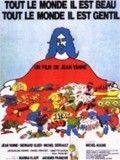
Performances that radiate menace and charm
A mischievous ensemble heightens the film’s bite, with titans like Bernard Blier, Michel Serrault, Jacques François, and Daniel Prévost supplying relentless spark. Every office tête-à-tête doubles as a duel of status, and every grin hides a whispered threat. The casting is so tightly calibrated that even throwaway moments feel richly layered.
Visually, the film keeps a bustling, newsroom-like rhythm, riding whip-smart edits to punch up the verbal barbs. The tone remains playfully irreverent, yet every laugh carries an aftertaste of unease.
“Half a century later, its gags feel like headlines—only with better punchlines and sharper memory.”
Why its vision still feels uncannily current
What once seemed comically exaggerated now reads like a sober manual for modern media. The film anticipates how outrage can be marketed, how sponsors direct editorial winds, and how the pursuit of “engagement” corrodes public trust. Watching today, you may feel a wince of recognition between fits of rueful laughter.
- Advertising eclipses editorial judgment, turning content into compliant inventory.
- Ratings function as a moral compass, pointing relentlessly toward the lowest common denominator.
- Politics apply pressure, and management translates it into quiet edicts.
- Hierarchy breeds bullying, with silence disguised as professional poise.
- Shock tactics masquerade as authenticity, while nuance gets discarded.
A hit that entered the language
Upon release in 1972, the film drew millions to French cinemas, proof that its barbed humor struck a collective nerve. Its very title slipped into common parlance, an idiom for sunny hypocrisy and corporate spin. Success didn’t blunt its edge; it made that edge a cultural touchstone.
Crucially, its wit is never merely snide. The jokes spring from a humane clarity about ambition and fear, about people caught in a system that rewards savvy cynicism. That empathy gives the farce lasting power and rare grace.
What to savor tonight
Come for the swaggering dialogue, stay for the eerie, news-cycle echoes. You’ll see how snappy banter and rolling crises can map an entire moral landscape in under two hours. And you’ll notice how a 1970s comedy sounds perfectly fluent in the language of today’s media.
Whether you’re a broadcast veteran or a casual channel surfer, this is a remarkably fresh watch—a reminder that the best comedies also keep the sharpest receipts. Few films wear their foresight so jauntily—and cut so deep while making you laugh.

Contact details
Address:
Farmers Forum,
36, Dominick Street,
Mullingar,
Co. Westmeath,
Ireland
Phone:
+353 (0)44 9310206
Or email us:
For technical issues please check out our FAQ's page or email - [email protected]
For general Queries email - [email protected]
Request to add event to our Calendar - [email protected]
Send us your mart reports - [email protected]
Suggestions and feedbacks - [email protected]
News Items / Press Release - [email protected]
To Advertise on Farmers Forum - [email protected]