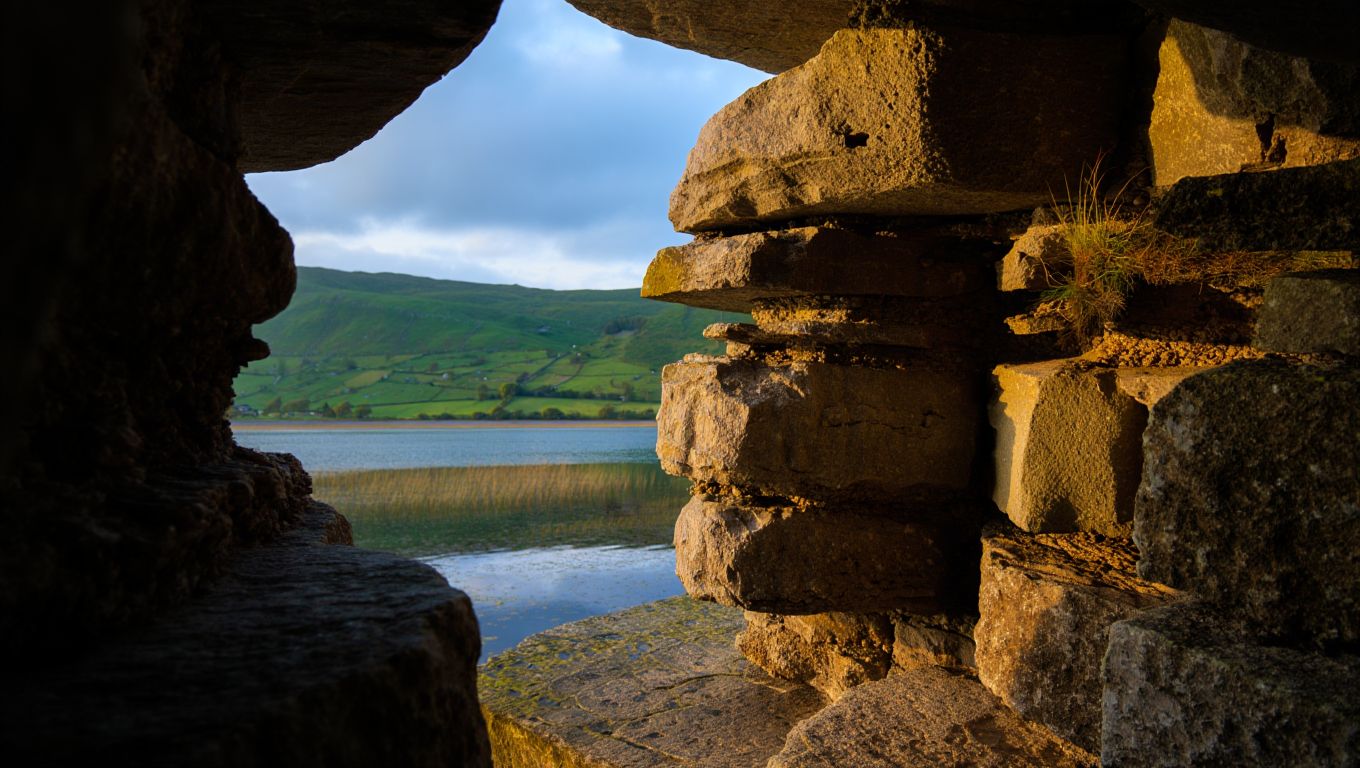
They say certain places hide in plain sight, and on the shoulder of a western lake, the stone makes its own weather. On days when clouds break like porcelain, the water flashes lapis, and the old seabed underfoot turns silver. A walker pauses, hears only wind through hawthorn, and swears the horizon smells faintly of salt. “It’s like a postcard someone misplaced,” a friend once said, “only the stamp reads Connacht.”
A glint of the Adriatic in Joyce Country
Under a high, clean sky, the terraces of pale limestone step down toward the lake with a rhythm that feels almost Mediterranean. The slabs are sun-bleached and scored, their edges softened into benches where larks hop and rest their bright throats. In that angle of light, the water shifts to impossible turquoise, and the mind drifts to ferries, figs, and olive groves. You are still in the west, but a borrowed south drapes itself across the bones of the land.
Stone that remembers the sea
This is karst country, where rain gnaws at calcium and sketches elegant grooves called grikes between broad clints. Ferns nestle in those seams, and spiky juniper defends tiny galaxies of moss and snail shell. Every step is ancient history, a calcified ledger of warm oceans, vanished reefs, and drifting continents. Press your palm to a slab, and you feel slow time breathing under the skin of Ireland.
When the light turns Dalmatian
The transformation rides on timing, as weather in the west often plays quick cards. After a passing shower, the rock dries in patches of sun and shadow, a dog-spotted pattern worthy of a coast thousands of kilometers away. The lake takes the hint, deepening to blues that look freshly stirred with a painter’s knife. In the hush that follows, even sheep seem to listen.
Paths that feel private, but aren’t
A lattice of trails threads between clumps of hazel and open pavement, marked by discreet posts and stiles. The going is mostly gentle, though the rock asks for deliberate feet and a love of quirky angles. “Find your own line,” an old hillman once grinned, meaning there’s no single right way to wander. You peel off the track, meet a wall, backtrack, and suddenly a new view unlatches like a window in spring.
Getting there without hurry
From Galway, the road north noses past stone-walled fields, then drifts through villages where paint still shines after rain. Aim for Cong or Clonbur, and then climb the quieter lanes toward the broad shoulders above the water. The journey takes about an hour and a half, but leave extra minutes for those irresistible pull-ins and quick photographs. Out here, haste feels like wearing tight shoes to a long meal.
What you see when you slow down
Look close and the details bloom: tiny saxifrage stars, bloody cranesbill like fingertip ink, and a bee’s dusty knees at work. Underfoot, fossil whorls peek from the stone like coiled thoughts half-remembered. In the hedges, a thrush drops an empty snail shell like a lightly used teacup. Over the water, a cormorant stitches the air with steady black, then vanishes into reflected sky.
Weather, the resident artist
Sun here is a restless painter, changing palettes every ten minutes and never signing a name. A grey spell gives the terraces a monkish calm, all pewter and quiet breaths. Then the west laughs, unbuttons a seam in the cloud, and everything brightens one stop. If you came for one scene, you’ll stay for the changing reel.
Small towns, big welcomes
After the hills, the villages offer comfort with a clatter of cups and stories. Sit near a window, order brown bread and smoky chowder, and watch the lake’s mood reorganize. Someone at the bar will point you toward a forgotten track, a better bend for photographs, a place where otters sometimes scribble in weed and foam. “You’ll find it yourself,” they’ll say, which here means you’ll earn the moment.
Make the most of it
- Bring sturdy boots, a nimble jacket, plenty of water, and a map that doesn’t need signal to behave.
Why it lingers in the mind
Some landscapes shout; this one suggests, confident in its bright whisper and old scars. The resemblance to a southern coast is less a trick than a friendly echo, limestone speaking the same dialect across far-flung bays. You come home with pockets of white dust and a head full of blue rooms, each one lit differently by shifting weather. And you keep a quiet thought for the day when the light lines up again, and the stone remembers to look a little more Adriatic.

Contact details
Address:
Farmers Forum,
36, Dominick Street,
Mullingar,
Co. Westmeath,
Ireland
Phone:
+353 (0)44 9310206
Or email us:
For technical issues please check out our FAQ's page or email - [email protected]
For general Queries email - [email protected]
Request to add event to our Calendar - [email protected]
Send us your mart reports - [email protected]
Suggestions and feedbacks - [email protected]
News Items / Press Release - [email protected]
To Advertise on Farmers Forum - [email protected]