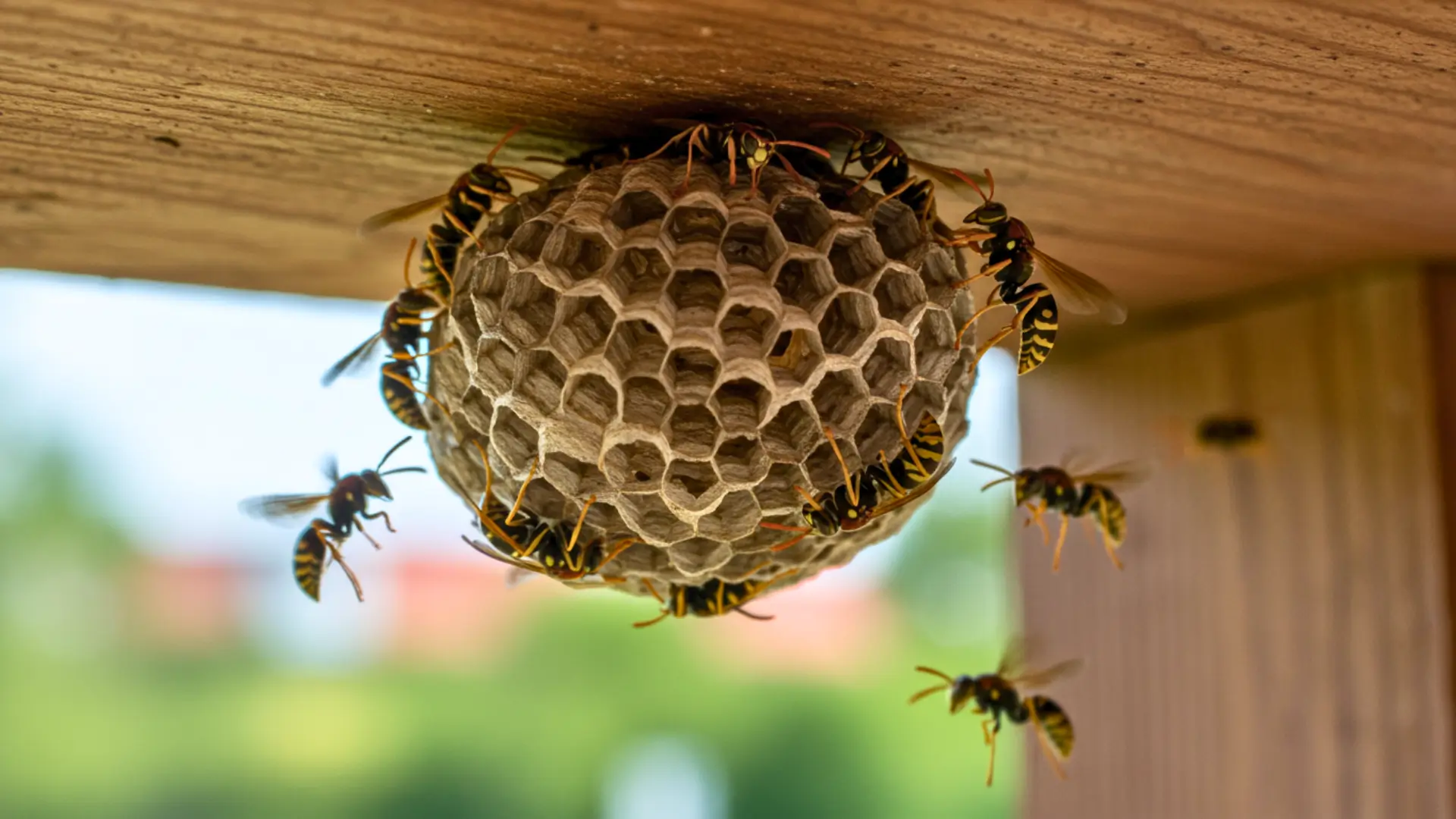
As soon as pleasant days settle in, outdoor spaces become coveted refuges for wasps. Their presence is not a matter of chance. Some everyday habits turn terraces and gardens into true magnets. Understanding these mechanisms allows for effective action without resorting to aggressive solutions.
Understanding the precise criteria that drive wasps to choose your terrace in spring
From the end of winter, founding wasps begin to explore the surroundings in search of a suitable site to settle. In fact, behavioral ecology studies show that the site selection by wasps rests on precise criteria that mix available food, ambient warmth, and tranquility.
Consequently, outdoor spaces that combine leftover food, sheltered zones, and little human traffic quickly become priorities for these opportunistic insects. Thus, a simple under-roof space or a dense hedge can be enough to initiate a colony, especially if the environment offers regular and accessible resources.
Identifying everyday actions that transform your outdoor space into an attractive zone for wasps
In daily life, leaving a sticky sweet drink or barbecue residues around may seem harmless. Yet wasps possess a remarkable ability to detect rich food sources thanks to their highly developed olfactory sense, a mechanism well documented in entomological research.
Moreover, water points also play a decisive role in their presence around homes. Thus, a pet water bowl, a saucer under a pot, or a persistent puddle quickly become attractive. Constant access to water then acts as a powerful and continuous signal.
Furthermore, once these resources are identified, wasps communicate with each other through sophisticated chemical signals. As a result, this collective behavior reinforces their presence and increases the risk of a durable installation. A simple passage can then evolve into regular visitation, eventually leading to a true colony.
Implementing preventive inspection and sealing to block any nesting
The critical period occurs between February and April, when founding queens select their future nesting site. Therefore, regular inspection allows rapid identification of sensitive zones before any installation. This early vigilance makes all the difference.
Then, cavities, cracks, and interstices provide ideal entry points for wasps seeking shelter. Consequently, simple sealing works can greatly reduce the chances of anchorage. Experts speak of an effective physical prevention validated by numerous technical guides.
Finally, this approach works upstream and without disturbing the natural balance of the environment. Moreover, it also avoids reliance on chemical products that are often ineffective against already-established colonies. Prevention remains always easier than intervening in an emergency situation.
Adopting effective routines to reduce wasp presence outdoors over the long term
First, organizing outdoor meals with a few precautions radically changes the terrace situation. Thus, covering foods and promptly cleaning surfaces limit attractive signals. This simple discipline greatly reduces wasp presence around guests.
Next, waste management is another essential lever often underestimated. Indeed, closed containers prevent the diffusion of sugary and protein odors. Regular outdoor hygiene then becomes an effective barrier against durable insect establishment.
Lastly, maintaining a structured and well-kept environment greatly diminishes zones prone to nesting. By combining vigilance, cleaning, and prevention, it becomes possible to fully enjoy the fine days without unwanted intrusions or constant stress.

Contact details
Address:
Farmers Forum,
36, Dominick Street,
Mullingar,
Co. Westmeath,
Ireland
Phone:
+353 (0)44 9310206
Or email us:
For technical issues please check out our FAQ's page or email - [email protected]
For general Queries email - [email protected]
Request to add event to our Calendar - [email protected]
Send us your mart reports - [email protected]
Suggestions and feedbacks - [email protected]
News Items / Press Release - [email protected]
To Advertise on Farmers Forum - [email protected]