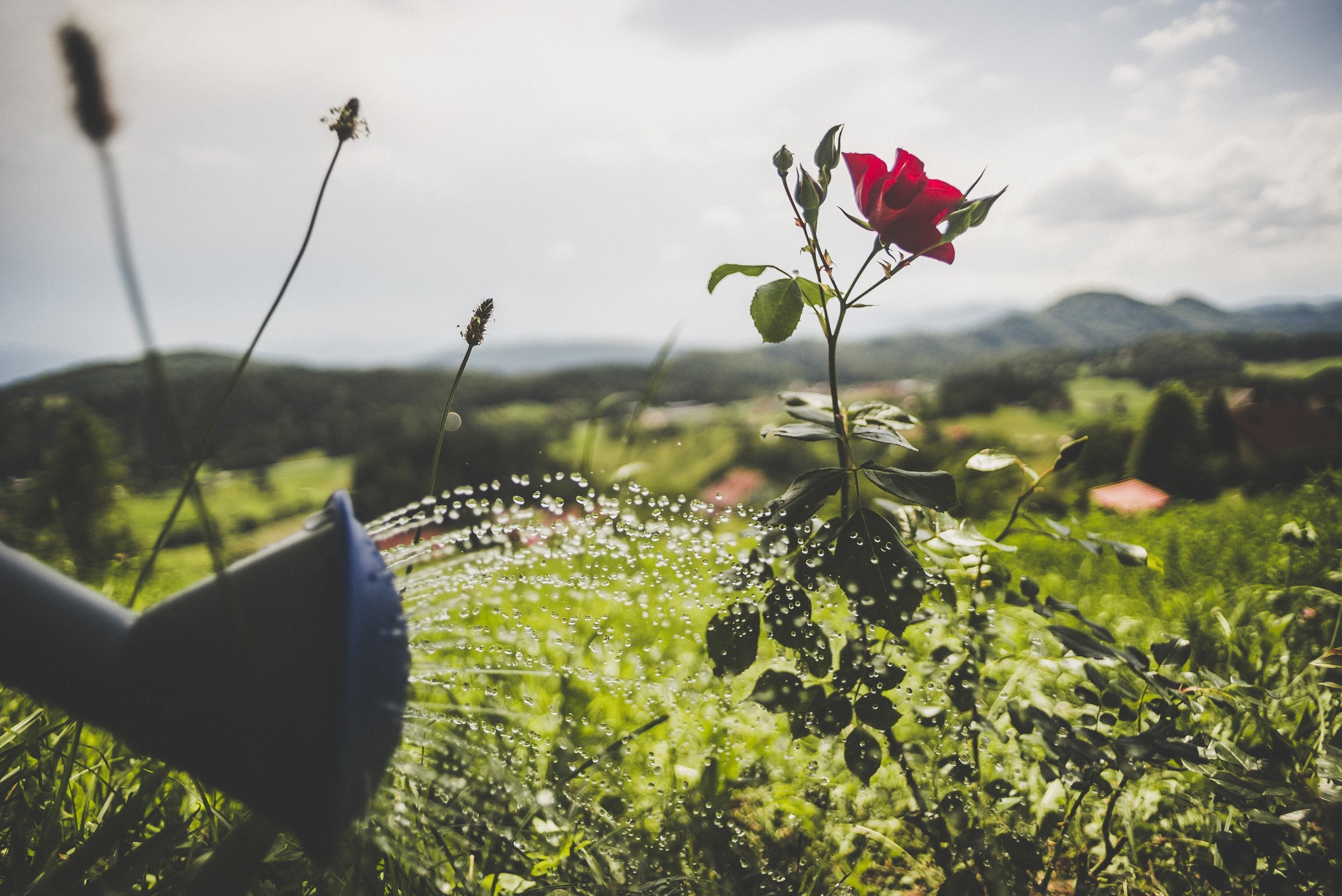
Not all roses drink the same
A young rose has short roots and relies on surface moisture. In light or stony soils, that water vanishes fast, leaving the plant thirsty. Such roses need regular watering, especially during heatwaves. Even brief summer showers rarely reach the root zone.
A well-established, in-ground rose can tap deeper reserves. With decent mulch, it often copes through dry spells. But extreme heat still triggers water stress, which cuts bloom quantity and bud quality. Watch for slightly dull leaves and fewer new shoots.
Potted roses are a different story. Limited substrate means rapid evaporation in sun and wind. In midsummer, a daily drink is often essential. On very hot days, you may need two lightings: morning and late afternoon.
What to check before you reach for the hose
Rather than watering by habit, test the reality on the ground. Slide a finger 5–6 cm into the soil. If it feels dry, the plant likely needs a deep soak. If it feels cool and faintly damp, wait another day.
Read the foliage. Slightly flaccid leaves, a muted sheen, or a gentle curl often signal thirst. Perky, upright leaves usually mean the roots are fine for now. In pots, lift the container: a light weight hints at dryness.
Check recent weather and the forecast. After a decent rain, delay any watering. If winds are hot, plants lose moisture faster, even when the soil looks modestly moist. Your goal is evidence, not routine.
“Water is a tool, not a ritual; use it when the plant tells you, not when the calendar does.”
How to water well in summer
Aim for fewer sessions, but deeper soaks. Shallow, daily sprinkles train roots to stay high, where heat and drought strike hardest. A proper watering should moisten at least 15–20 cm down, encouraging resilient roots.
Water in the early morning or at dusk, when evaporation is low. Direct the stream to the base, keeping foliage dry to reduce fungal risk. Pour slowly, allowing the soil to absorb, then pause and repeat for thorough penetration.
Mulch the root zone with compost, straw, or fine bark. Mulch stabilizes temperatures, slows evaporation, and protects soil life. With mulch, you can often stretch intervals without sacrificing vigor.
Signs you might be overdoing it
Too much water is a quiet threat, especially in clay or compacted ground. Consistently wet soil starves roots of oxygen, weakening their function. You may see yellowing, black-spot flare-ups, or slow, miserly growth.
If the surface is damp yet leaves look tired, suspect overwatering or poor drainage. Probe deeper with a trowel to check the profile. Improve structure with organic matter, and space out sessions while monitoring recovery.
In pots, ensure drain holes are clear, and avoid saucers brimming with water. Saturated mixes breed root rot, which often mimics drought stress. When in doubt, let the top centimeters dry before the next drink.
Quick checks before any watering
- Soil feels dry at 5–6 cm, not just at the surface
- Leaves look slightly limp, with a dull finish
- Forecast shows heat and wind, not cool, wet days
- Pot feels light, and the mix looks pale and crumbly
- Recent rain was brief, with shallow penetration
Tailoring frequency to situation
Young, in-ground roses often need top-ups every two or three days in hot weather. Established, unmulched shrubs may take a weekly soak when it’s reliably dry. Well-mulched plants can stretch to seven–ten days, provided signs of stress are absent. In full-sun containers, plan on daily checks and frequent, measured watering.
Always adapt to your soil, the plant’s stage, and the week’s weather. Sandy beds drain fast and demand tighter rhythms. Heavier loams hold more moisture but risk waterlogging if pushed too hard. Your best measure is the rose’s voice: posture, color, and new growth.
The summer smart-water mindset
Think like a steward, not a sprinkler. Prioritize depth, protect with mulch, and pace your sessions by clear, observable cues. A wisely watered rose blooms longer, resists common diseases, and builds roots that ride out heat.
In the end, one well-timed, thorough soak beats several shallow splashes. Watch the plant, test the soil, and let your watering reflect what the rose is asking—not what habit would have you do.

Contact details
Address:
Farmers Forum,
36, Dominick Street,
Mullingar,
Co. Westmeath,
Ireland
Phone:
+353 (0)44 9310206
Or email us:
For technical issues please check out our FAQ's page or email - [email protected]
For general Queries email - [email protected]
Request to add event to our Calendar - [email protected]
Send us your mart reports - [email protected]
Suggestions and feedbacks - [email protected]
News Items / Press Release - [email protected]
To Advertise on Farmers Forum - [email protected]