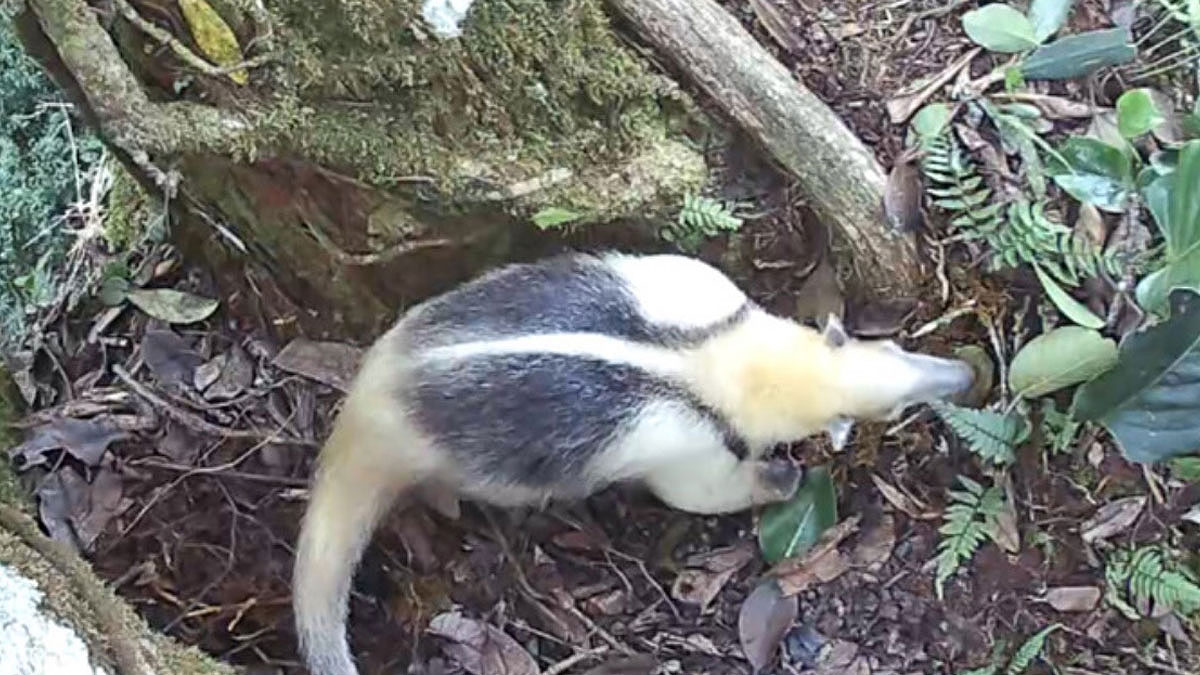
While exploring the cloud forests of Costa Rica, researchers found that many arboreal mammals tended to favor the same tree to relieve themselves, hinting at an intriguing form of animal communication.
Public Toilets
Jeremy Quirós-Navarro, then an independent ecologist in Costa Rica, and his colleagues spotted one of these latrines about 30 meters up, while they were seeking a place to install their camera. Similar discoveries made afterward consistently involved the same tree species: the strangler fig (Ficus tuerckheimii).
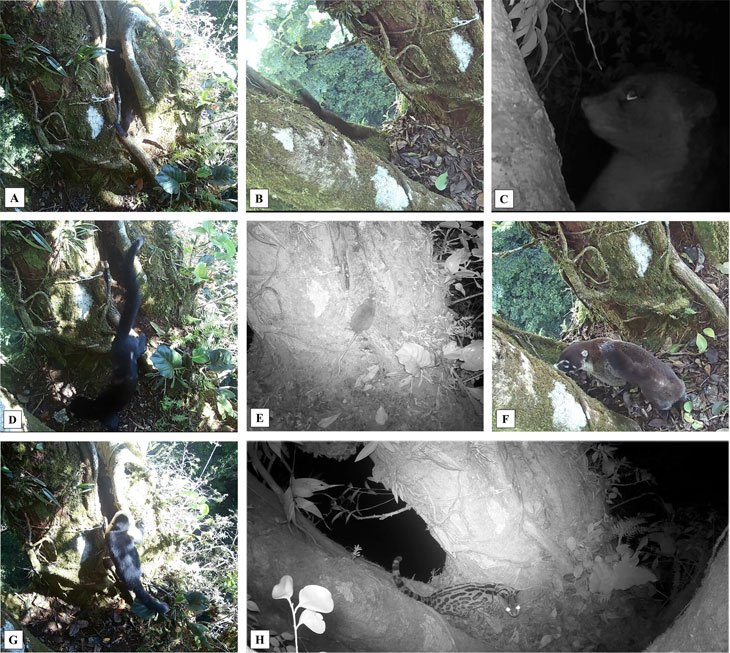
Setting up a camera trap in Monteverde Reserve helped clarify the use of these “public toilets.” In two months, the researchers cataloged 17 different species of mammals, nearly all known to thrive in the local canopy.
Receiving up to three visits per day, these aerial latrines, described as natural platforms, were notably frequented by margays (wild cats), porcupines, possums, white-faced capuchins, howler monkeys, coatis (close to raccoons) and weasels. “Even two-toed sloths, which were thought to only relieve themselves on the ground, used them,” write the study authors, published in the journal Ecology and Evolution.
For Neil Jordan, from the University of New South Wales, these “shared WCs” constitute an important discovery. The fact that some terrestrial animals, such as rhinoceroses and hyenas, also use communal latrines suggests that these sites can serve as landmarks, enable territorial marking, interspecies information exchange, or help reduce the risk of detection by predators.
Key Elements of the Ecosystem
The strangler fig is a striking plant that gradually envelops the host tree, which often dies in the process. Up in the canopy, its branches essentially form clusters resembling inverted hands, creating a comfortable and safe space for mammals.
According to Quirós-Navarro, its branches can reach about twelve meters in length. They provide important passageways for arboreal wildlife, particularly above watercourses.
“These trees are highly prized by climbing animals, some of which perch on the platforms that serve as latrines,” explains the researcher, who notes that removing even a single one would profoundly affect the ecosystem and the communication between different forested areas.
Earlier this year, researchers had documented a fascinating social organization among the monkeys dwelling in the canopy of the Yucatán jungle.

Contact details
Address:
Farmers Forum,
36, Dominick Street,
Mullingar,
Co. Westmeath,
Ireland
Phone:
+353 (0)44 9310206
Or email us:
For technical issues please check out our FAQ's page or email - [email protected]
For general Queries email - [email protected]
Request to add event to our Calendar - [email protected]
Send us your mart reports - [email protected]
Suggestions and feedbacks - [email protected]
News Items / Press Release - [email protected]
To Advertise on Farmers Forum - [email protected]