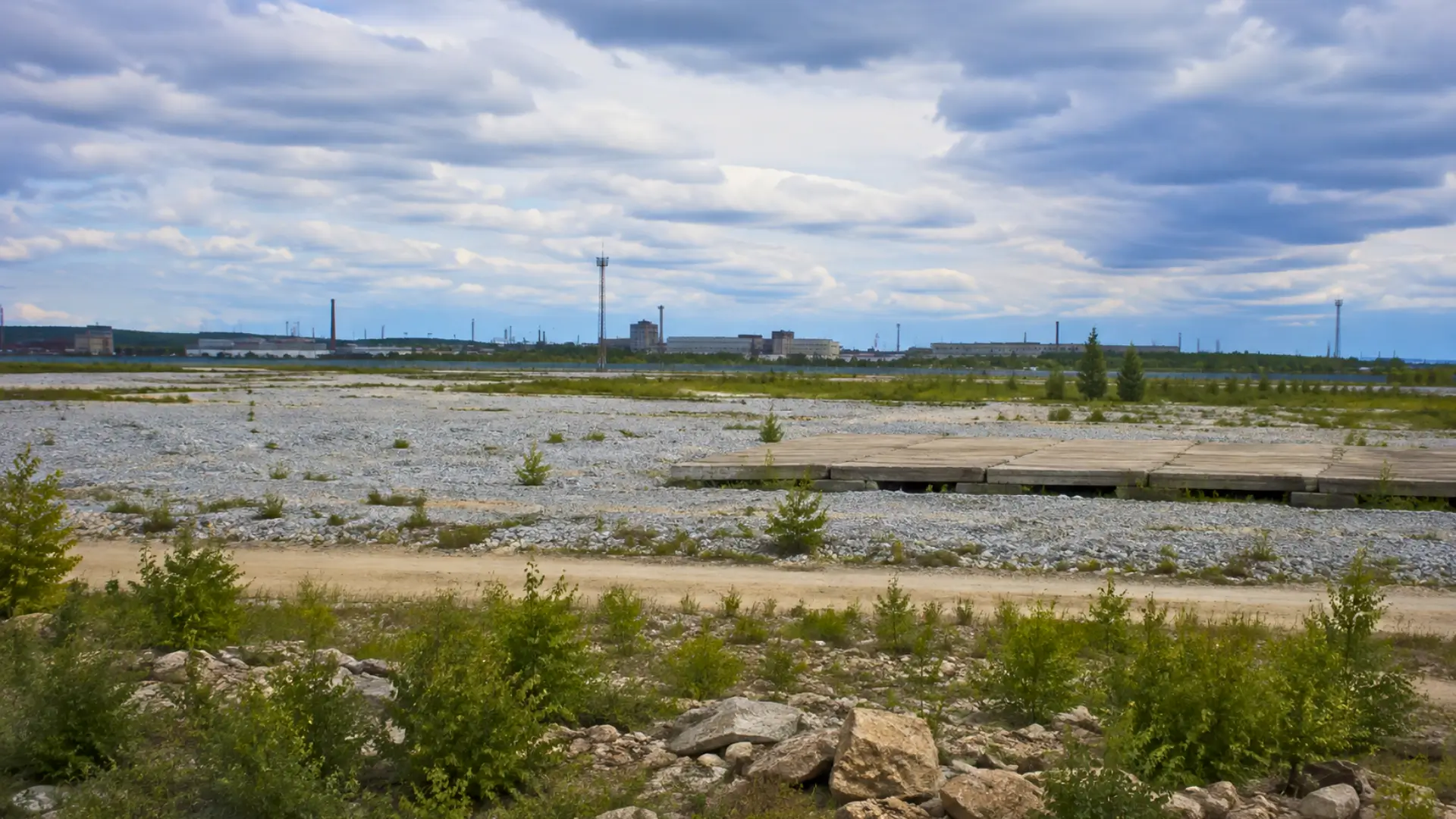
What does a lake that has become too dangerous to stay a lake look like? In the Russian Urals, Karachay served for decades as a nuclear waste reservoir. At its most contaminated, prolonged exposure could once deliver a potentially lethal dose.
Behind the Barbed Wire of the Urals, a Small Lake Becomes the Receptacle of a Secret Nuclear Program
It all begins far from the public eye, in the Chelyabinsk region. In the late 1940s, the Soviet Union built at Mayak a sprawling complex to produce, among other things, military plutonium. The priority remained strategic: to catch up with the United States in the nuclear race, even at the cost of completely neglecting environmental safety.
From 1951 onward, the complex discharged its liquid radioactive waste into Karachay Lake. The International Atomic Energy Agency confirms this use in its work on regional contamination. Gradually, this small body of water abandoned its natural role and became an open-air waste reservoir.
The secrecy surrounding Mayak makes the situation almost surreal. For decades, the Soviet regime locked away a large portion of information. The site did not merely produce weapons: it continuously contaminated water, soils, and ecosystems. Scientists would gauge the scale of the damage only much later.
In 1957, an explosion brutally revealed the hidden consequences of this plutonium race
On September 29, 1957, a tank filled with highly radioactive waste exploded after a cooling system failure. The event, known as the Kyshtym disaster, scattered radionuclides over a vast portion of the Urals. The IAEA estimates that the contamination covered thousands of square kilometers.
Karachay thus represents only one piece of a much larger disaster. The complex’s discharges already contaminated the Techa River and exposed nearby populations. Later studies assessed the doses received by residents and workers, gradually revealing the health consequences of a program long protected by secrecy.
Then the lake begins to dry up, and the radioactivity trapped until then literally takes to the wind
In 1967, a drought heightens the danger. The lake’s level falls, exposing parts of its bed. The wind then lifts the contaminated sediments and disperses about 22 terabecquerels of radionuclides over nearly 1,800 km², according to scientific work on the region’s populations.
The scenario almost reads like a disaster movie: no explosion, just dust and wind. Later investigations decades on detect cesium-137 signatures in some soils from this fallout. The lake no longer threatens only its shores: its particles can travel.
Here is the figure that has shaped its reputation. In 1990, near the old discharge point, instruments recorded an exposure rate of about 600 roentgens per hour. A person exposed long enough could then receive a lethal dose in an hour. However, this extreme value pertained to that specific area, not to all shores.
It took decades of concrete and backfilling to erase Karachay from the landscape
The authorities began gradually to cover the lake to prevent its sediments from drying out and dispersing into the atmosphere. They used concrete blocks, rocks and other materials to stabilize the site. In 2015, they completely backfilled the water body, nearly erasing Karachay from the map.
Yet burying the lake does not erase its legacy. Recent work published in Communications Earth & Environment shows that climate change can amplify the risks associated with certain radioactive waste reservoirs, especially during droughts or extreme events. Karachay thus serves as a reminder that an industrial decision can continue to generate effects long after the regime that made it has vanished.

Contact details
Address:
Farmers Forum,
36, Dominick Street,
Mullingar,
Co. Westmeath,
Ireland
Phone:
+353 (0)44 9310206
Or email us:
For technical issues please check out our FAQ's page or email - [email protected]
For general Queries email - [email protected]
Request to add event to our Calendar - [email protected]
Send us your mart reports - [email protected]
Suggestions and feedbacks - [email protected]
News Items / Press Release - [email protected]
To Advertise on Farmers Forum - [email protected]