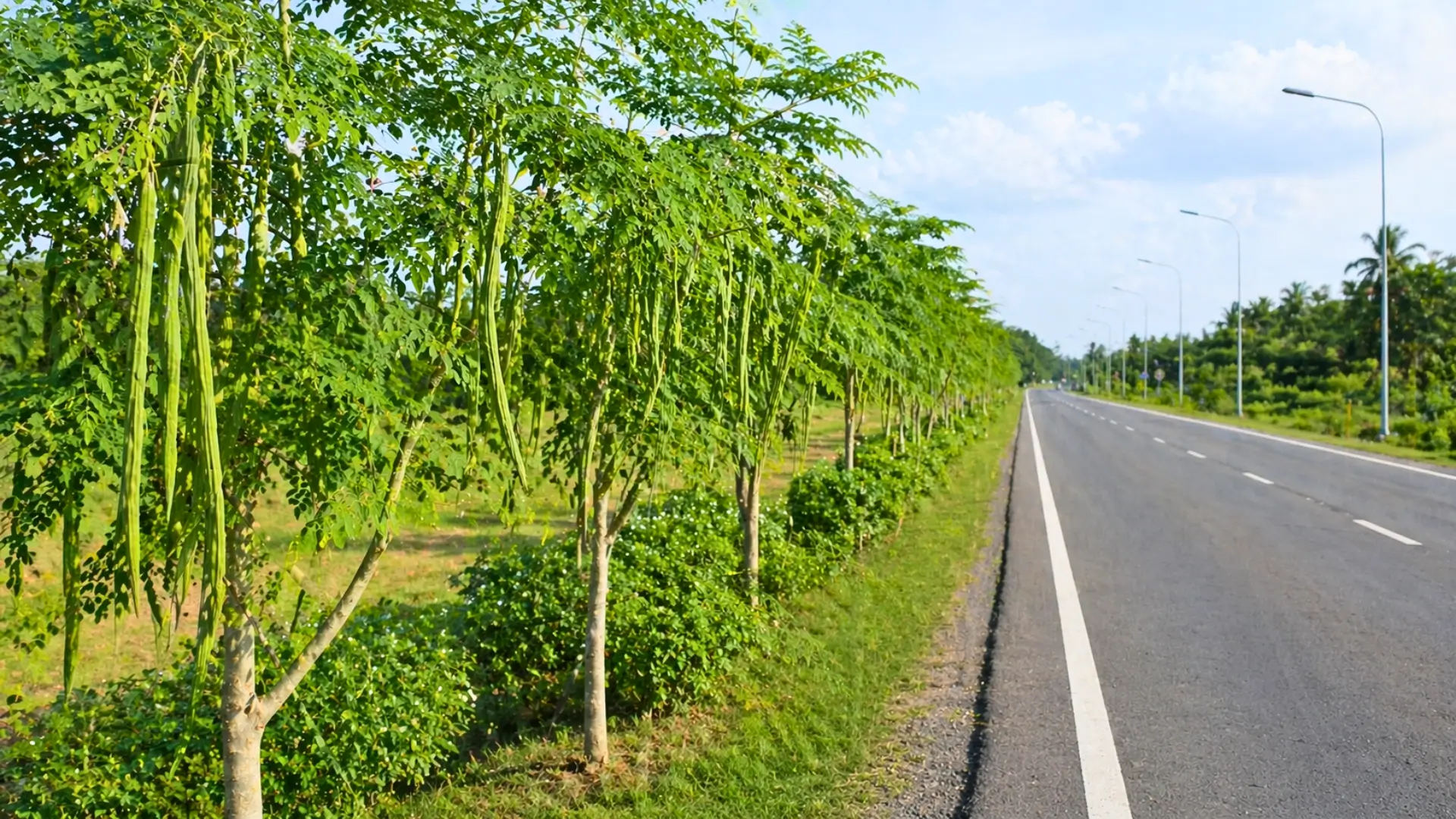
What if a natural solution, used for centuries in certain villages, could today rival the most advanced technologies in removing microplastics from drinking water? A recent study is overturning certainties and reviving an age-old knowledge long forgotten.
Microplastics, an unseen challenge that filtration systems struggle to capture
In a glass of clear water, thousands of invisible particles can float around without arousing any suspicion. Yet microplastics, often smaller than 50 micrometers, slip past traditional filtration systems. Consequently, their negative electric charge prevents them from aggregating, making their capture particularly difficult in today’s infrastructures.
The challenge is dizzying. Indeed, some analyses point to as many as 240,000 particles per liter in bottled water. Moreover, tires, synthetic textiles, fragmented packaging—these residues infiltrate everywhere. Yet wastewater treatment plants, though sophisticated, still struggle to intercept the smallest fractions.
Facing this challenge, industries employ coagulants such as aluminum sulfate. While effective, they are not flawless. In particular, when dosing is off, they can leave aluminum residues in the water, raising questions about their long-term health effects.
Moringa rivals chemical coagulants for removing microplastics
In April 2026, a study published in the journal ACS Omega drew the attention of the scientific community. More precisely, Brazilian researchers tested moringa seeds on water contaminated with PVC microplastics, with results that surprised even specialists.
Under optimal conditions, the seed extract managed to remove more than 98% of the particles, thereby rivaling aluminum sulfate. In fact, the mechanism is intriguing: the moringa proteins neutralize the charge of the microplastics, which promotes their aggregation and subsequent capture by filtration.
Furthermore, a study from Uppsala University, published in Colloids and Surfaces, confirms that these natural proteins bind to impurities and accelerate their aggregation. In some cases, they prove even more effective than synthetic coagulants. Finally, the increased effectiveness in alkaline water points to simpler processes, with no toxic residues and lower energy consumption.
Ancient water purification practices now validated by science
Long before laboratories, certain communities were already using moringa to clarify water. Notably in Sudan, women ground its seeds to purify the Nile’s water. Thus, this gesture, passed down through generations, rested on an empirical intuition now confirmed by science.
Moreover, the properties of moringa do not stop there. Indeed, in addition to reducing turbidity, it eliminates up to 99% of indicator bacteria, significantly improving water quality. Consequently, it is an accessible solution, especially valuable in rural regions lacking advanced infrastructure.
Furthermore, this tropical tree packs multiple advantages. On one hand, its leaves are nutrient-rich. On the other, its seeds purify water, and the entire plant is biodegradable. Thus, it becomes a natural, multifunctional tool that contrasts with modern chemical solutions, often costly and complex.
A promising eco-friendly alternative still facing technical limits
Despite its potential, moringa is not a miracle solution ready for deployment everywhere. Indeed, researchers point to the release of dissolved organic carbon, which could complicate certain steps of water treatment. For now, this parameter remains under study.
However, another limit emerges: large-scale use raises questions. In centralized networks, the organic matter can alter the taste or odor of the water if it is not treated promptly. Consequently, technical adjustments will be necessary to integrate this solution into existing systems.
Finally, early real-world tests, particularly in Brazil, remain promising. As pressure increases on chemical coagulants, a biodegradable and local alternative is drawing attention. Hence, a question remains: along a tropical road, is part of the answer to the invisible challenges of modern water already waiting at the roadside?

Contact details
Address:
Farmers Forum,
36, Dominick Street,
Mullingar,
Co. Westmeath,
Ireland
Phone:
+353 (0)44 9310206
Or email us:
For technical issues please check out our FAQ's page or email - [email protected]
For general Queries email - [email protected]
Request to add event to our Calendar - [email protected]
Send us your mart reports - [email protected]
Suggestions and feedbacks - [email protected]
News Items / Press Release - [email protected]
To Advertise on Farmers Forum - [email protected]