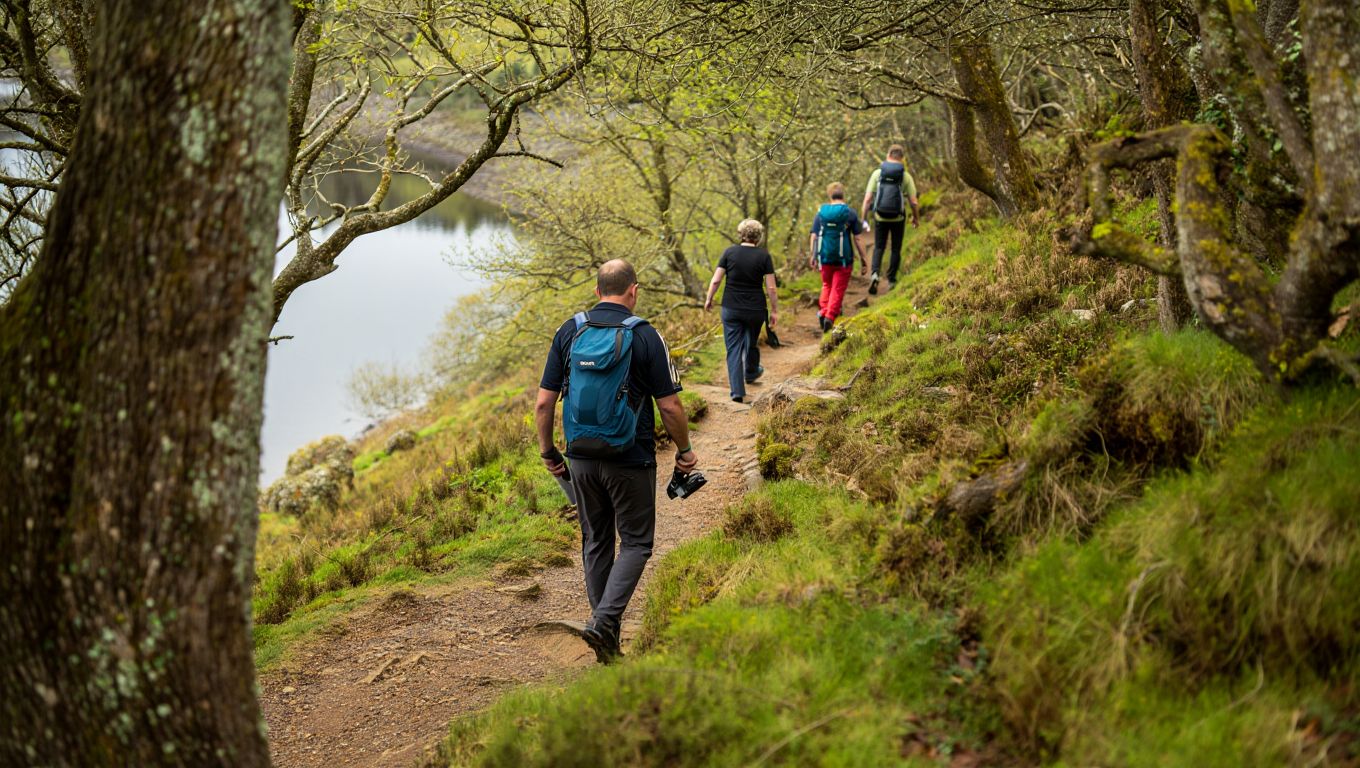
The story goes like this: a few summers of shuddering queues, buses idling, and the slow carousel of parking chaos taught locals to look elsewhere. The quiet answer lay to the northwest, where green ridges lift above an island‑dotted lake, and paths wander between pines, heather, and old stone walls. Out here, boots tick softly on needles, and the breeze carries curlew whistles instead of engines. People don’t race for a space; they linger for a view. “You start walking, and the noise lets go,” said one regular I met by a mossed gate, adjusting her pack with a relieved smile.
From gridlock to green hush
Glendalough remains magnificent, but the pressure of its popularity can feel relentless on fine weekends. Locals remember the long reversals, the impatient horn notes, and the awkward dance of full lots meeting fresh arrivals. The vibe felt more like logistics than a day with the hills. So the seasoned walkers quietly drew lines on new maps, choosing places where a path could be a promise, not a queue. Above Lough Key, they found that gentle, unadvertised refuge.
The character of the high trails
Climb the low shoulders of the Curlew Mountains, and the world tilts toward water and sky. The lake throws back silver shards, islands drift like dark green boats, and wind combs the pine tops into soft, seaborne textures. Underfoot, the ground switches from firm track to springy bog, then to a ribbon of pale gravel along old boundaries. You’ll pass hawthorn knuckles, ruined field corners, and sudden, spillway views that make you stop talking. It is not dramatic in a postcard‑shouty way; it is quiet, precise, and deeply kind.
A morning on the Curlew ridge
Start early, and the first light filters like tea through the pine needles. Footsteps wake wet heather, releasing that peppered, medicinal scent that feels both ancient and fresh. A robin clicks from a gatepost, and something small flickers through the gorse with fox‑bright intent. “There’s a stillness here that isn’t empty,” a walker told me, tapping his stick like a soft ticking clock. He meant the hum of bees in the bilberry, the far tractor’s cough, the swish of reeds where the lake breathes the day awake. Every corner gives a change, never abrupt, always lithe.
How to tread lightly
- Pack simple, pack smart: water, a small shell, grippy footwear, and a map or offline app.
- Park by smaller trailhead lay‑bys where permitted, never on soft verges.
- Step around saturated patches to protect boot‑wide trails from blooming into muddy scars.
- Keep voices low near nesting areas, and let the place set your pace, not your watch.
Landmarks without plaques
You won’t find many shouting signboards, but the land has its own glossary. A gap in a drystone wall offers a keyhole of lake and the distant gray seam of hills. An outcrop becomes a small altar, where someone leaves a feather‑light memory: a pinecone, a smooth white stone. The forestry cuts are not always pretty, yet even the raw edges throw open rooms of unexpected horizon. Follow a sheep‑worry of faint paths, and you’ll meet the larger spine that wends back toward Boyle, with the water always half a turn away. It feels both local and slightly unwritten.
Getting there the gentle way
Trains run the Dublin–Sligo line through Boyle, and a short taxi or bike hop reaches upland starts without the parking drama. If you must drive, arrive early, tuck in with attention to access, and leave nothing but small prints behind. The reward is time that expands like warm bread, with every minute tasting more clearly of place. “You notice your own breathing again,” said a man lacing his boots, looking past me to a sunlit cutover where birch saplings flickered silver. He smiled the quiet smile of someone who knows where the better doors now open.
Why it keeps calling
The appeal is not a single “wow” moment, but a braid of small truths. Short drives from towns, generous space between footsteps, and views that unfold like slow music over gentle heights. There’s room for weather to be a real character, for drizzle to pearl the spider‑fine webs, for wind to clean the crowded week’s chalkboard. You step out as a visitor, and the place treats you like a calm, old friend. When you drop back to the shore, the lake sits easy and bright, and the road home feels agreeably, deliberately long.

Oh my goodness. Please write a book. Your writing is simply beautiful.