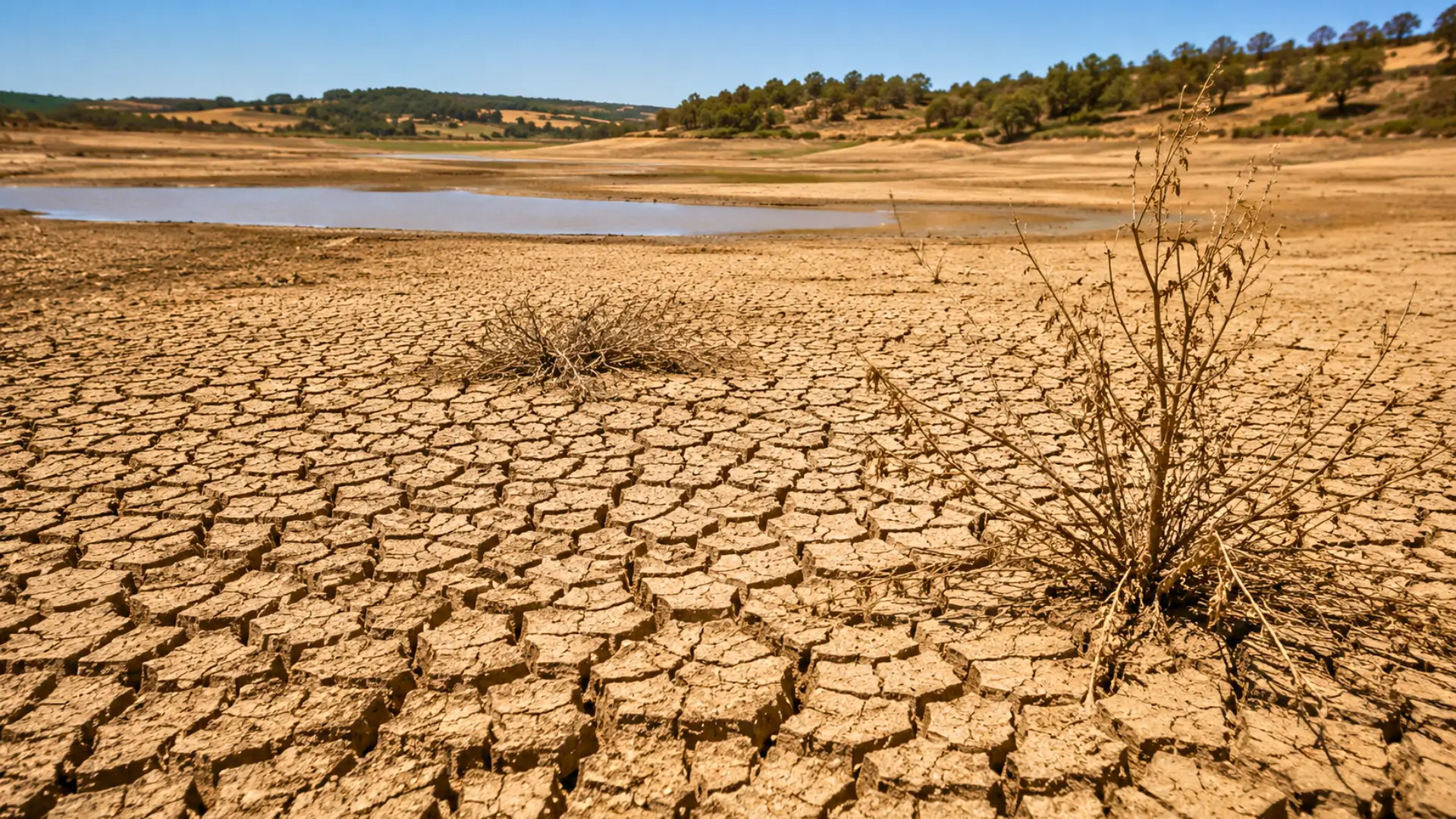
What if global averages mask an urgency much closer to home? By analyzing ten climate models, an artificial intelligence reveals that several regions could cross critical thresholds much sooner than expected. A new, more precise and alarming map of warming is taking shape.
A Global Average That Masks Strong Regional Variations in Warming
For years, the figure of 1.5°C of warming has dominated scientific reports and international summits. This global benchmark serves as a reference. Yet, it is like the average body temperature of a patient: useful for detecting fever, but insufficient to understand which organs are already suffering most.
In reality, some landmasses warm much faster than the oceans. Thus, polar regions, continental areas, or already arid territories cross high thresholds earlier. Consequently, this dynamic sketches a geography of risks that remains difficult to date with precision.
According to the IPCC, the global temperature rose to around 1.1°C above the 1850-1900 period between 2011 and 2020. Behind this average lie concrete phenomena. Indeed, heatwaves, tropical nights, and drying soils are becoming more frequent, while agricultural seasons are already deeply disrupted.
Artificial Intelligence Sharpens Climate Models for More Precise Forecasts
To refine these projections, researchers from Colorado, Stanford, and ETH Zurich used transfer learning. Specifically, this method allows an artificial intelligence to reuse knowledge it has acquired, enabling it to progress more quickly on a related task.
The algorithm did not replace classical climate models. On the contrary, it analyzed the results of ten different models. Then, it identified relationships between emissions, temperatures, and future trajectories. Published in Environmental Research Letters, these works aim to reduce uncertainties and sharpen regional timelines.
Crucial Climate Thresholds Reached Earlier in Many Regions Worldwide
The result speaks of an alarm waking up too early. Among the 46 regions studied, 34 could exceed 1.5°C as early as 2040. Moreover, in 31 of them, the rise could reach 2°C by that date, i.e., within less than fifteen years. Even more striking, 26 regions could cross 3°C before 2060. However, this threshold does not concern the entire planet. It describes a local reality.
Thus, certain populations would experience conditions close to the most extreme scenarios, well before the century ends. Of course, these figures are not absolute certainties. They rest on scenarios and probabilities. Nevertheless, their message is clear: danger is unevenly distributed, and waiting for a global average could delay urgent actions at the local level.
Regional Forecasts Essential to Adapt Cities and Infrastructure to the Climate of the Future
For a town, a city, or a region, knowing more precisely the rate of warming changes a lot. It may require adapting water networks, greening neighborhoods, or adjusting work hours during heatwaves. In agricultural areas, some crops must also evolve. Hence, a few years of difference can decide whether these measures arrive before or after the crisis.
Moreover, the challenge also concerns sustainable infrastructures. A school, a dam, or a railway line must function for decades. They will have to face the climate of the 2050s. Therefore, regional projections help avoid building with yesterday’s temperatures as the sole reference.
Finally, artificial intelligence will not cool the planet, nor replace climate policies. However, it helps to better understand risks and to identify the most exposed zones. Consequently, a question remains: if the calendar accelerates, will decisions keep pace?

Contact details
Address:
Farmers Forum,
36, Dominick Street,
Mullingar,
Co. Westmeath,
Ireland
Phone:
+353 (0)44 9310206
Or email us:
For technical issues please check out our FAQ's page or email - [email protected]
For general Queries email - [email protected]
Request to add event to our Calendar - [email protected]
Send us your mart reports - [email protected]
Suggestions and feedbacks - [email protected]
News Items / Press Release - [email protected]
To Advertise on Farmers Forum - [email protected]