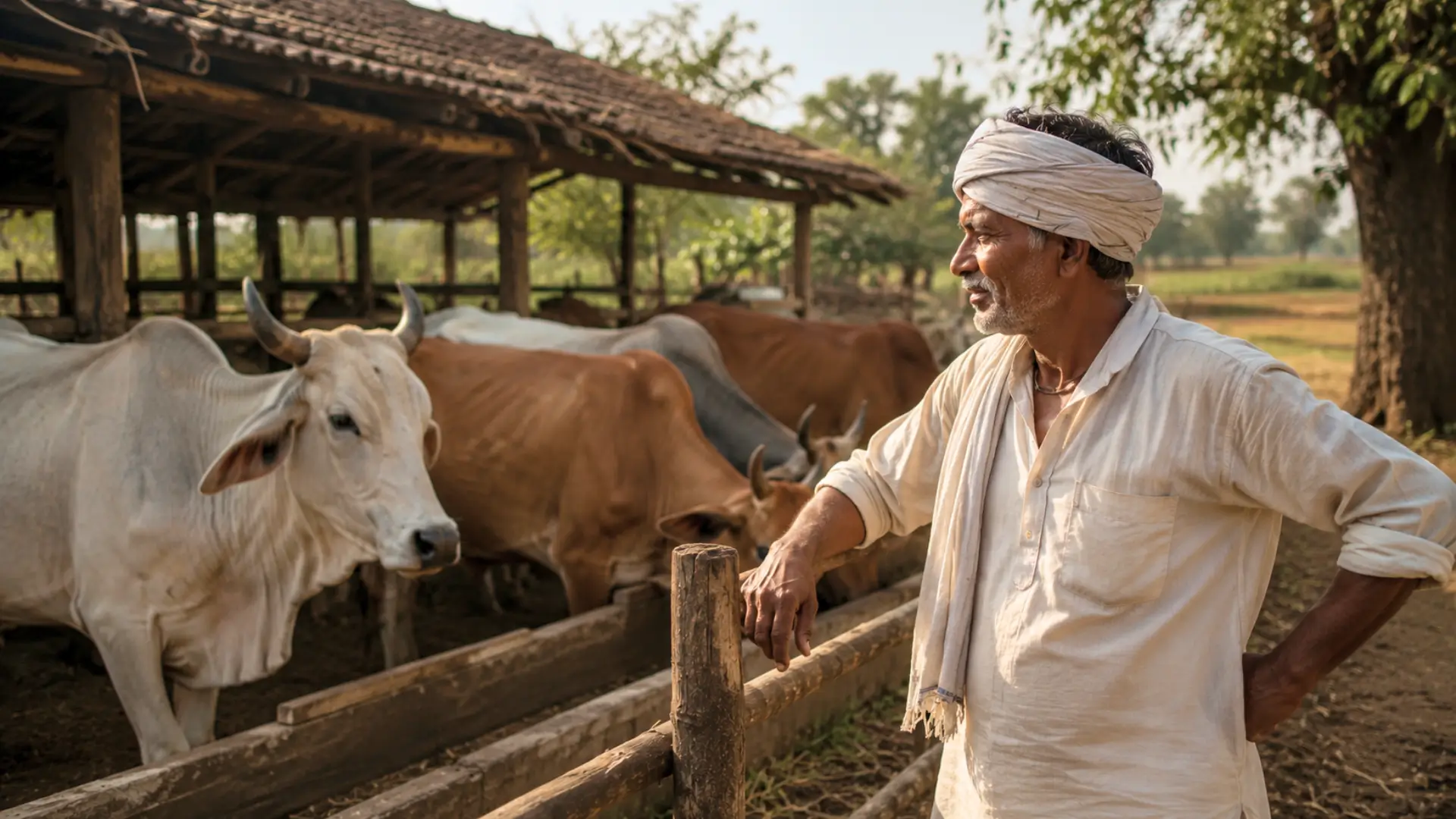
In several Indian villages, kitchens are restarting thanks to a resource as ordinary as it is unlikely. As gas cylinders disappear from shelves, thousands of families are rediscovering an age-old technology capable of turning agricultural waste into domestic energy.
The Hormuz Strait blockage triggers a quiet crisis in Indian households
Since the blockage of the Strait of Hormuz began in early 2026, the consequences extend far beyond oil markets. In India, where a large share of liquefied natural gas arrives via this strategic sea lane, residents now wait for hours in front of gas depots. In some rural regions, queues stretch from dawn around the few delivery trucks.
The phenomenon has grown to unprecedented proportions with panic buying and the surge of the black market. Despite the government’s reassuring statements, many families report frequent outages and sharply rising prices. This energy strain reveals a dependence long ignored on a global trade that has become extremely fragile.
Meanwhile, in several villages in Bihar or Uttar Pradesh, a nearly forgotten solution returns to the center of daily life. Behind some houses, small cement domes quietly produce domestic biogas from a blend of manure and water. An ancient technology, but suddenly precious again.
Rural biogas digesters enable families to cook despite gas shortages
The principle may seem rudimentary, yet it rests on a fascinating biological mechanism. In a biogas digester, bacteria break down organic matter in the absence of oxygen and release methane. This gas is then directed toward kitchens to fuel stoves. With only a few cows, some families already cover a large portion of their energy needs.
The example of Pramod Singh, recently highlighted by the scientific outlet Phys.org, perfectly illustrates this quiet transition. Thanks to the manure produced by four cows, his installation provides enough gas to cook daily for six people. But the real treasure lies elsewhere, in the residues left after fermentation.
These nitrogen-rich sludges are now used as natural fertilizer in regions where chemical fertilizers have become hard to obtain. Here too, international tensions play a major role. The conflict in the Middle East is also disrupting agricultural supply, pushing some farmers to sharply cut their purchases of industrial fertilizers.
India’s biogas bet becomes a strategic asset amid global tensions
Long considered modest equipment reserved for isolated villages, these systems now appear as an astonishing energy safety net. In a country that consumes about 30 million tonnes of LNG per year, every local source becomes strategic. Moreover, nearly half of this gas originates from imports.
This dynamic is also part of a much broader climate ambition. Since 2018, the SATAT government program encourages the production of compressed biogas for transport and domestic uses. India hopes to gradually integrate more renewable gas into its network to reduce its emissions and aim for carbon neutrality by 2070.
The Cow’s Sacred Role Fuels the Growth of Biogas in India’s Rural Areas
The speed with which biogas has taken hold in certain regions is also explained by a deeply rooted cultural reality. In many Hindu communities, the cow has occupied a sacred place for centuries. Its dung is already used as fuel, as a building material, or as an element in traditional rituals.
Yet the current situation raises a broader question. As geopolitical tensions weaken global energy networks, many countries may be forced to rediscover local resources long deemed archaic. In some Indian villages, the next major energy breakthroughs now seem to begin… in a simple barn.

Contact details
Address:
Farmers Forum,
36, Dominick Street,
Mullingar,
Co. Westmeath,
Ireland
Phone:
+353 (0)44 9310206
Or email us:
For technical issues please check out our FAQ's page or email - [email protected]
For general Queries email - [email protected]
Request to add event to our Calendar - [email protected]
Send us your mart reports - [email protected]
Suggestions and feedbacks - [email protected]
News Items / Press Release - [email protected]
To Advertise on Farmers Forum - [email protected]