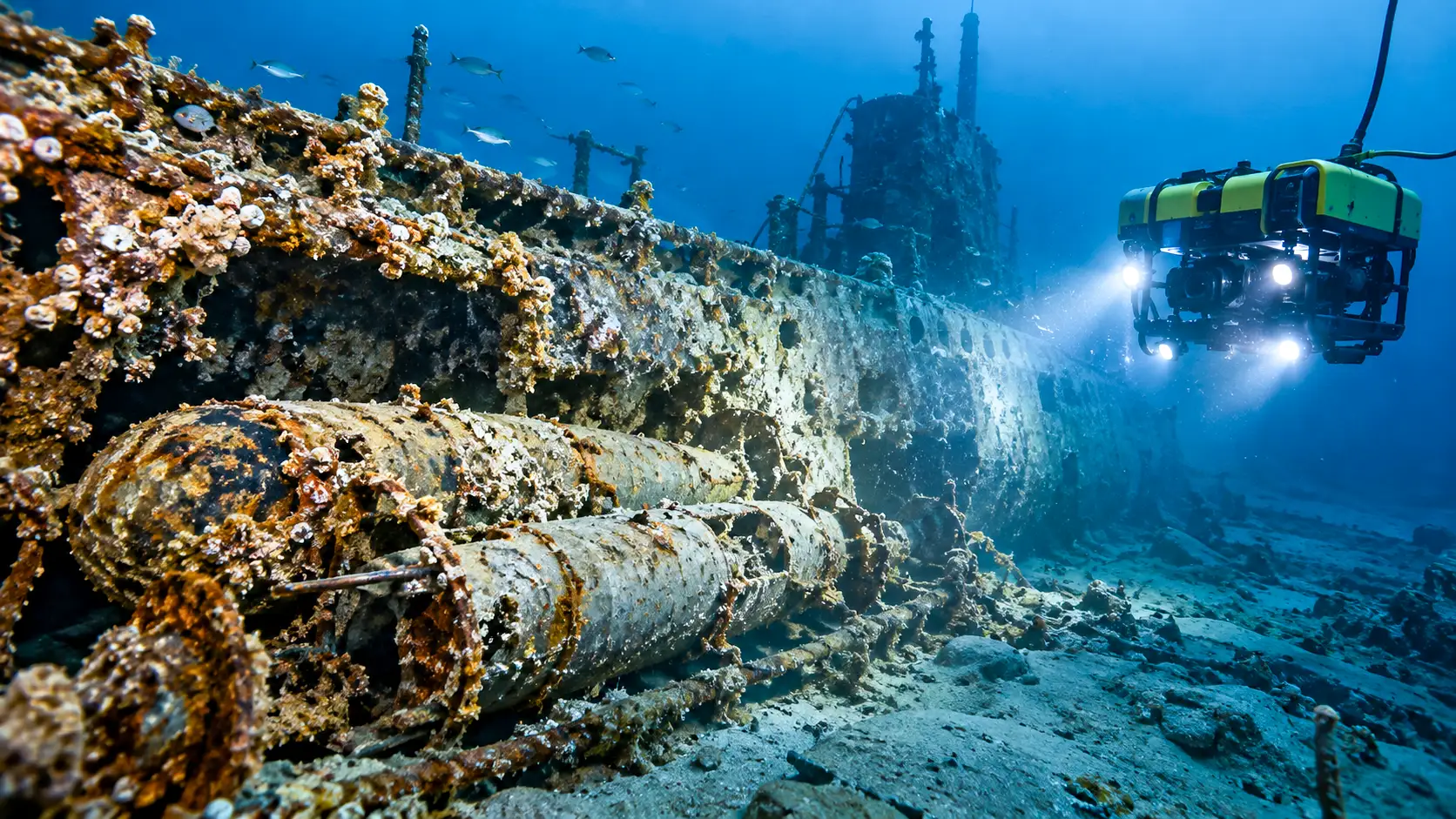
Thousands of military craft lie submerged since the world wars. Their rusting metal hulls now release potent toxins. Biologists are today uncovering the direct ravages of these wrecks on the marine food chain.
Submersibles and ships sunk during world conflicts are degrading and releasing their chemical poisons
Gert Normann Andersen has located the German submarine UC-30 off the coast of Denmark. This vessel sank in 1917 and carried eighteen mines and six torpedoes. Consequently, nearly five thousand kilograms of explosives lay beneath the water until this discovery.
The NorthSeaWrecks research project is carefully studying this maritime relic. Scientists tally 10,127 wrecks in Danish waters alone. Thus, about 15 % of these ships originate directly from the two world wars with dangerous cargo.
These rusted military reservoirs leak munitions and chemical weapons. Moreover, the holds still store highly toxic heavy fuel oil. Ocean currents spread this invisible threat across square kilometers of coastal seabeds.
TNT residues seep into marine organisms and disrupt the natural reproduction of species
Aarhus University published an alarming finding in the Marine Pollution Bulletin. Researchers detected TNT in the water surrounding the UC-30 wreck. Indeed, corrosion pierced the metal walls of the submerged mines.
This contamination already affects mollusks fixed to the metal debris. Mussels experience severe enzymatic and metabolic disturbances. Consequently, their energy reserves plummet, completely compromising their reproductive cycle at sea.
Traditional underwater mine clearance operations cause explosions that worsen contamination
Governments long ignored this stock of weapons dumped after the two world wars. Yet these devices pose a mortal danger for modern coastal works. Fishermen and workers on undersea cables often cross paths with these forgotten traps.
The numbers confirm the scale of human risk. Between 1945 and 2014, these munitions caused 418 deaths and 680 injuries at sea. However, detonating these bombs on site worsens pollution by dispersing chemical residues.
The shock wave shatters the metal and disperses toxic molecules into the water column. As a result, this destructive approach aggravates local environmental conditions. Germany is therefore investing heavily to test other less aggressive solutions.
Underwater robots offer concrete hope to extract these charges before future wrecks
Modern robotic technology now provides a promising path forward. The remotely operated vehicles first map the state of hulls with great precision. Then these specialized machines can retrieve the munitions intact and bring them to shore safely.
This technical intervention is increasingly urgent to safeguard our seas. Furthermore, between sixty and one hundred ships still sink each year worldwide. Their modern cargo adds plastic and fuel to this heavy wartime legacy.

Contact details
Address:
Farmers Forum,
36, Dominick Street,
Mullingar,
Co. Westmeath,
Ireland
Phone:
+353 (0)44 9310206
Or email us:
For technical issues please check out our FAQ's page or email - [email protected]
For general Queries email - [email protected]
Request to add event to our Calendar - [email protected]
Send us your mart reports - [email protected]
Suggestions and feedbacks - [email protected]
News Items / Press Release - [email protected]
To Advertise on Farmers Forum - [email protected]