
Type “helmet mandatory scooter 2026” into Google and you’ll find dozens of pages claiming the measure has passed. It has not. The bill backing it was filed on June 9, 2026 and sits idle in the laws committee. By contrast, wearing a helmet has been mandatory outside urban areas since 2019, and almost no one knows it. Three days before the opening of the 25th European Mobility Week, we revisit the legal framework line by line: what is in force, what is only a proposal, and where the real financial risk lies, which is not where you think.
The baseline dates back to decree no. 2019-1082 of October 23, 2019, published on October 25. It is this decree that created the category of motorized personal transport devices, the EDPMs, and brought them into the highway code. Electric scooters, monowheels, hoverboards, and gyropods: same category, same rules.
Three texts have modified it since. Decree No. 2022-31 of January 14, 2022 added electric balance bikes. The decree of March 15, 2024 allowed EDPM riders to use passages reserved for cyclists indicated by a panel M12. The decree of November 2024 allowed brake lights and turn signals, authorized riding two abreast on greenways, and prohibited rear flashing lights. None of these texts touched the helmet, a point we verify with every scooter test published here.
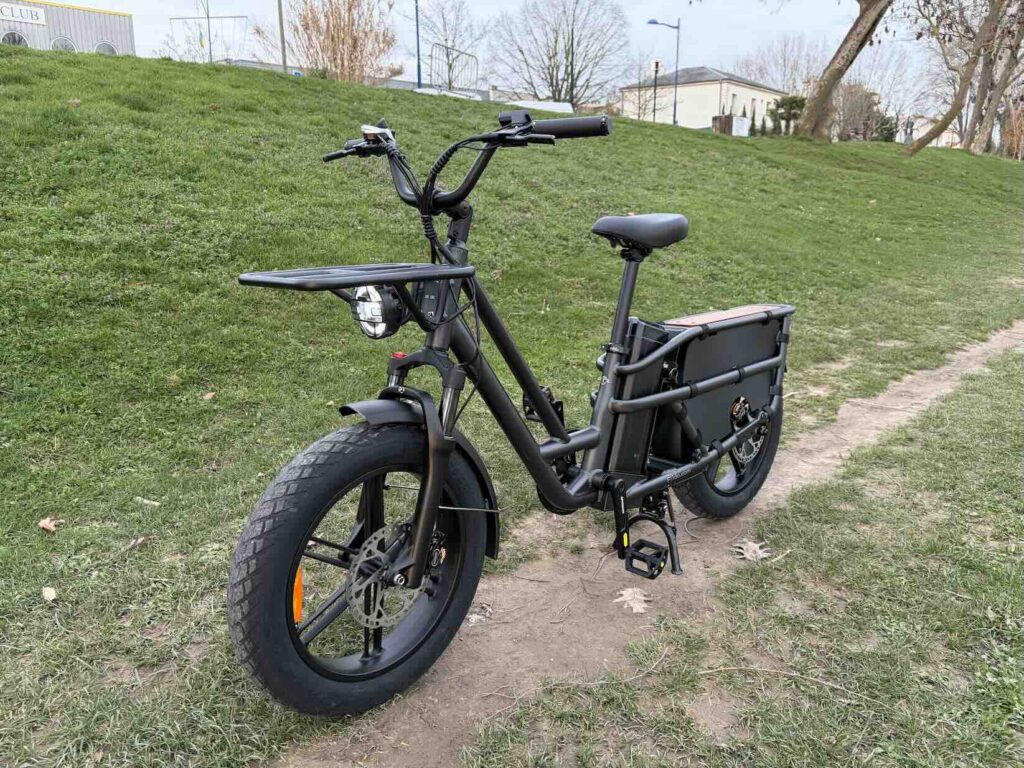
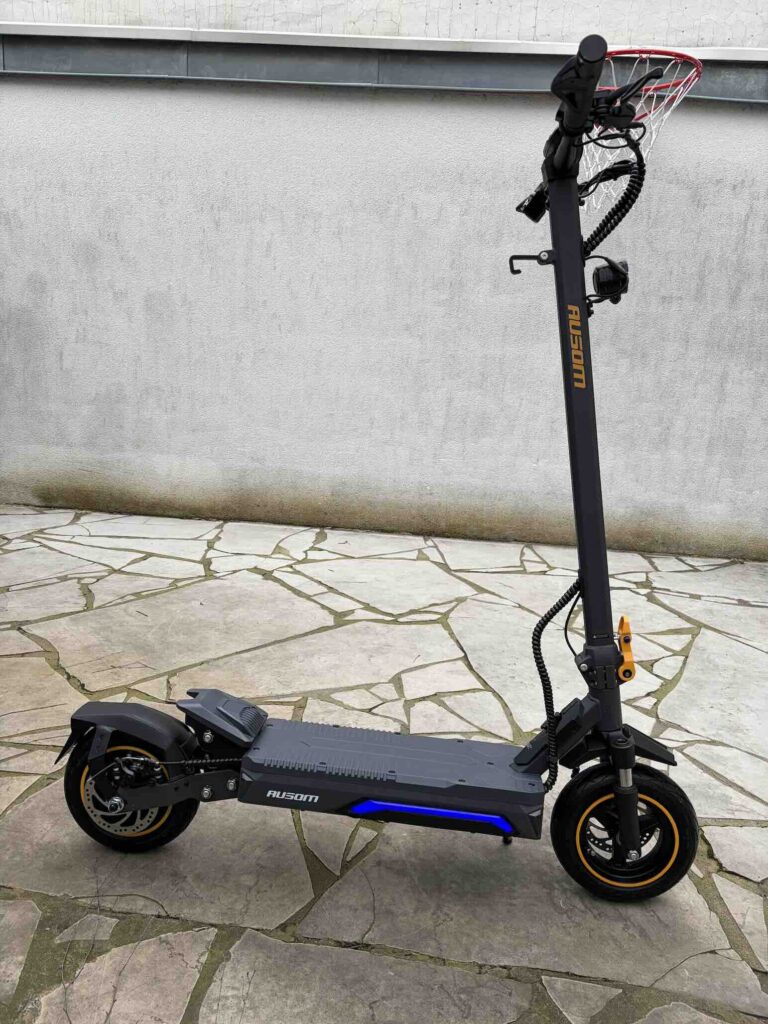
We have been testing these machines in real-world conditions for several years, from the KuKirin G2 Max to the Ausom K20 Pro, and on bikes in our comparison of the best electric bikes. This dossier is the missing piece of this series: the legal framework within which all of this takes place, with no guesswork and no copying vendor sheets.
The table of EDPM rules in force
| Rule | What the highway code says | Sanction |
|---|---|---|
| Minimum age | 14 years since September 1, 2023 (12 years previously) | Fine, liability of the legal guardian |
| Maximum speed | 25 km/h, mandatory factory speed limiter | €1,500 in case of de-restriction |
| Where to ride in urban areas | Bike path or cycle lane if it exists, otherwise roadway limited to 50 km/h | €35 |
| Sidewalk | Prohibited, except by municipal exemption and at a maximum of 6 km/h | €135 |
| Outside urban areas | Greenways and cycle paths only, roads prohibited | €35 |
| Passenger | Forbidden, the device is strictly single-seat | €135 |
| Headphones and earpieces | Prohibited during operation | €135 |
| Vehicle equipment | Sound horn, effective brakes, front and rear lights, retroreflective devices | Variable depending on the shortcoming |
| Casque | Mandatory outside urban areas, day and night. Recommended only in cities | Fine outside urban areas |
| Hi-vis vest or reflective equipment | Mandatory outside urban areas, and at night or when visibility is poor in city | Fine |
| Civil liability insurance | Mandatory, without exception | €500 fixed, up to €3,750 |
A note on reading this table. The amounts are not the interesting part, and that is precisely what most articles simply copy. What matters are the two bold lines at the bottom: the de-restriction and the insurance. They do not follow the same logic as the rest, and they can cost a hundred times more than a ticket.
The helmet: the real rule isn’t where you look for it
Let’s start again from the beginning. A bill designed to strengthen the control of electric scooter use was filed at the National Assembly on June 9, 2026, under number 2900, and referred to the laws committee. It notably provides for general helmet wearing. As we write, it has not been examined in plenary, has not passed the Senate, and therefore is not law.
Several brand and retailer sites nevertheless announce the obligation as a done deal, sometimes with a cited fine amount. This is false, and it’s the kind of error that spreads quickly because it is plausible: the measure has been debated for years and will probably eventually pass.
The actual rule is different and much older. Outside urban areas, the helmet is mandatory for any EDPM rider, day or night, just like reflective equipment. In urban areas, it is only recommended unless a municipal ordinance says otherwise. Several municipalities have tightened the rule on their territory, Nice being the best-known case.
The practical consequence is somewhat absurd. A ten-kilometer home-to-work trip that exits the municipality legally requires a helmet; the same fully urban trip does not require it, even though most accidents occur in the city. No one defends this coherence, and that is probably what will ultimately push the text through.
The insurance: the fine isn’t the real risk
This is the part of the dossier we recommend reading even if you know the rest. The obligation to carry civil liability insurance has been absolute since 2019: it applies to any motorized scooter, regardless of speed, whether new or used. Riding without it is a crime under article L324-2 of the highway code, not a simple fine.
The fixed fine is €500, reduced to €400 if paid within fifteen days, increased to €1,000 after more than forty-five days, and up to €3,750 before the court in cases of recidivism or contestation, with possible seizure of the device.
But the real risk isn’t there. If you injure someone without insurance, the Guarantee Fund for mandatory insurances compensates the victim on your behalf, in full, under the principle of bodily injury repair. Then it goes back after you to recover every euro paid, including management costs. This recourse has no ceiling; it targets salaries and assets, and it can span years.
To give a sense of scale. In 2025, this fund paid out more than €132 million to around 7,500 victims of accidents involving uninsured drivers, across all vehicle categories. A complex fracture with lasting consequences is priced in the tens of thousands of euros; a serious bodily injury far exceeds the wealth of an individual.
One point many people ignore: home insurance almost never covers this. Multirisk home policies almost always exclude liability linked to operating a motor vehicle on land, and an EDPM falls under that category. Check your policy rather than assume it; it takes five minutes, and it’s the only part of this dossier that can prevent a financial catastrophe.

The de-restriction, the fault that costs the most
€1,500 fine for a device traveling beyond 25 km/h on public roads. The amount is surprising, and it’s explained: beyond this limit, the device is no longer an EDPM in the sense of the highway code. It shifts into the category of motor vehicles, with all the corresponding obligations—registration, specific insurance, license of which none are fulfilled.
Two consequences follow, heavier than the fine. Your EDPM insurance, if you have one, covers nothing more: it insures a compliant device, not a reclassified vehicle. And in case of an accident, criminal liability changes in nature.
A useful market nuance. Many models sold online advertise speeds of 40, 50 or 60 km/h. They are legal to sell and legal on private property or on circuits; they are not legal on public roads as long as they are not bridged to 25 km/h. Reputable manufacturers ship with the road mode activated by default. This is a point we systematically verify in our tests, including on foldable models, and it does not appear on product sheets.
What product sheets never tell you
Three blind spots recur from one test to another, and none of them appear in the technical specifications.
The first is the homologation itself. A compliant scooter must have a sounding horn, permanent front and rear lights, and retroreflective devices. A significant number of entry-level models ship without a proper rear light, sometimes with only a small and insufficient LED. This is enough to land you in breach without you having sought it.
The second is the behavior of the speed limiter. Some models are software-limited and can be de-restricted by a button sequence described on forums; others are hardware-limited. From a legal standpoint, the nuance does not exist: what matters is the observed speed. From the buyer’s perspective, it changes everything, because an involuntary manipulation can happen quickly.
The third is the battery. CE marking, EN 15194 conformity for bikes, and cell traceability are not bureaucratic details: they are the only elements that distinguish a proper battery from a refurbished pack. It is also what determines whether your insurer will back you in a battery-related incident.
What changes based on your usage
Daily urban commute, entirely within the city. Insurance mandatory, helmet recommended but not required, priority bike lanes, sidewalk prohibited. The primary point to check is your insurance policy: this is the only real financial risk asymmetry in your practice.
Mixed city and outskirts commute. As soon as you leave the city, the helmet and reflective gear become mandatory, and you no longer have the right to use the road: greenways and cycle paths only. This is the configuration most often in breach without realizing it, because municipal boundaries aren’t visible.
Powerful model, leisure use. A scooter advertised at 60 km/h remains legal to own. On public roads, it must be bridled to 25 km/h. De-restricting it converts a potential fine into a road offense with a loss of insurance coverage. The math is quick.
Imported electric bike or fat bike. Check the three criteria before buying, not after: 250 W, cut-off at 25 km/h, assist only when pedaling. A model that fails any of the three commits you to a moped regime that no one told you about at purchase.
European Mobility Week, and what it does not change
The 25th edition runs from September 16 to 22. It brings activities, the loan of equipment, sometimes free repair workshops and anti-theft marking operations organized by local authorities. Check your municipality’s program; there are often concrete things you can take part in.
What it does not bring is a change in the law. No text comes into force on this occasion, and the rules described above will be exactly the same on September 23. If a novelty must arrive in 2026 or 2027, it will come from bill No. 2900, and it will go through a vote, not a thematic week.
Frequently Asked Questions
Is the helmet mandatory on electric scooters in 2026?
Outside urban areas, yes, day and night. In urban areas, no: it remains recommended unless a municipal order says otherwise. The bill to generalize it was filed on June 9, 2026 and has not been adopted. Pages claiming a general obligation are inaccurate.
What is the minimum age to ride an electric scooter?
14 years since September 1, 2023, versus 12 years previously. No license is required. The legal responsibility of the legal guardian is engaged for a minor, including for insurance and compensation to a victim.
What fine for a de-restricted scooter?
€1,500. Beyond 25 km/h, the device is no longer an EDPM but an unapproved, unregistered vehicle and uninsured for that use. Your EDPM insurance coverage ceases, which is the heaviest consequence.
Does home insurance cover an electric scooter?
Almost never. Home multi-risk policies generally exclude liability related to operating a motor vehicle on land, a category that includes any EDPM. A specific warranty is necessary. Check the exclusions of your policy rather than assuming.
What risk if an accident occurs without insurance?
The Guarantee Fund compensates the victim and then goes after the driver to recover the amounts paid, with no ceiling, from earnings and assets, for years. In 2025, this fund paid out more than €132 million to approximately 7,500 victims, all vehicle types included.
Is a 750 W electric bike legal in France?
Not as a bike. Beyond 250 W, with a cutoff at 25 km/h and a motor that engages only when pedaling, the device becomes a category L1e-B moped: registration, plate, insurance, a homologated helmet, certified gloves, and the AM license become mandatory, and bike lanes are prohibited.
Verdict
The legal framework for EDPMs has been stable since 2019 and the tweaks in 2022, 2024, and 2026 have only adjusted the margins. What moves is not the law itself but the chatter around it: every year, a prospective obligation is presented as established, and every year a real obligation goes unnoticed.
If you take away only two things from this dossier, here they are. Check your insurance, because that’s the only point where an error doesn’t end in a fine but in debt. And do not de-restrict, because the speed gain is paid for by the loss of all coverage at the very moment you would need it.
The rest is regulatory common sense: bike path when available, no sidewalk, no passenger, no headphones, helmet as soon as you leave the city. We would have liked to write that the last rule aligns with real accident trends. It does not, and that is probably what will drive its eventual change.

Contact details
Address:
Farmers Forum,
36, Dominick Street,
Mullingar,
Co. Westmeath,
Ireland
Phone:
+353 (0)44 9310206
Or email us:
For technical issues please check out our FAQ's page or email - [email protected]
For general Queries email - [email protected]
Request to add event to our Calendar - [email protected]
Send us your mart reports - [email protected]
Suggestions and feedbacks - [email protected]
News Items / Press Release - [email protected]
To Advertise on Farmers Forum - [email protected]