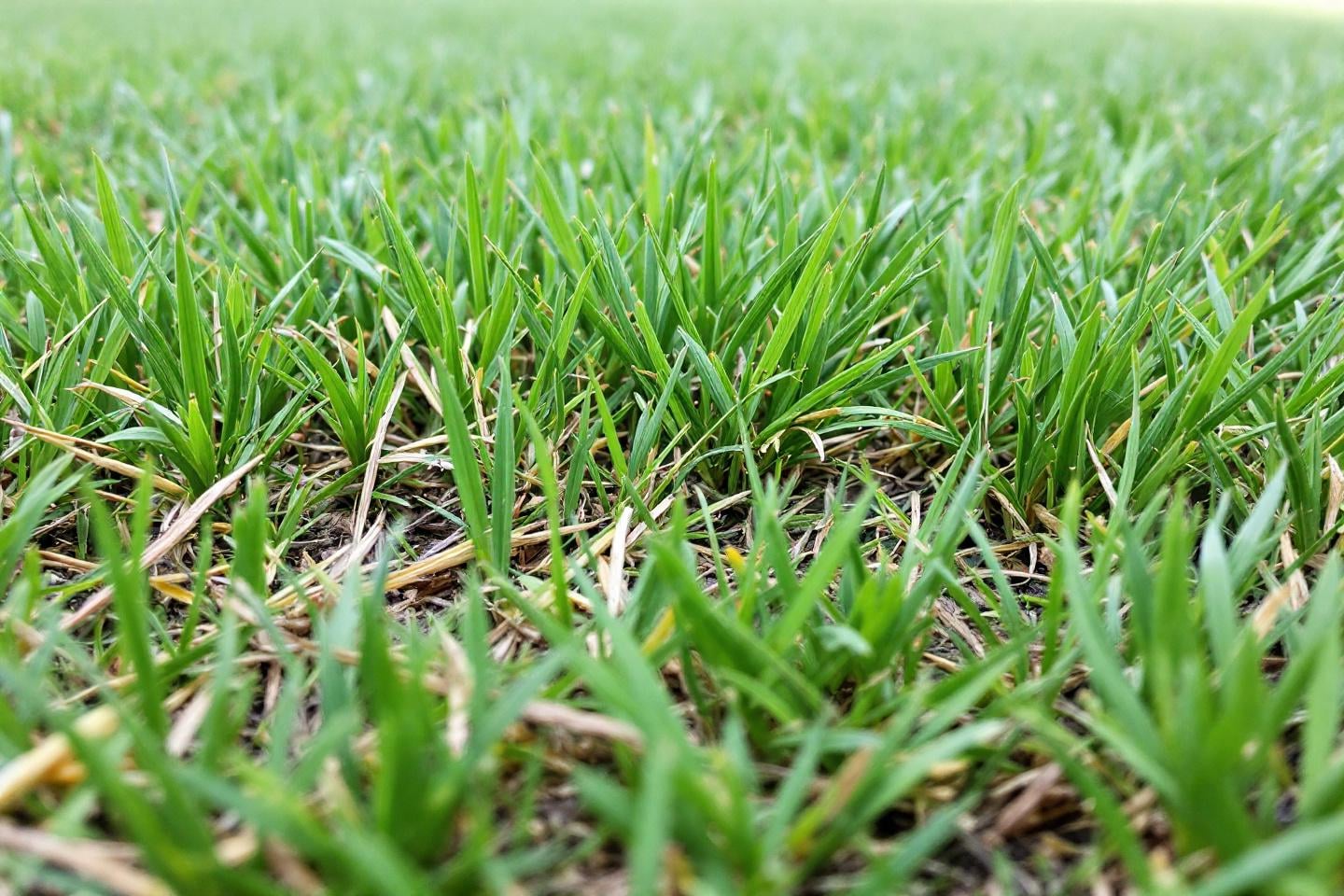
The costly summer slip-up
When temperatures climb, the fastest way to a thirsty, yellow lawn is a **scalping** cut. Shaving grass too short exposes tender **crowns** and dries the soil surface at speed. The result is **scorched** blades, patchy texture, and a lawn that gulps **water** without recovering.
Grass is a living **canopy**, and its leaf area is your lawn’s built‑in **shade**. Remove too much leaf and you lose evaporative **cooling**, root protection, and the plant’s energy‑making **engine**. In heat, recovery slows, so every harsh cut multiplies **stress**.
Set the right height before the first heatwave
Two weeks before forecasted heat, raise the mower to a **summer** setting. For most cool‑season mixes, aim for **6–8 cm** so the canopy shields soil and keeps roots **humid**. This higher cut trims growth while preserving **reserves** that power survival.
Follow the one‑third **rule**: never remove more than one‑third of the blade at a **time**. That gentle approach limits shock and sustains **photosynthesis** during stressful **spells**. If your lawn is already tall, step down in **stages** across two or three light **cuts**.
Sharpen, time, and mulch your way to resilience
A sharp blade makes a clean **shear** that heals quickly and loses less **moisture**. A dull blade tears **tissue**, browns the tips, and invites summer **disease**. Sharpen or replace blades at the start of the **season**, then check mid‑summer for edge **wear**.
Mow during cooler **windows**, ideally late afternoon or early **evening**. Avoid midday passes that compound **heat** stress and scorch delicate **crowns**. Leave fine clippings as light **mulch** to shade soil and recycle quick **nutrients**.
Water like a pro, not like a sprinkler
Deep, infrequent watering builds deeper **roots** and steadier **color**. When allowed, deliver a single soaking that reaches 12–15 cm of **soil**, then wait until footprints linger before the next **cycle**. Early morning reduces wind **loss** and fungal **risk**.
Skip daily spritzes that create shallow **habit** and higher **thirst**. Pair watering with taller **mowing** to cut evaporation and preserve soil **coolth**. If restrictions apply, the higher setting becomes your primary **defense** against drought **burn**.
Feed lightly and choose the right species
In late spring, apply a slow‑release, low‑nitrogen **feed** to prevent surge‑and‑crash **growth**. Overfeeding in heat pushes lush, weak **leaf** that wilts at the first hot **gust**. A measured approach supports **roots** without spiking **thirst**.
Overseed thinned areas with drought‑tolerant **blends** like tall fescue or fine **fescues**. These species maintain cooler **crowns** and steadier **color** through extended **warmth**. Diversity adds built‑in **resilience** to changing **weather**.
“Raise the height, sharpen the blade, and let the clippings work—those three simple moves are your lawn’s summer insurance.”
Find the summer rhythm, then protect it
Match mowing frequency to actual **growth**, not the calendar **date**. In wet bursts, mow every 7–10 **days**; in dry spells, stretch to two **weeks** or pause entirely. Consistency beats aggressive, irregular **cuts** that deplete plant **reserves**.
When the canopy looks **dull**, blades feel brittle, or footprints **linger**, skip the mow. Those are stress **signals** that call for rest, shade, and a higher **deck**. Patience today prevents bigger **repairs** tomorrow.
Small upgrades with big payoffs
Core aeration in spring or autumn opens compacted **soil** and deepens **rooting**. A light topdressing of compost improves **structure** and summer **moisture** holding. Together, they turn every liter of water into more lasting **coolth**.
Edge beds to reduce weed **creep**, and raise wheel paths on high‑traffic **lanes**. Redirect foot traffic with pavers to limit **compaction** in the hottest **weeks**. Every pressure you remove frees the plant to stay **green** and calm under **heat**.
Pre‑heat checklist
- Lift the mower to a safe summer **height** and follow the one‑third **rule**.
- Sharpen blades for crisp **cuts** and fewer brown **tips**.
- Switch to deep, morning **soaks** rather than frequent light **sprays**.
- Leave fine clippings as moisture‑saving **mulch** after each **mow**.
- Feed lightly with slow‑release **nutrients** that favor steady **roots**.
- Overseed thin spots with drought‑tough **varieties** for blended **resilience**.
- Pause mowing during extreme **heat** or visible plant **stress**.
What to stop doing—immediately
Avoid ultra‑low **cuts** that bake crowns and strip natural **shade**. Skip erratic marathon **mows** after long gaps that shock **tissue**. Drop daily sprinkling that drives shallow **roots** and summer **thirst**.
Resist high‑nitrogen, mid‑summer **feeds** that push soft, scorch‑prone **growth**. Save heavy work for cooler **shoulders** of the **season**. Calm, consistent care beats crisis‑driven **fixes** every **time**.
The method that keeps color without waste
Protect leaf area with a taller, steady **cut**, and your soil stays **cooler** with less evaporation. Combine that canopy with deep, well‑timed **watering**, and the lawn holds its **green** through heat spikes. Add sharp blades and light **mulch**, and recovery becomes predictably **swift**.
This is the quiet **discipline** behind every resilient **lawn**: height, rhythm, and gentle **inputs** aligned to weather and plant **signals**. Practice it before the first **heatwave**, and you will glide through summer with a lawn that stays **dense**, soft, and far less **thirsty**.

Contact details
Address:
Farmers Forum,
36, Dominick Street,
Mullingar,
Co. Westmeath,
Ireland
Phone:
+353 (0)44 9310206
Or email us:
For technical issues please check out our FAQ's page or email - [email protected]
For general Queries email - [email protected]
Request to add event to our Calendar - [email protected]
Send us your mart reports - [email protected]
Suggestions and feedbacks - [email protected]
News Items / Press Release - [email protected]
To Advertise on Farmers Forum - [email protected]