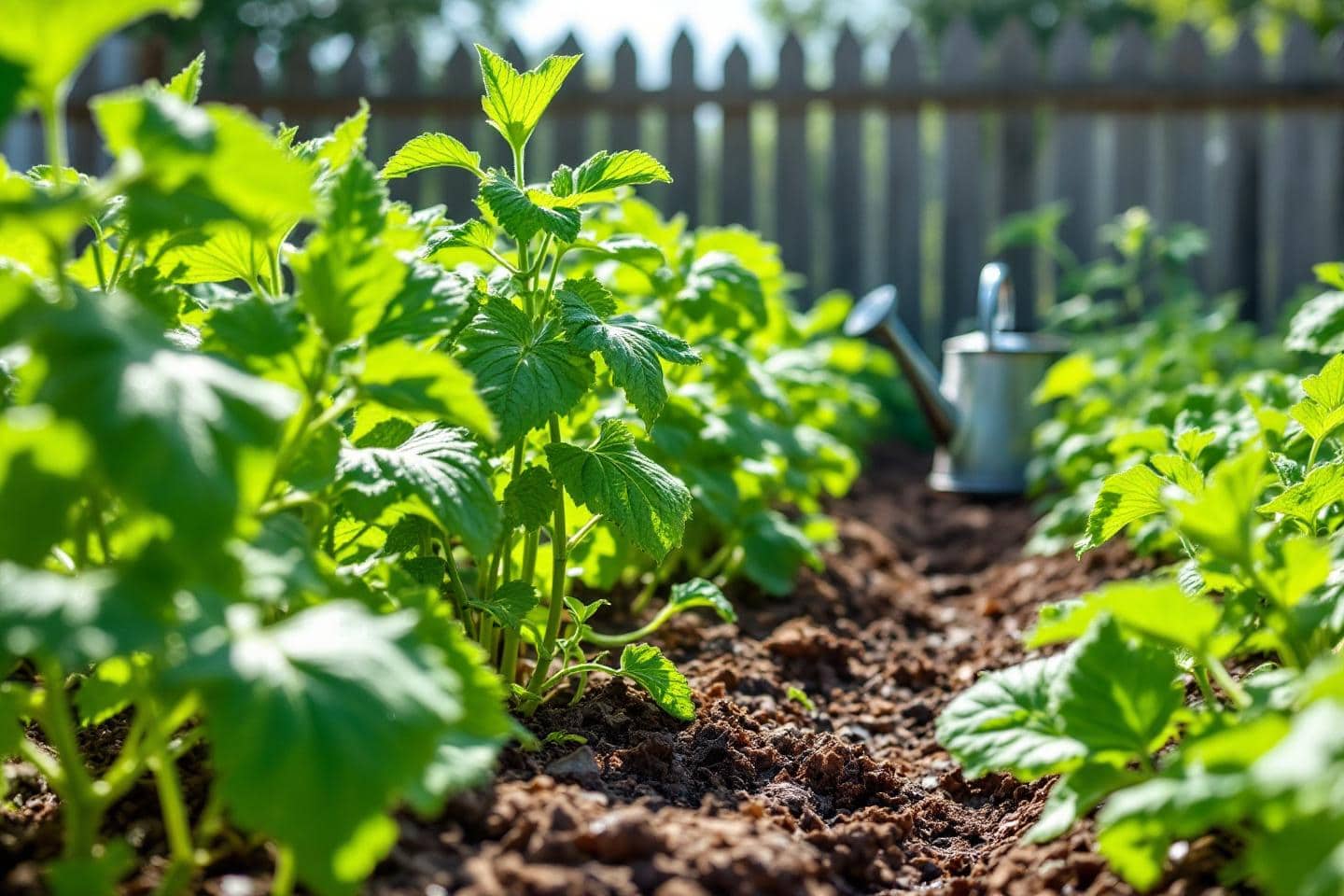
Read the heat like a gardener-scientist
When temperatures soar, your soil becomes a battery that stores and radiates heat. That surge drives fast evaporation and deep stress, especially for shallow-rooted crops like lettuce, radishes, and spinach.
Watch for early distress: drooping leaves at noon that don’t recover by dusk, dull color, slowed growth, and sunscald on fruits. Catching these cues early keeps plants vigorous and harvests steady.
Watering that works in scorching weather
Arid days reward timing, technique, and water temperature. Predawn irrigation saturates the soil when wind is soft and evaporation low, giving roots a full morning to drink before the sun bites.
Use gently warmed water from a can left out overnight to avoid cold-shock at the root zone. With the right rhythm, you’ll save water and protect cellular function.
- Aim water at the root zone, not the leaves, to reduce fungus and waste.
- Pulse-soak in two rounds for deeper penetration and fewer surface runoffs.
- Place porous ollas or buried pots for slow, targeted release.
- Cluster thirsty crops to simplify lines and conserve pressure.
- Mulch immediately after watering to lock in moisture and cool the surface.
Mulch that feeds and cools
Mulch is your living shield, capping soil to reduce evaporation and heat sway. A 5–8 cm layer of grass clippings, shredded leaves, or ramial wood builds a cooler microclimate and steadier moisture.
Comfrey brings rare power to this mix: its leaves are rich in potassium and trace minerals, releasing nutrients as they wilt. Lay slightly wilted comfrey around tomatoes, courgettes, and potatoes for a steady feed and a moist, cushioned root zone.
Layer for resilience with comfrey
Alternate thin layers: comfrey, then light grass, then straw for airflow and slow decay. This mosaic curbs crusting, invites worms, and levels out midday spikes.
Expect cooler soil, less erosion, and tangible savings on water through the fiercest weeks. Your beds stay loamy, and roots keep exploring deeper.
Shade that breathes
Temporary shade prevents scorch without suffocating leaves. Hooped cloth at 30–50% shade, a simple parasol, or a draped sheet can blunt harsh rays while preserving airflow.
Crucially, keep vents open and edges loose so heat can escape. “Water at dawn, mulch by noon, harvest at dusk—let the sun do the rest.”
Plant mixes that make their own weather
Diverse beds buffer extremes. Tuck basil under tomatoes, interplant marigolds and nasturtiums, and weave chives among leafy greens to build living canopies.
Dense foliage casts mottled shade, slows wind at ground level, and stabilizes humidity around tender tips. Pollinators arrive for flowers, then linger to set fruit.
Small daily habits, big summer gains
A quick evening walk-through yields wins: remove damaged leaves, pick ripe fruits, and nip excess shoots to rebalance demand and supply. Light pruning on tomatoes lifts airflow and shifts sugars back to fruit.
- Harvest in the cool morning for crisper, longer-keeping produce.
- Keep a rotating mulch stash to top up thin, sun-baked spots.
- Log waterings and heat spikes; patterns guide smarter timing.
Soil prep that pays off in July
Spring work underwrites summer calm. Deep loosening and compost build structure that holds both air and moisture, so roots run farther and cope with daylong heat.
Think of organic matter as your reservoir: it buffers drought, fuels microbe life, and turns each watering into a longer benefit.
When heatwaves linger
If the mercury stays high, scale up protection. Add removable awnings, group containers for mutual shade, and switch to evening top-ups on extreme days after a predawn soak.
Consider quick-sown cover crops post-harvest to shield bare soil and bank organic matter for the next round.
From heat to harvest
Summer success isn’t louder effort, it’s quieter precision. Early water, warm to the touch; mulch that feeds while it cools; shade that breathes instead of trapping heat.
Blend tradition with nimble observation, and your beds stay crisp, productive, and sweet through the fiercest weeks. The result is a garden that feels alive, even when the air feels ablaze.

Contact details
Address:
Farmers Forum,
36, Dominick Street,
Mullingar,
Co. Westmeath,
Ireland
Phone:
+353 (0)44 9310206
Or email us:
For technical issues please check out our FAQ's page or email - [email protected]
For general Queries email - [email protected]
Request to add event to our Calendar - [email protected]
Send us your mart reports - [email protected]
Suggestions and feedbacks - [email protected]
News Items / Press Release - [email protected]
To Advertise on Farmers Forum - [email protected]