On April 26, 1986, Reactor 4 at the Chernobyl nuclear power plant exploded, prompting the evacuation of more than a hundred thousand people and the creation of a vast exclusion zone, which has since evolved into a true sanctuary for wildlife.
A Thriving and Rare Wildlife
To assess the animal diversity around the site, researchers relied on camera traps. It turned out that the area hosted populations noticeably larger than those in the nearby Drevlianskyi nature reserve and surrounding unprotected zones, and it also stood out for the presence of rare species, such as Przewalski’s horses, lynxes, moose, red deer, raccoon dogs, and brown bears.
Contrary to what the team expected, higher occurrences of more common species, such as red foxes, renowned for their remarkable adaptability, were not evident, suggesting they are less affected by human activities.
Just submitted our latest paper on @NERCscience #Chornobyl wildlife camera trap work – this one in on wildlife in the Red Forest over the year following an extensive #wildfire which impacted the site in 2016. Fingers crossed & watch this space. pic.twitter.com/ztQIjBHqXv
— Prof Nick Beresford (@radioecology) October 7, 2022
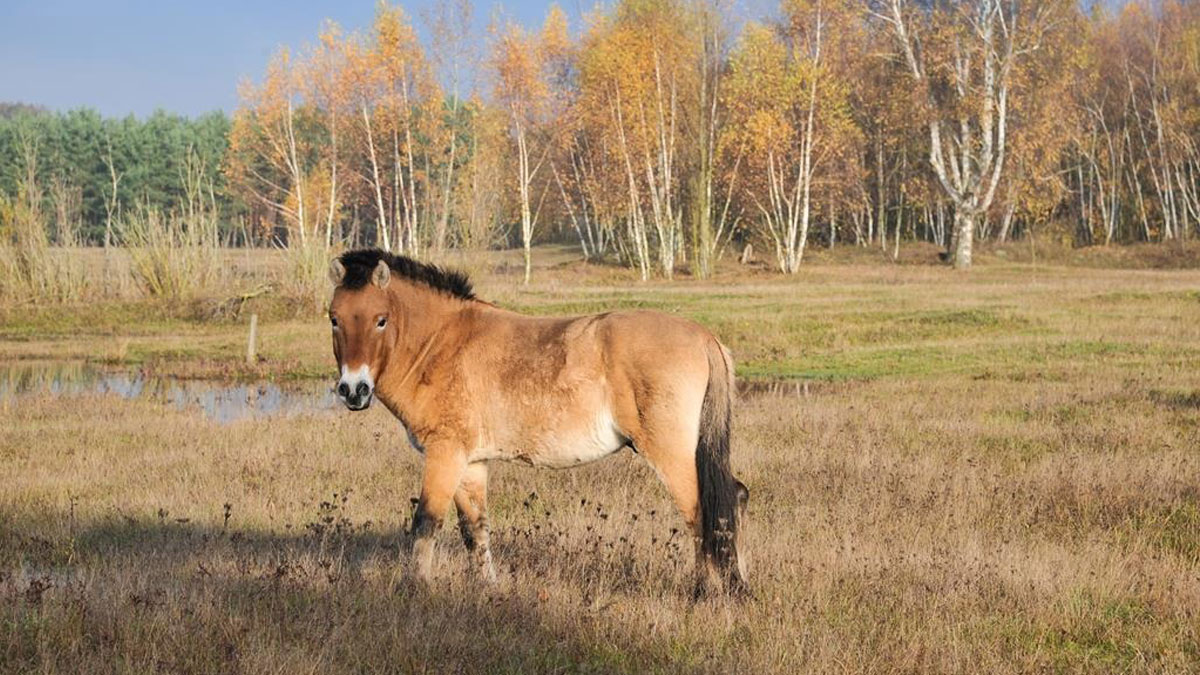
Przewalski’s horses constitute a particularly striking example. Once declared extinct in the wild by the late 1960s, they were reintroduced in parts of Ukraine in the late 1990s. In total, more than a thousand photographs of these equids have been taken in the Chernobyl Exclusion Zone since 2016. As with brown bears, there have been no sightings outside of the exclusion zone during this period.
According to the team, whose work is published in the journal Proceedings of the Royal Society B, this situation could be linked to a recent ecological upheaval. “It is likely that after the massive wildfires of 2020 and 2021, the lush vegetation that developed on these nutrient-rich soils drawing large numbers of ungulates such as the Przewalski’s horse and the red deer,” says Svitlana Kudrenko, the lead author of the new study.
An Accidental Eden: Chornobyl Has Become A Wildlife Refuge For Extremely Rare Animals, Including Przewalski’s Horses.
40 Years after the disaster, new images show how wildlife, including 11 large mammal species, is thriving in the Chornobyl Exclusion Zone. https://t.co/bvJQzecGa9— Louisa Pearson (@louisa1000) May 24, 2026
The Radiation Question
Although Kudrenko and colleagues did not investigate the effects of ambient radioactivity, they reference earlier studies that concluded these have only a minimal impact on the zone’s mammal populations.
In 2024, research even showed that the Chernobyl gray wolves possessed a immune system different from nearby populations, with mutations similar to those seen in humans undergoing radiotherapy, potentially reducing cancer risk.
Illustrating the exclusion zone’s unique profile, the latest observations also have implications for the global conservation of wildlife. “Like many others, our work highlights the importance of large areas to ensure the persistence of rare species,” concludes Kudrenko.
Last year, a study concluded that thousands of hectares around Chernobyl could safely be cultivated again.

Contact details
Address:
Farmers Forum,
36, Dominick Street,
Mullingar,
Co. Westmeath,
Ireland
Phone:
+353 (0)44 9310206
Or email us:
For technical issues please check out our FAQ's page or email - [email protected]
For general Queries email - [email protected]
Request to add event to our Calendar - [email protected]
Send us your mart reports - [email protected]
Suggestions and feedbacks - [email protected]
News Items / Press Release - [email protected]
To Advertise on Farmers Forum - [email protected]