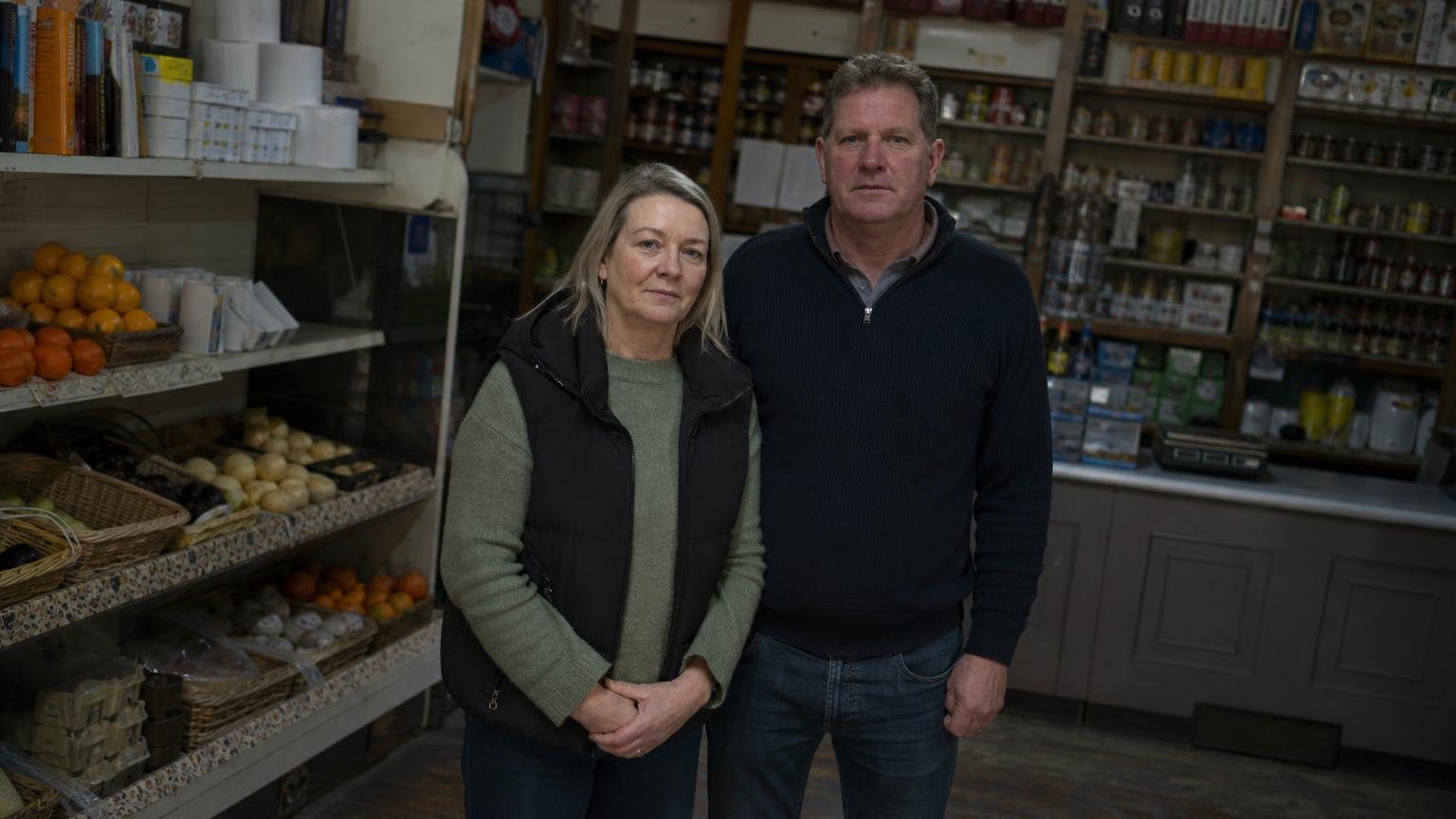
The metal shutter groaned, a stubborn grey tongue rolling up to reveal a narrow doorway and a dusty bell that still remembered names. After four silent years, a small shop in a Roscommon village took a breath again, coaxed back to life by a couple from Kinnegad who thought they were buying a business and discovered they were rescuing a habit.
They moved the old fridge, scrubbed shelves that had stopped believing in customers, and pressed the light switch like a prayer. “We didn’t come for the profit,” one of them said, smiling past the tally of bills, “we came because a village without a shop loses its place.”
Four years of quiet
In the first week, people stood at the threshold, reluctant and hopeful, as if the bottles and biscuits had been arranged for a wake. The bell chimed for memories, not for impulse buys. A farmer asked after stamps, an older neighbour asked for bread “with a proper crust,” and a teenager pointed at the freezer like it was a museum.
Before they arrived, the only commerce was conversation, the trade of favours and lifts. “You forget how far a litre of milk can feel when there’s no shop within walking distance,” the couple said, their hands still inked with marker from reorganising the aisles.
The decision nobody expected
They saw the For Sale sign on a rainy Sunday, weeks after deciding not to take on anything big. Yet the idea tugged like a loose thread. “We told ourselves we’d keep the lights on for a year, just to see who still comes,” they said. Friends called it daft, family called it brave, and the solicitor called it a “modest acquisition with significant risk.”
The building came with a rusting ice-cream sign and a ledger that trailed off mid-sentence. They brought a card machine, a kettle, and a willingness to stock what people asked for, even when the margin looked like a whisper.
The numbers that don’t add up
By the third week, the romance met the till. “We take less in a week than we used to in a day,” they admitted, turning the receipt spool like a rosary. The electricity meter blinked its quiet warning, and the wholesaler’s invoice seemed to swell with every new delivery of bread and bleach and tea.
“Profit doesn’t turn the key in the morning,” one of them said, “the bell does.” Still, the arithmetic is stark: a hundred cups of coffee won’t fix a roof or fund a payroll. “We knew it would be tight,” they added, “we just didn’t know tight could be this thin.”
What a little shop becomes
They learned the rhythms of weather and wages, of pension day and the school-run rush. They added a tiny corner for local produce, and a ledge where someone can write a small note or leave a lost glove.
- Fresh basics each morning, a little coffee window, seasonal treats, a noticeboard where lifts, gigs, and missing pets find answers
People come for milk, and stay for news. A mother buys plasters and a minute of quiet. Two lads argue over crisps and the meaning of fizzy. A man orders a birthday card, then tells the story he’s been carrying all week.
Community as inventory
On Saturdays, the door opens again and again, not with the urgency of a supermarket queue but with the pace of a field gate. “You’ve made the place feel awake,” an elderly neighbour told them, slipping coins into a palm like a small blessing. Another arrived with eggs, apologising for the odd sizes, and asked if the shop could keep a box by the counter for charity raffles.
The couple started a pay-it-forward tab for coffee and bread, a quiet pot that never stayed full for long. “We’re not saints,” they insisted, “we’re just trying to keep the door open long enough for the habit to come back.”
Small bets, big weather
They plan by the forecast now. If the rain holds, they’ll push out a chalkboard and a plate of scones. If the sun breaks, the freezer mustn’t be empty. They learn the names of dogs and tractors, the precise way Mrs. D likes her brown loaf, the hour that teenagers descend like cheerful weather.
“Rural life is not a trend,” they said, stacking tins into a small skyline. “It’s a long conversation, and lately it’s been one-sided and thin.” When asked what keeps them going, they looked at each other and said, almost at once, “The faces by the door.”
What it costs, what it gives
It costs early mornings and late ledgers, weekends shaped by deliveries and a fridge that sulks without warning. It costs a kind of worry that lodges in the chest, tightening with every gust of news about energy prices and rising wholesale rates.
Yet it gives names, and a map drawn in footsteps across a single threshold. It gives the sound of the bell when a child spends their first earned coin, and the way someone says “put it in the book” with a trust that feels like a handshake.
They are not sure about five years from now, but they know about tomorrow. Doors open at eight, scones at ten, milk before it runs out. “Maybe the takings will catch up,” they said, “but until then, we’ll keep the light on, and the bell ready to ring.”

I mean, they probably were hoping for the location to be I
Included!
Would love to know what village in Co. Roscommon where this shop is.
Really well written articles, the hook attracts and the line lingers right to the end, I’m hanging on waiting for a place name to surface, but it’s doesn’t!. Yet I’ll read another article next week
Interested to know where this shop is situated ..would love to support them
I really enjoyed your piece above . So well written that it transports me completely to the setting . Thank you
Where is the shop? I want to go there to support them
Very brave couple and I truly hope they make enough to stay open and enjoy their venture but surely you should name the village so that people would come and support them
Great snapshot of life in a rural town, more of a short story than an article, I really enjoyed it.
Wishing the couple and their enterprise every success.
Beautifully written and captivating article. Wish the couple well.
I agree. A well written piece but should include the location. It makes me think that it is fictional. Also people who live nearby may not know the shop has reopened.
What is the name of the Town?
Well done it takes time for people to re ajust to a personal service. Locals will meet and look out for each other . Welcome back the family shop. I was that solider.
Where is this shop?
A beautifully written article. The village shop is such a necessary node in a rural village. Often family politics and tribal loyalties get in the way of them being profitable.
I’d love to know where the shop is. We’d have a drive out to enjoy the surroundings and make purchases at the shop. There’s a closed down village shop 3 miles from us and it’s so forlorn when you drive past it.
What’s on everyone’s lips.. where is it, so we can go?
A most interesting account of the life of a small rural shopkeeper trying to revitalise a rural village. Well done to that couple, I hope that the local population will support them and enable them to realize their dream in providing a much needed service to this village. Would it be a good idea to mention the location as I am very sure that they would be strongly supported by a lot more customers if the location and the range of services were highlighted. I wish them success.
Beautiful writing, thank you. But, like others, i expected the town and shop name to be revealed. Go in.. spill the beans, you can’t eat words, however articulate they are.
Beautiful writing, thank you. But, like others, i expected the town and shop name to be revealed. Go on.. spill the beans, you can’t eat words, however articulate they are.
I’m from Roscommon and I haven’t a clue where this is. I’d love to know
As everyone else has stated…… great article….. very well written….it draws you in and you’re waiting for the location to be revealed….. but you’re just left hanging…..???
Most people would like to know where this shop is located so that they could support this wonderful couple!