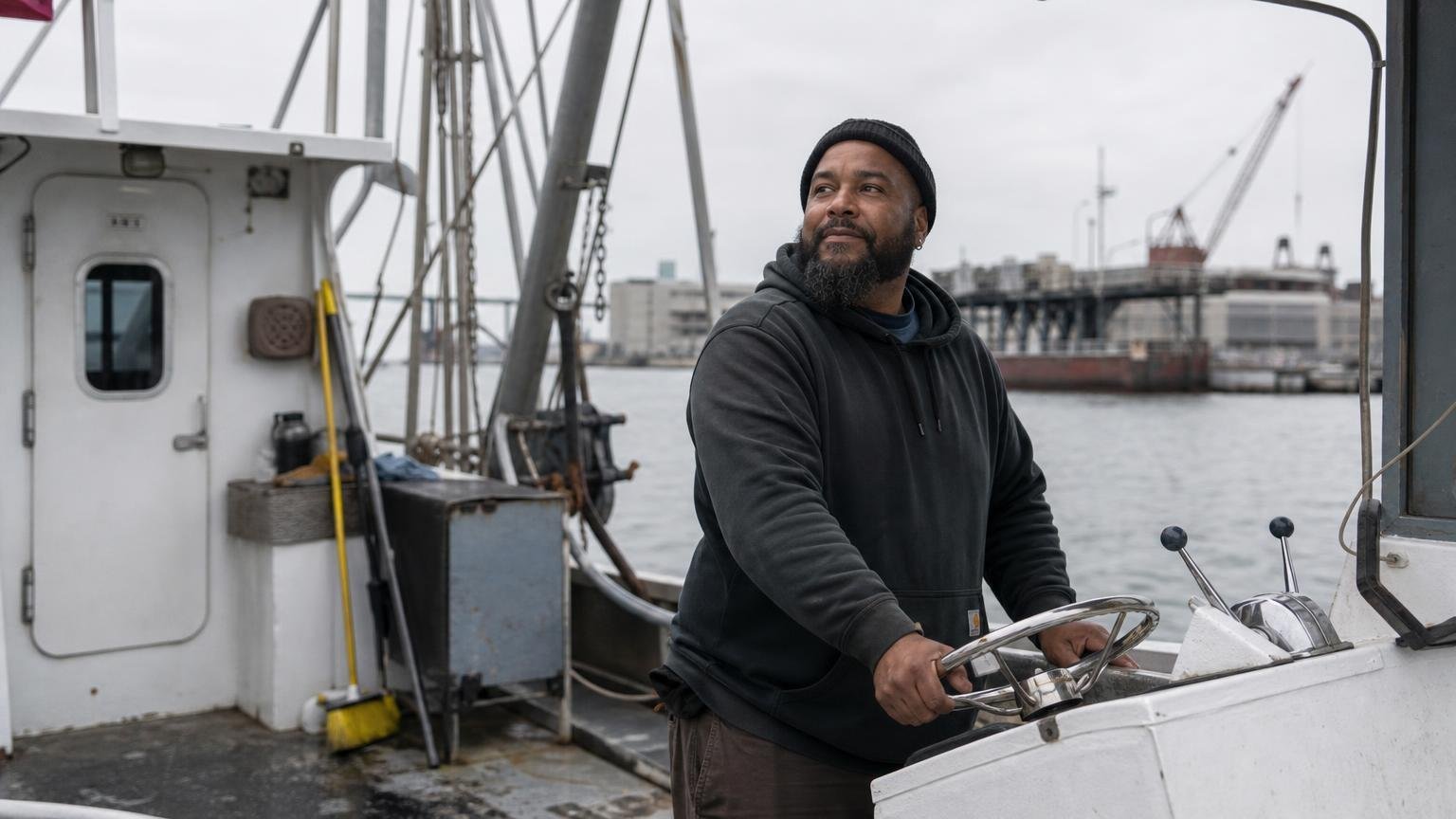
He used to coil lines in the dark, boots slick with brine and diesel, eyes on another man’s wheel. Now the wheel is his, and the dockhands look to his nod before the boat eases off the piling.
The Patapsco’s brackish breath rises each morning, gulls tracing white slices above the Domino Sugar sign. In that light, a battered 46-foot deadrise called Evelyn Marie lifts and settles, the same rhythm she’s kept for decades, only with a new name on the paperwork and the same hands on her rail—finally promoted by the weight of a signature.
Twelve Years of Apprenticeship
He started as a kid, nineteen and stubborn, hired because he would show up early and shut up late. He learned knots by feel, wakes by sound, and the harbor’s moods by the way wind wrinkles the channel near Fort McHenry.
“Twelve years on the deck will build your back, but more than that, it builds a map inside your head,” he says. “You stop seeing water, and start seeing what water is planning to do to you.”
Most seasons blurred into others, measured by bait prices, zinc anodes, and whether the starter would turn on the third crank or the fifth. The old skipper cursed in whispers and taught in silence, testing with a lifted eyebrow instead of a raised voice. Somewhere in that long slow education, the mate became the memory of the boat.
The Day the Keys Changed Hands
When the owner grew tired, he didn’t post a listing or haggle the highest bidder. He folded a napkin in Fell’s Point, scribbled three numbers, and slid it across a wet table. “You already run her,” he said. “Might as well run everything.”
It took a community lender, a scraped-together down, some seller financing, and a promise to keep the name and the crew. Paperwork felt more foreign than foul weather, and every signature weighed like a storm front on the barometer.
“I used to carry the lines,” he says. “Now I carry the risk.” He laughs, a sound like a backing alarm, half warning, half joy.
Learning to Lead from the Wheel
Leadership at sea is half voice, half silence. He keeps the old habits—coffee at four, tools on the port bench, no music before sunup. But he changed the tempo. Orders come clean, hands move steady, and nobody gets rushed past their limits.
“Confidence is a tone,” he says. “If you sound sure, the boat stays sure. If you sound thin, the wind hears you.”
On the first week as skipper, the throttle cable stuck abeam of Fort Carroll, tide pushing nasty against a starboard quarter. He didn’t shout; he breathed and used the rudder, backing and filling like he’d practiced in his head a hundred times. The crew watched the wake turn articulate, a white sentence finishing itself on the water.
The Business Hidden in the Bilge
Owning a workboat is part ship, part spreadsheet. He learned to price charters, chase invoices without embarrassment, and read the engine like a ledger. Oil speaks, paint testifies, and the alternator writes its own margins in the squeal of a cold belt.
Baltimore gives and demands. Summer brings tourists and tips, autumn brings stripers and the long thin light that flatters everything. Winter is for haul-outs, new hoses, and the stubborn ambition of re-bedding hardware that hasn’t moved since Carter was in the White House.
“What’s success,” he muses, “if not paying the yard on time and getting home before your kids fall asleep?”
What He Kept, What He Changed
- Kept the name and the routes; changed the pricing and the paperwork. Kept the coffee and the dock jokes; changed the filters and the shore-power routine. Kept the old flag; added a new radio and a second VHF because redundancy is a prayer you make to the Bay.
The Boat’s Heartbeat
The diesel still coughs its first note like a bar band testing the amp. He palms the wheel, listens for that faint harmonic that means the shaft is dead true. The bilge pump clicks with conviction, a metronome he doesn’t want to hear too often.
On windy days, the harbor cuts teeth, little white snarls beneath the Key Bridge. He trims by instinct, adding a degree of rudder, sliding the stern into the lee of a bulk carrier like a sparrow stealing a ride on a giant’s wake.
“The Bay will forgive your mistakes,” he says, “until the day she won’t. That’s why you fix what isn’t broken and check what’s working twice.”
Harbor as Teacher, Boat as Home
Cities teach speed, but water teaches patience. He measures progress in wakes that settle clean, lines that come off a cleat without chatter, crew who stop looking to the shore for comfort and find it in each other.
The Evelyn Marie is work, but also home. There’s a pan on the gimbal, a photo taped near the compass, and a lucky coin under the throttle base. Small rituals anchor big days.
He doesn’t make speeches or count followers. He counts safe departures and safe returns, the arithmetic of a harbor life. Some mornings the gulls sound like they’re mocking him; some evenings they sound like they’re cheering.
And on a clear night, with the city soft and distant, he kills the engine, lets the hull tick like a cooling watch, and remembers the first time he stood here, a kid with salt on his sleeves, dreaming of a wheel that felt this solid and a future that felt this real.

Contact details
Address:
Farmers Forum,
36, Dominick Street,
Mullingar,
Co. Westmeath,
Ireland
Phone:
+353 (0)44 9310206
Or email us:
For technical issues please check out our FAQ's page or email - [email protected]
For general Queries email - [email protected]
Request to add event to our Calendar - [email protected]
Send us your mart reports - [email protected]
Suggestions and feedbacks - [email protected]
News Items / Press Release - [email protected]
To Advertise on Farmers Forum - [email protected]