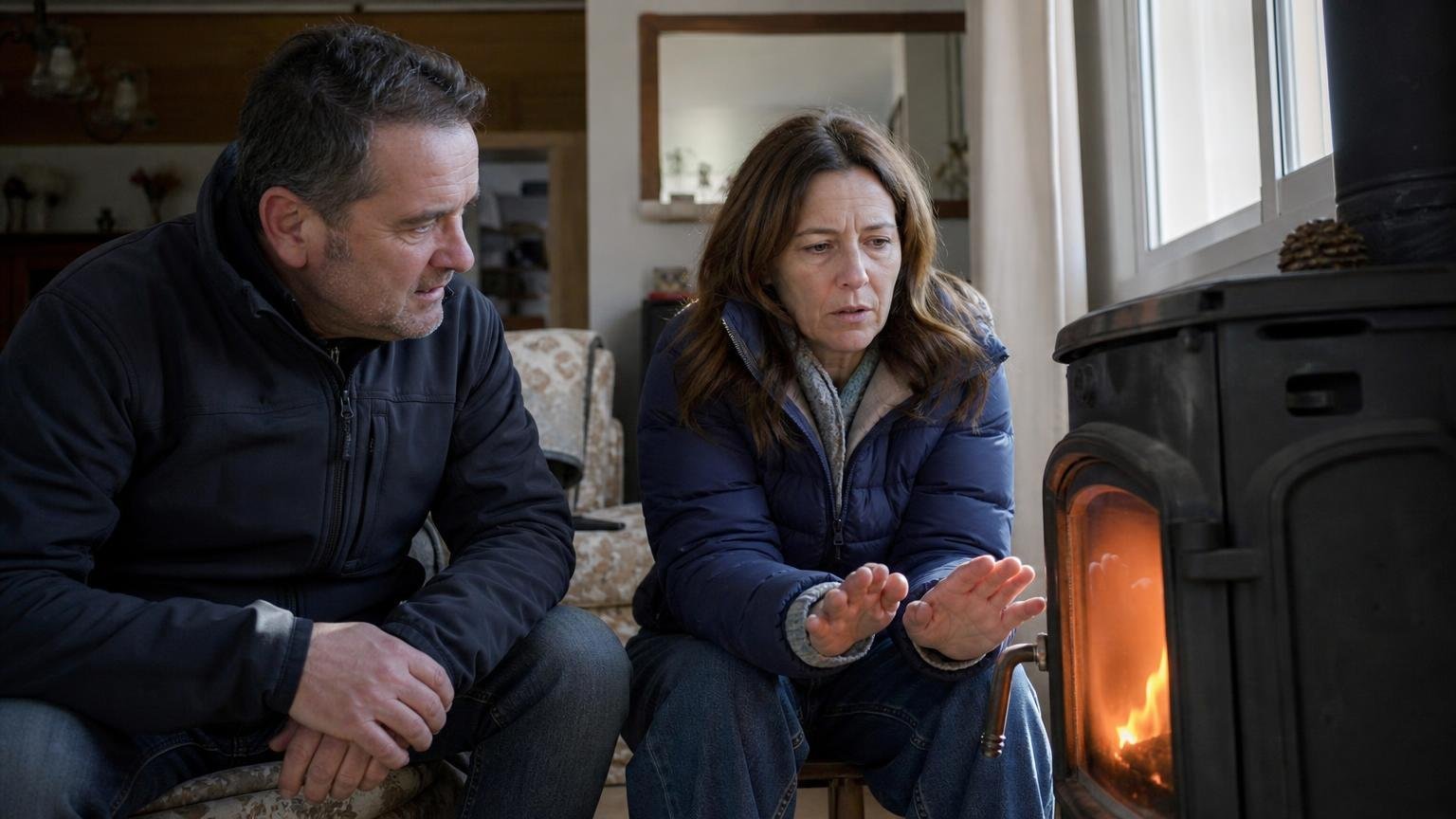
They left harbor winds and harsh rain for orange groves and pale stone, and thought the greatest test would be the blazing months. Two years on, from a small village outside Valencia, they laugh: “The summer behaved. The winter didn’t.”
Sun-chasers who learned to love fleece
On paper, the temperatures looked kind. Ten or twelve degrees in January after years of Cork’s squalls felt generous. Yet the first December brought a different cold—one that lived inside the house. “We’d sit under beams and watch our breath,” Mark said, “not outside, but at the table.”
Spanish village homes are built to reject heat, not to trap it. Thick walls, tiled floors, and shuttered windows keep July’s furnace at bay, but invite damp to linger. “We learned that humidity is a trickster,” Aoife added. “It makes 9°C feel like three.”
Summer was simple; winter was the puzzle
They managed August with an easy ritual: dawn errands, drawn persianas, a toldo stretched over the patio, and late walks when the hills finally exhaled. Even the poniente, that dry wind that pushes the mercury to 40, arrived like a sharp solo, loud but brief.
January was quieter and far more complicated. “We wore slippers all day and layered blankets on the sofa,” Mark said. “Tiles feel like ice at seven in the morning.” They discovered dew inside the bedroom, condensation that beaded on the glass and crept into wardrobes. A cheap dehumidifier became a small miracle.
The unexpected costs of staying warm
The first year, they tried electric heaters and watched the meter spin. The second, they installed a pellet stove and learned the choreography of bags, ash, and glow. “A sack of pellets became our calendar,” Aoife said. “Two a week, then only one by March.”
They also met the bright orange butane cylinders—the famous bombonas—lugging them from the ferretería like cheerful anchors. Warmth here is piecemeal, a patchwork of strategies rather than one big boiler. It turned heating into a habit, not an invisible system.
What we wish we’d known about the cold months
- Buy a good dehumidifier before the first rain; it’s worth its hum.
“Twenty percent of our comfort,” Mark said, “was gear; eighty percent was timing.” They learned to open windows wide for a brief, dry gulp at noon, then shut everything when the temperature dipped. Rugs turned the acoustics from chapel to home.
Winter’s gifts we didn’t expect
Not all the surprises bit. January brought almond blossom like pale confetti on black branches. The oranges sweetened into fire, and neighbors arrived with bags heavy enough to bend your wrists. “You learn to juice in self-defense,” Aoife joked.
Village life thickened as the days thinned. Bonfires for Sant Antoni threw sparks against white walls. People warmed their hands over coals and grilled sausages, telling stories in Valencian and Spanish with equal welcome. “Winter is when the village looks up from its work,” Mark said. “You’re not hiding from the sun, so you actually meet.”
Rhythm, paperwork, and the long view
The first months were a parade of appointments—numbers, forms, and stamps—but the real settling happened through tiny rituals. There’s the 11 a.m. almuerzo, that honest sandwich and strong coffee that turns a workday gentle. There’s Sunday paella, a crisp-bottomed promise that arrives late and ends later. The calendar leans into March with Fallas, firecrackers that shake the air, but the village keeps its own quieter clocks.
They still miss Cork things: the clipped laughter of a pub on a wet Tuesday, the fast weather that scrubs the sky. But the trade has been clear. “Here,” Aoife said, “we’ve swapped constant gray for long light, and learned that comfort is something you build, not just buy.”
For anyone dreaming of a similar leap
Expect the heat, yes, but prepare for the chill that sneaks through keyholes and tile. Bring your slippers, your appetite for slow mornings, and a respectful curiosity for how things are done. Talk to neighbors early; someone will know a reliable stove installer, another a patient plumber. Learn the names of the winds and which clouds mean go to the market now.
Two years on, they don’t chase paradise; they keep company with a place. “Summer is the postcard,” Mark said. “Winter is the handwritten note on the back—the part that makes it yours.”

Contact details
Address:
Farmers Forum,
36, Dominick Street,
Mullingar,
Co. Westmeath,
Ireland
Phone:
+353 (0)44 9310206
Or email us:
For technical issues please check out our FAQ's page or email - [email protected]
For general Queries email - [email protected]
Request to add event to our Calendar - [email protected]
Send us your mart reports - [email protected]
Suggestions and feedbacks - [email protected]
News Items / Press Release - [email protected]
To Advertise on Farmers Forum - [email protected]