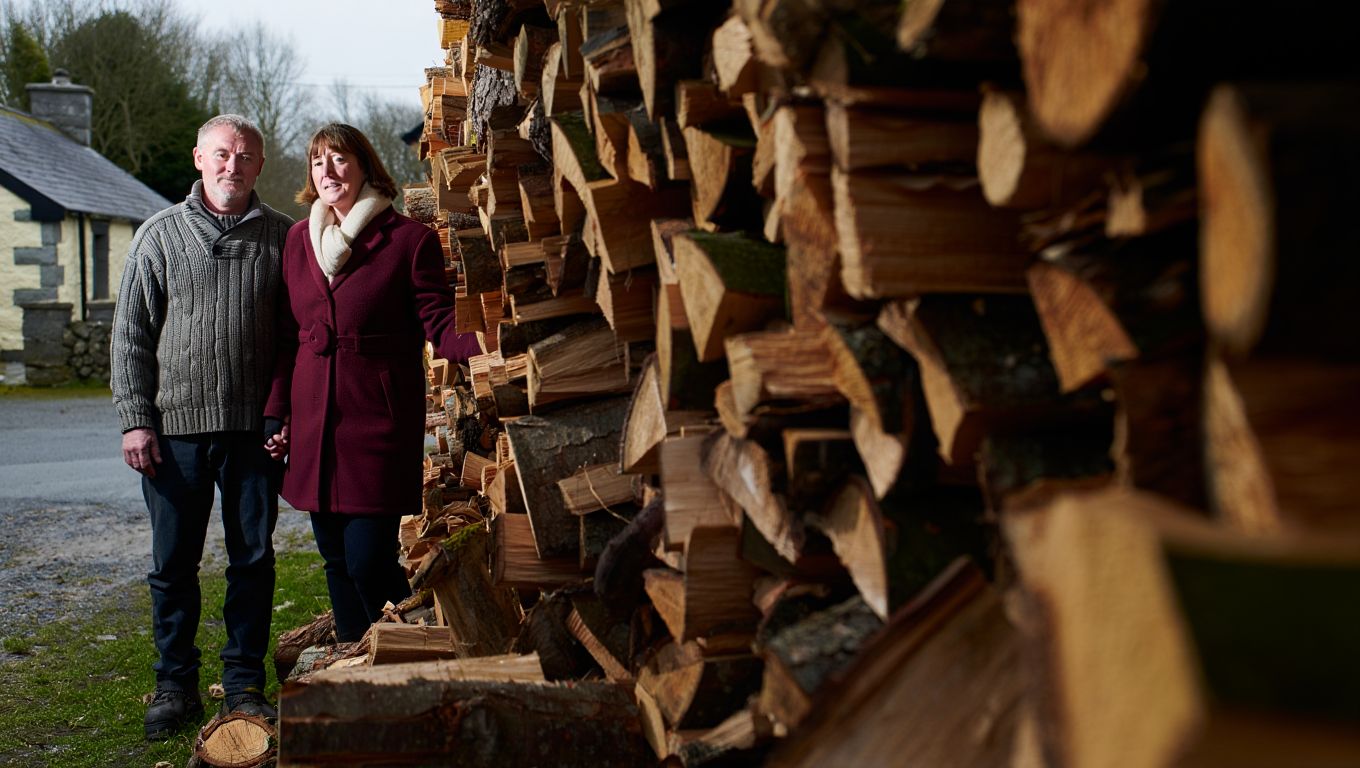
The first winter in the Leitrim hills felt both sharper and simpler. In a cottage outside Ballinamore, with a slate roof and a low stone hearth, a couple learned to count money the way they counted logs: by the stack, by the season, by what remained when the nights ran long and wet. “We used to budget on a spreadsheet,” she said, “but now we budget by the woodpile.”
Trading streets for hedgerows
They left Galway after a decade of cafes, bus lanes, and damp radiators that hissed into nothing. The move was supposed to buy silence, cheaper rent, and a view of hills that roll down toward the Shannon. “We wanted something more circular than the city’s monthly debit,” he said. The cottage had thick walls, mossy steps, and a squat stove in cast-iron black.
The first week, the postman leaned on the gate and nodded at the pile of split ash. “That’s your real bank,” he joked. They laughed then, green to the maths, bright on romance, and not yet acquainted with February.
The bills they brought and the bills they didn’t
The city had been central heating, price spikes, and an electric shower that ate kilowatts. Winter utilities ran near €220 a month for heat and light, sometimes €260 if the wind went sideways. In the cottage, the electricity hovered around €90, the mobile signal about two bars, and the thermostat—a memory. “We burned money on gas in town,” she said. “Out here we burn trees, and it feels honest.”
Yet rural life brought its own additions. The car drank more diesel. The lanes needed tyres with grip. A leaky gutter turned a corner room into a wet museum. Savings came not as a straight line, but as a weather map: some clear, some squalls, all of it moving at the speed of cloud.
The pile that changed everything
What they did not expect was how radically the wood would rearrange their spending. In the city, heat was a cost that arrived by email, due on the 15th, easily ignored until debited. In the cottage, heat sat in the yard, visible, finite, and bodily.
They learned species by feel. Ash that split like cake. Birch that flashed quick and bright. Spruce that smoked if rushed, oak that waited all summer to dry. “When you see heat as matter, you hoard it like harvest,” he said. “You don’t waste it because you can see it shrinking.”
Buying by the trailer, they spent roughly €480–€650 each winter on seasoned logs, plus the one-time outlay for a steel rack, a maul, a secondhand saw, and a moisture meter. The stove took over as central authority. Instead of turning a dial, they rose to feed it, tuned vents like instruments, and timed showers to the stove’s mood. “I can hear the ticks as the metal cools,” she said, “and that’s when I put the kettle on.”
Heat, labour, and the new rhythm
Heat demanded work. Stacking became a language between them—he split, she sorted, both of them learning the geometry of airflow. Saturday mornings meant kindling, evenings meant ash pans, and rain meant tarps pulled tight. The calendar shifted forward: order wood in August, curse yourself if you don’t. “Warmth became a practice, not a product,” she said.
There were trade‑offs. The hours they spent on fuel were hours not spent earning elsewhere, but those same hours lowered the peaks of outgoings. The stove pushed heat into the bones of the house. Rooms were arranged by temperature: reading chair near the stove, office just in its reach, spare room resigned to wool blankets and brief visits.
The numbers, softened by flame
By the second winter, their annual energy spend had fallen by roughly a third, even factoring in higher driving costs. They insulated gaps with brush strips, hung lined curtains, and discovered that a well‑timed bake doubled as room heat. “We used to pay for invisible warmth,” he said. “Now we buy it in stacks we can measure.”
The change wasn’t only in euros. It was psychological credit: the comfort of seeing six rows of logs and knowing the worst month was covered. On storm nights, the cottage felt anchored, the stove a small engine at the core.
What they’d tell anyone eyeing the lane
- Buy wood early and buy it dry; store it like you’d store your best winter food: off the ground, under cover, with air.
- Spend on a safe flue and a good moisture meter; both pay back in heat and peace of mind.
- Treat clothing as part of the heating system: slippers, wool layers, and a decent hat will save more than they cost.
- Make heat do double duty—kettle, stew, laundry air‑drying—so every log earns its keep.
Beyond thrift
Two winters in, the romance sits beside the real. There are mornings when the fire sulks and the wind sulks harder. There are splinters, damp matches, and the stubborn calculus of February. But there is also the pleasure of a room made warm by your own hands, the way a log’s heartwood flares, the late‑night glow that lingers after talk has ended.
“We didn’t move to save money,” she said, poking the embers until they blued. “But the woodpile taught us where money was leaking.” He watched the stove door fog, then clear. “Heat, it turns out,” he said, “is the most honest bill we pay.”

This is prose..maith thú
Basically turning back the clock, Many of us grew up that way.
Lovely writing.