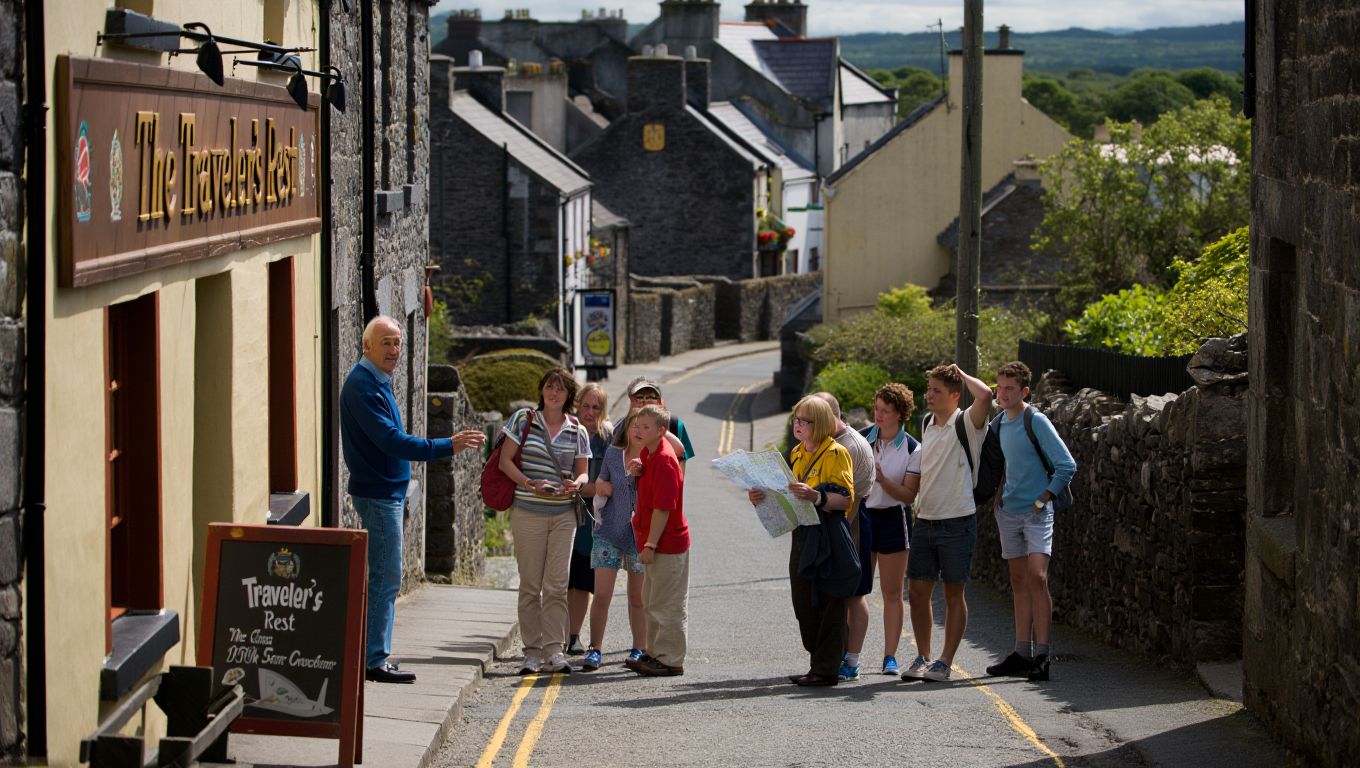
Sea light spills over stone, and the first thing you notice is the silhouette of medieval walls above a glittering lough. In the next breath you catch salt on the air, a clang from the pier, and chatter rolling down tightly packed lanes. It’s Ireland, but the mood is strangely continental—café tables on cobbles, slate roofs, and shopfronts painted in crisp pastels. “Give it five minutes,” a barman grins, “and you’ll swear you’ve wandered into Brittany by mistake.”
Where the streets feel a touch Français
What lends the town its faintly Gallic glow is a mix of scale, texture, and sea. Low stone houses tuck into the hill, windows trimmed in blues and mustards, and alleyways that lead, always, towards water. The lough lies long and silver, with fishing boats fussing at the quay, and gulls carving slow spirals overhead.
Stand by King John’s Castle and you get that postcard moment—a fortified hulk, tide-slicked rocks, and mountains rising like folded green velvet. “It’s the kind of place where your camera does all the work,” a weekend walker laughed. And then there are the town walls, stubborn and handsome, framing streets as neatly as a French bastide.
A short history written in stone
Normans left their signature here early: the Tholsel Gate still narrows traffic to a medieval heartbeat, and The Mint’s carved façade whispers of merchant fortunes. Taaffe’s Castle squats over a corner like a stone ship, all gunloops and weathered corners. Across the green, the Dominican Priory keeps its cool dignity, ivy softening buttress and arch.
Walk the surviving ramparts, and you feel the town’s original logic—defend the harbor, tax the trade, and keep a watch on the busy lough. Every view is edged with history, yet nothing feels museum-quiet. Shops clink, cafés hum, and the lanes carry an easy, lived-in rhythm.
Why August crackles
Summer builds slowly and then, in late August, everything tilts into full celebration. The Carlingford Oyster Festival pops the town wide open, sending music down streets and aromas of garlic and sizzling butter into the breeze. Stalls shine with briny shells, pints travel in practiced arcs, and children chase bubbles between clusters of happily distracted grown-ups.
“The whole place runs on a brighter voltage in August,” a fishmonger told me, shucking in a swift, wrist-flicking rhythm. There are sea swims, kayak outings, and a regatta’s bright triangles on the water, plus pub sessions that can turn a quiet Tuesday into a dancing story. Add the late light—gold on stone, blue on mountain—and you get that expansive, festival-weekend feeling.
Flavors with a briny edge
Here, oysters taste like a clean wave, with a snap of minerality and a sweet, finishing bell. Mussels come bowl-deep, fragrant with white wine and parsley, while chowders land sturdy and creamy, harboring chunks of smoked haddock and potato you could practically call architectural. Pub menus roam into slow-cooked lamb, Cooley-reared beef, and brown bread dense enough to anchor any afternoon.
“Sip a neat local whiskey, then chase it with a cold half-dozen,” a server suggested, “and watch the mountains turn violet while the lough goes mirror-still.” It’s simple food, done with crisp confidence, and portions that match the town’s generous mood.
Beyond the walls: hills, ferries, and small adventures
Hiking lifts you straight into big scenery on the Cooley Peninsula, with Slieve Foye shouldering sky and gifting those huge views—sea, Mourne peaks, and the long, folded coast. Rent a bike for quiet backroads, or drop into the lough for a cool, slate-green swim when the tide and weather smile.
To stitch the landscape together, take the Carlingford Lough Ferry between Greenore and Greencastle, a short hop that feels oddly ceremonial as mountains flank your easy crossing. The breeze scrubs your head, gulls shout their approval, and you step off feeling newly placed in the map.
Getting there and settling in
From Dublin it’s roughly 90 minutes by M1 and scenic byways, and from Belfast it’s a breezy 75 or so, traffic and coffee stops allowing. Buses get you close, but a car wins for detours—view-grabs and pastry raids at roadside bakeries. In town, sleep in a snug B&B, a Georgian house, or a boutique hotel with rooms that frame the lough like a painting on your private wall.
- Quick hit: arrive by late morning, walk the town walls, slurp your first oysters, ferry across the lough, hike a gentle loop, then settle into a music-lit pub for the kind of evening that edits itself into perfect memory.
What to pack, and what to expect
Pack a light shell, because Irish weather likes a playful swerve, and bring shoes that don’t argue with cobbles. Even in high summer, evenings can nip like a friendly fox, so an extra layer pays off. Expect friendly talk, schedules that bend in lucky ways, and a town that invites you to wander without hurry.
“People arrive for the views and stay for the vibe,” a local teacher smiled. Stand under the old gate, watch the tide roll in silver sheets, and you’ll feel it—the soft overlap of Irish character and a northern French mood, stitched together by salt, stone, and late-summer light.

Contact details
Address:
Farmers Forum,
36, Dominick Street,
Mullingar,
Co. Westmeath,
Ireland
Phone:
+353 (0)44 9310206
Or email us:
For technical issues please check out our FAQ's page or email - [email protected]
For general Queries email - [email protected]
Request to add event to our Calendar - [email protected]
Send us your mart reports - [email protected]
Suggestions and feedbacks - [email protected]
News Items / Press Release - [email protected]
To Advertise on Farmers Forum - [email protected]