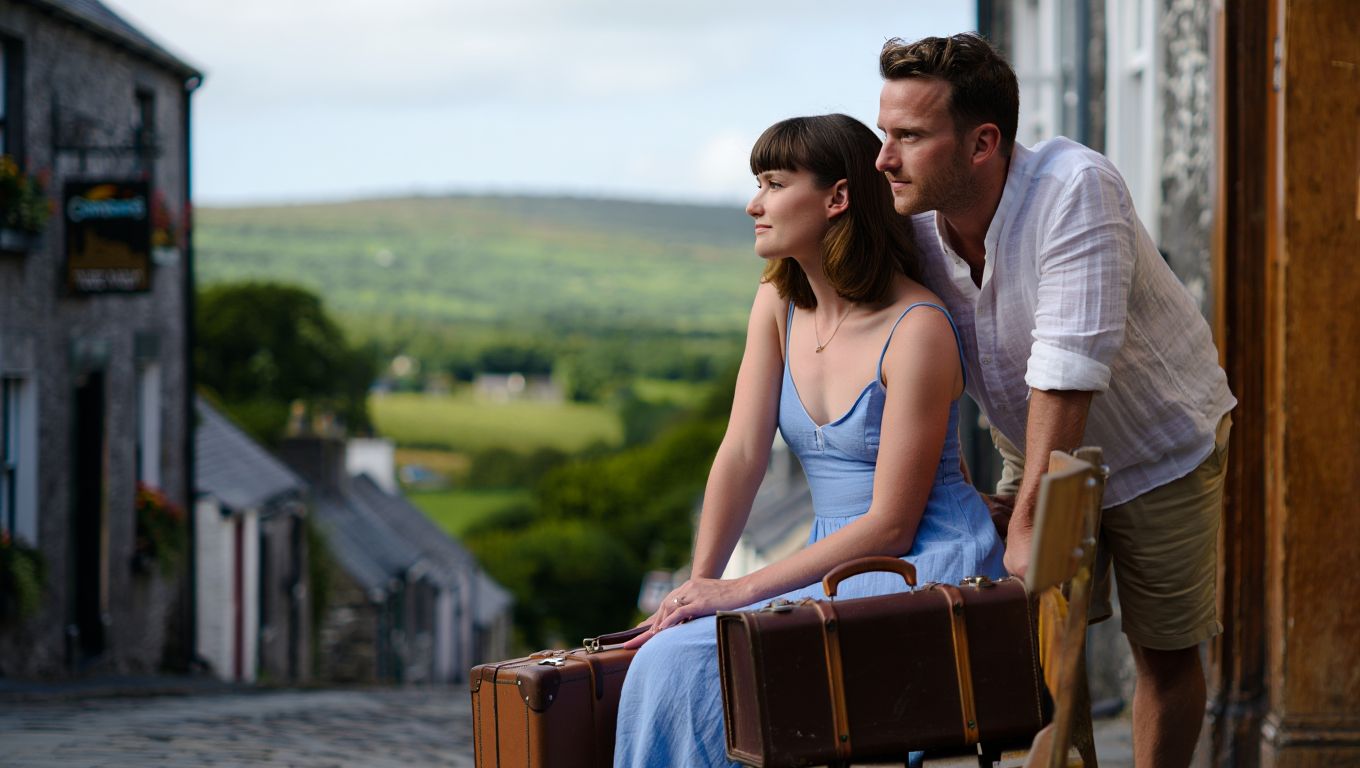
They left the city on a wet May evening with a boot full of plants and an old bicycle, following a hunch that quiet might be the best soundtrack to a long Irish summer. In County Monaghan, just past a field of buttercups and a lane lined with hawthorn, they found a village where the clock seemed to breathe. They unpacked slowly, made tea, and listened to the church bell strike seven.
Why leave when the days are longest
Dublin was never the problem. It was the pace, the thrum, the constant scroll of options. “We wanted to press pause without leaving Ireland,” Mark said, setting a jar of wildflowers on the windowsill. “We weren’t fleeing; we were curious.”
The village—Glaslough—had been a whisper between friends for years: woodland walks, a lake with a mirror-sheen surface, neighbours who still knew each other’s dogs. “It sounded like a place where summer still felt local,” Aoife added, her sandals drying by the back door.
First impressions come on foot
They walked on the first morning, past low stone walls, ivy-tucked gateways, and a bakery window fogged with the breath of fresh bread. The air carried a thread of honeysuckle, a tractor’s purl, and a distant call from the pitch. “It’s the kind of silence that isn’t silent at all,” Mark laughed. “It’s layered with small, living sounds.”
They met a neighbour who insisted they take a bag of rhubarb “or it will bolt,” and a teenager on a scooter who stopped to pet their terrier. “Monaghan hospitality is incredibly unforced,” Aoife said. “People ask where you’re from and then ask if you need a ladder.”
Work still happens, just differently
The apartment they rented has a deep windowsill that became a desk, plus a view of maple leaves and the post office. Broadband held steady through video calls, and the village café accepted laptop nomads with unfussy grace. “By four o’clock the light slants across the screen, and you realise you’ve done the day’s work without your heart racing,” Mark admitted.
Commuting to Dublin twice a month became a ritual: an early bus, a packed lunch, a playlist that began and ended with birdsong recorded on the village green. “You notice you speak more slowly in the meetings,” Aoife said. “And you listen more deeply.”
The price of time feels different
Rent was lower, but the big savings were in the margins. Evenings didn’t disappear to queues or traffic; instead they stretched toward the lake for a swim, or to the shop for strawberries that tasted like actual sun. “We’re spending less and getting more hours back,” Mark said. “It’s a very satisfying trade.”
Eating became an occasion rather than a reaction. A neighbour’s eggs, a farm gate honesty box, a picnic under a beech tree where the dog napped like a retired poet.
A community of small, steady gestures
They found the GAA pitch on a Tuesday, the library on a Thursday, and the Tidy Towns crew at a verge with hi-vis vests and great stories. “Joining in takes exactly one hello,” Aoife smiled. “Stay five minutes and someone hands you a brush.”
A Saturday market appeared like a folding theatre, with chutneys, slate coasters, and a woman selling candles that smelled like June rain. “You buy something and end up with a recipe and a tale about a cousin in Clones,” Mark said, half-delighted, half-astonished, fully won.
Nervous systems recalibrated
Mornings began with crows clasping the skyline and ended with bats stitching the dusk like quick black commas. Their dog learned the geometry of lanes; they learned the weather’s mood by the feel of the kitchen tiles. “We’re sleeping deeper,” Aoife said. “And waking with less alarm.”
They noticed how conversation unspooled in porches, how news moved on foot, how the day had edges again. “In the city, time smudged; here it articulates,” Mark said, tapping the table with a measured contentment.
What surprised them most
- The village calendar is quietly full: concerts in halls, swims at dusk, pop-up poetry.
- Nature is louder than traffic: swans, swallows, and hedgerows that practically sing.
- Slowness is not idleness: you still do plenty, you just do it with presence.
What they still miss—and don’t
They miss the cinema on a Wednesday, the late-night ramen, and the way a city can make you feel gloriously anonymous. “And my barber who understood my weird cowlick,” Mark added with theatrical sorrow.
But they don’t miss the scramble, the box-checking weekends, the sound of a neighbour’s party through two sets of walls. “Here, the loudest thing at midnight is a fox deciding if the compost is worth the effort,” Aoife said.
Advice for the gently restless
“Come for a month, not a weekend,” Aoife suggested. “Let the rhythm get under your skin.” Choose a place with a daily heartbeat—a post office, a pitch, a school run—so you can sync to the local tempo.
“Arrive with skills to share,” Mark added. “A drill, a recipe, a willingness to stand in the rain and hold a gazebo pole.” Start with one favour offered without ledger, and the place will fold you in like a letter slipped under a warm loaf.
By late August, their Dublin lease felt like a bookmark in a chapter they’d finished, and the village felt like the story itself. The bell in the square kept time, the lake kept its secrets, and they kept finding new paths simply by saying, “Let’s turn left today.”

This reads like poetry and ideal, having lived in Glaslough for most of my life surprised no mention on the castle, pubs , pizza place, chocolate shop, Blasta on a Friday? There is no bakery, library, post office or strawberries you have go to town for those or to O’neills garden centre. While people are lovely you can be sure they know you aren’t local and never will be unless you’ve lived there for 5 generations at least 😉 Rent has turned extortionate to so thanks for that, now it’s fleeing Americans and holiday homes leaving Little accommodation for families from area.