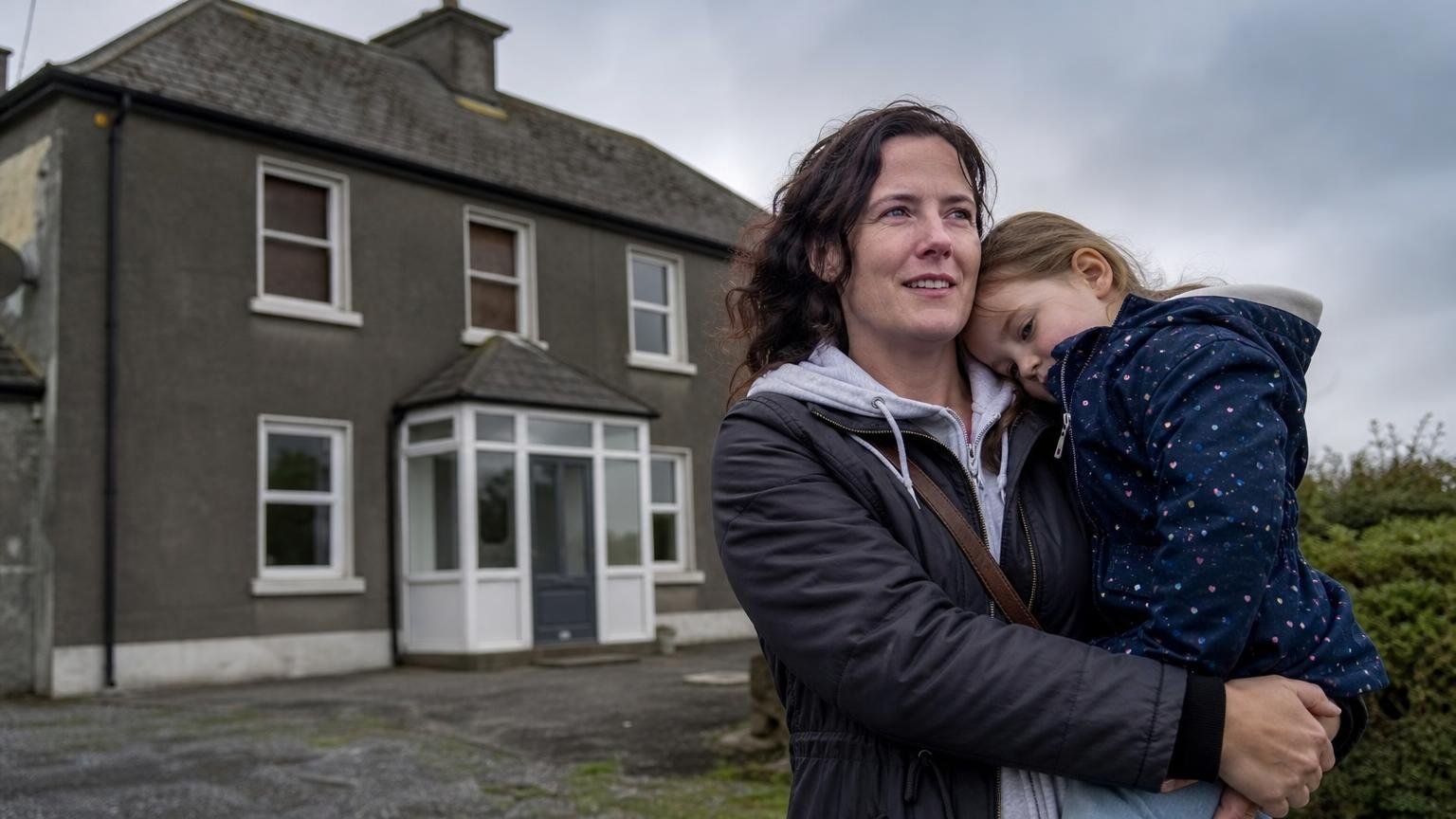
The first morning back smelled like peat and rain, a soft Atlantic breath that found its way into every sleeve. After two restless decades, their map felt both shrunk and magnified. Streets once learned on visits became riddles, while the lane to the old gate was muscled with briars. “It’s smaller than I remember,” one said, and the other answered, “It’s bigger than I can handle.”
The road that found them again
They left the motorway and slid onto roads that bent like old stories. Loughrea’s lake showed first, a polished coin under a scudding sky. Stone walls kept their counsel, and the grass flared a green not seen from the Brown Line. At the roundabout, a sign to Portumna, another to Galway, names that sounded like music you only catch at the chorus.
They parked by the cathedral, its façade pale with Atlantic light. Bells entered the bones like a long-owed apology, and a gull shrieked just to keep things mixed. “We’re not tourists,” she said, and he laughed, “We’re not locals either.”
The house with her hand still in it
The key was in the blue Delft bowl, the one with cows and a half-peeled sticker that refused to age. The door sighed like a practiced host, the kitchen holding heat as if the range were still lit. Tins of Jacob’s biscuits lined a shelf, and a dozen holy pictures argued quietly over the sink.
There was the oilcloth with a rose pattern, the teapot wearing its knitted hat, the chair with the dint from her sharp small elbow. A list in her neat hand, elastic snapped at the corner: turf, stamps, blue bag for the recycling. “She left us more than a roof,” he said. “She left us instruction.”
They opened windows that stuck like old opinions, each sash freeing with a judicial little groan. The garden had gone to wild, but the apple tree still wagged in the wind, gossiping about every neighbor who had passed the gate.
The town that knew before they said
In the shop with the purple awning, the woman at the till said, “Ye’re Mary’s two, from across the water.” It wasn’t a question. Names arrived with the change, and a loaf as long as a forearm thumped the counter. “Welcome home, so,” the man behind added, the so hanging like a soft anchor.
At evening in Kelly’s bar, men leaned their opinions on varnished wood. The match flickered on the screen, hurleys a blur, and someone asked how the Bears were doing “these days.” “We measure weather by wind,” a woman said, “you measure by the El.” They laughed till their pints found the table again, brown as a Connemara bog in sun.
What they packed without knowing
They carried stubborn habits in the lining of their coats. Coffee that had to be a certain roast, emails that arrived at ghost hours, the comfort of a straight grid and a clock that never stalled. The house carried other clocks, bell and bird, tide and the soft drag of cloud.
“What exactly are we going to do?” she asked, hands in the sink, touching the smooth blue plates like they were a new language. “We’ll learn what the place wants,” he said, and found he believed it past a sensible degree.
The first month’s reckonings
- Fix the drip that sings at 2 a.m., but not so tight it forgets how to breathe
- Say yes to tea even when you mean to say no; it means yes anyway
- Walk the lane at dusk and nod to what moves in the hedge, named or not
- Call the electrician named Declan, but call him thrice if you really want him
Work that teaches its own rhythm
They stripped wallpaper the color of custard, uncovering hairline rivers that cracked to the foundation. A swallow argued from the rafters, writing cursive over the morning air. “You can’t rush an Irish lane,” their nearest neighbor said, “or a fella with a ladder.”
They learned the slow alchemy of turf smoke and damp towels hung near the range. Washing took a day if the wind agreed, two if it grew stubborn. “Everything’s a little slower,” he said. “Everything’s less afraid of being slow.”
Ghosts who stayed friendly
On Sundays they walked to the graveyard, where names met names like magnets in a drawer. “She’s tidy where she is,” a cousin whispered, “and fierce glad you came at last.” The word glad carried weight like a full bucket, sloshing into their shoes.
In the drawer with the batteries they found a stack of U.S. stamps, forever flags in a rubber band. A postcard from 1987 read, “Send news when you can. The garden is decent.” The gardener was now the news, and the garden demanded better than decent.
What home asked in return
They decided to keep the black kettle, the jam jars with their brass lids, the lopsided stool that pretended it wasn’t a crutch. They let go of the faded souvenir magnet that lied about a Florida beach. “We’ll live between places,” she said, “until the places learn to live between us.”
“Funny,” he added, “we thought we’d come to clear a house, and the house has cleared us.” Out on the lane, the hedges whispered a dry applause, and the lake turned one perfect shoulder to the wind.
Some nights they still dreamed the roaring tracks, the gloved hand on a winter pole, city glow like a bottled storm. Then morning laid its quiet palm on the sill, and a rook scratched a sermon out of the air. And they found that staying, like leaving, was its own brave verb, made of small promises, kept daily and lightly.

Contact details
Address:
Farmers Forum,
36, Dominick Street,
Mullingar,
Co. Westmeath,
Ireland
Phone:
+353 (0)44 9310206
Or email us:
For technical issues please check out our FAQ's page or email - [email protected]
For general Queries email - [email protected]
Request to add event to our Calendar - [email protected]
Send us your mart reports - [email protected]
Suggestions and feedbacks - [email protected]
News Items / Press Release - [email protected]
To Advertise on Farmers Forum - [email protected]