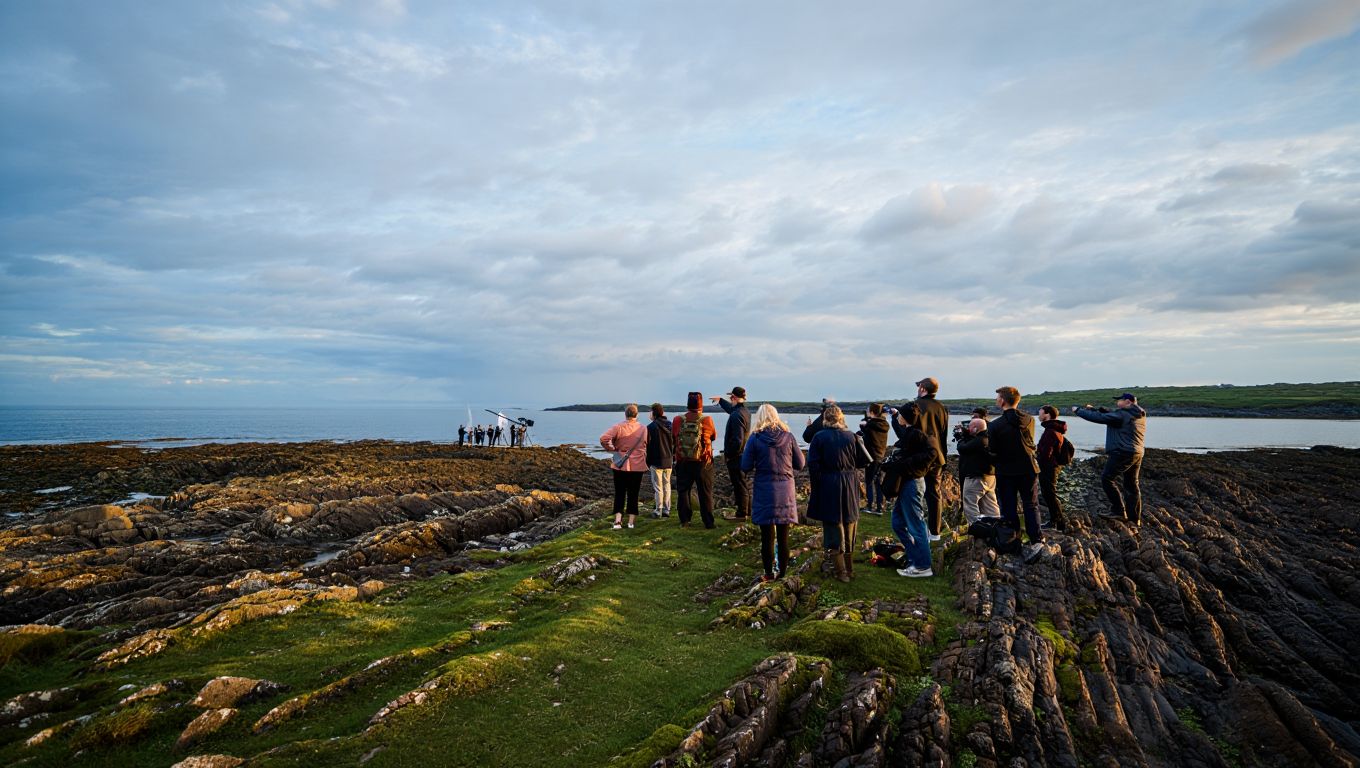
Salt‑sprayed cliffs, narrow lanes, and a restless Atlantic have become a magnet for travelers this summer, drawn by the hum of cameras and the promise of a story unfolding along Ireland’s west Clare coast. The sight of period costumes against storm‑bruised skies feels both timeless and electric, and visitors are arriving with phone cameras ready, chasing the same light that drew the crew.
Locals talk about the shift in rhythm: coffees poured a little faster, shop doors chiming all day, parking spots turning over with the tide. “It’s like the town took a deep breath, and then the summer rolled in with a bang,” said Mary O’Dea, who runs a café near the bay. “You can hear accents from everywhere, all asking where the next scene might be.”
A coastline that frames a story
From the serrated edges near Loop Head to the honeyed sweep of Spanish Point, the shoreline is a natural set. Atlantic swells slap the rocks with drama, gulls slice the wind with that insistent keening, and the sky seems to change its mind every minute. It’s a place that insists on scale, where cliffs reduce you to a smaller, more attentive version of yourself.
Cinematographers love the texture here: stone, spray, and the soft greens of pasture that tumble right to the brink. “The light is a living thing,” said Niamh Keane, a location scout walking the headland at dawn. “You blink, and the scene becomes a different painting.”
On‑set secrecy, off‑set whispers
The production keeps its cards close, but the period hints are everywhere: rough‑hewn props stacked by a pier, horse‑drawn wheels carving faint arcs in the sand, a fisherman’s shed made older with clever patina. You catch a flutter of sleeves, a glint of brass buttons, and suddenly the present steps aside.
No one is naming dates, but locals say the team favors early mornings and late afternoons, wrapping scenes in the long, honeyed hours when cliffs glow like banked embers. Fans hover at a respectful distance, tracing footpaths and following the quiet logistics of grips, gaffers, and patient extras.
The summer swell of curious feet
A hush often spreads along a coastal walk, the kind that says “they’re rolling,” and then laughter returns like a tide. Day‑trippers arrive with folded maps, while repeat visitors bring picnics and a tidy plan. “We’ve had bookings from people who never knew west Clare before,” said Tomás Lynch, who runs a B&B near the shore. “They want the cliffs, the music, the food, and a chance to glimpse that starched collar or a lantern in the mist.”
One visitor, Aoife Byrne from Limerick, grinned over a steaming takeaway tea. “Even if I don’t catch a scene, the place already feels like the series I want to watch,” she said. “It’s got weather, wilder than my hair, and that’s half the fun.”
If you go, go kindly
- Arrive early, park legally, and follow any marshals on site; crews work to tight windows.
- Stay outside cordons and respect “no photo” requests, especially during takes.
- Keep to marked paths; sea cliffs are both beautiful and fragile, with sudden edges.
- Pack layers and a windproof shell; the Atlantic can turn on a whim.
- Support local cafés, shops, and guides; it keeps the welcome truly warm.
Scenes between the scenes
Even without a lens, there’s plenty to frame. The Bridges of Ross slice into the ocean with theatrical poise; cliff‑top tracks near Kilkee offer pulse‑quickening vistas. In the evening, trad sessions lift from pub doors, fiddles skating over the chatter like bright pebbles on water. If time allows, boat tours nose along lonely stacks, where kittiwakes braid the air in white threads.
Food follows the coast’s mood: chowders dense with local catch, brown bread dark as peat bricks, and butter that tastes like sun in a field. For dessert, there’s the small miracle of a clear sky, stars clicking on as if cued by a silent clapper.
Weather writes its own script
Summer here is stitched with blue and pewter, sometimes in the same hour. A rain squall can pass like a rumor, rinsing everything clean, and then the world steps out in color again. Photographers chase the after‑rain shine, when stone looks newly woken and the sea pulls its silver thread along the coast.
“People think we wait for perfect sun, but the Atlantic’s moodiness is the real asset,” said Keane, shouldering a light meter. “Cloud is our giant, moving softbox.”
Guardrails for a living place
The coastline holds rare flowers, nesting seabirds, and centuries of human footprints. Local groups have added discreet signage, not to scold but to guide. There’s pride in the buzz, and an even fiercer pride in what was here first: the wind, the water, the old stone spine of the land.
Residents talk about a “good busy,” the kind that lifts winter memories of quiet streets without straining what the place can bear. “We want people to feel the magic, and we want to keep it,” said O’Dea, stacking cups with a practiced clink.
After the final cut
When the last truck pulls away, the coastline will keep its secrets and its light will keep moving. If history is any guide, the show will air and curious travelers will follow the camera’s breadcrumbs, eager to stand where a scene found its shape. But the gift here is more stubborn than a trend: a shore that stages its own epic, daily, with or without anyone calling action.

Hi there. I’m neither a farmer nor a regular reader of Farmers’ Forum but this is the second article of yours I have read, and each time I’m struck by the beauty of your descriptive writing.
You have just described one if my favourite places in the world. My second is a special place in Italy. And I’m so lucky to live in West Clare. Can you say which film it was please.