The war unleashed on February 28, 2026 around Iran has revived an old reflex: the fear of a fossil-fuel shortage. Yet another movement is gaining ground. The rise of solar and wind energy is sketching a form of energy security that is more local and less vulnerable.
Since February 28, Hormuz has closed and brutally reminds the world of what a fossil shock can cost.
Since the near-closure of Hormuz, markets have shifted tone. Reuters reports a jump of more than 70% in European gas since February 28. The signal is simple: when the route gets blocked, the bill climbs quickly.
This is not a local accident. The strait handles nearly a fifth of global flows of oil, refined products and LNG. As soon as it jams, Asia pays first. Then Europe and the rest of the world absorb the blow.
The 2025 record changes the scale: 814 GW of new capacity make solar and wind a global force
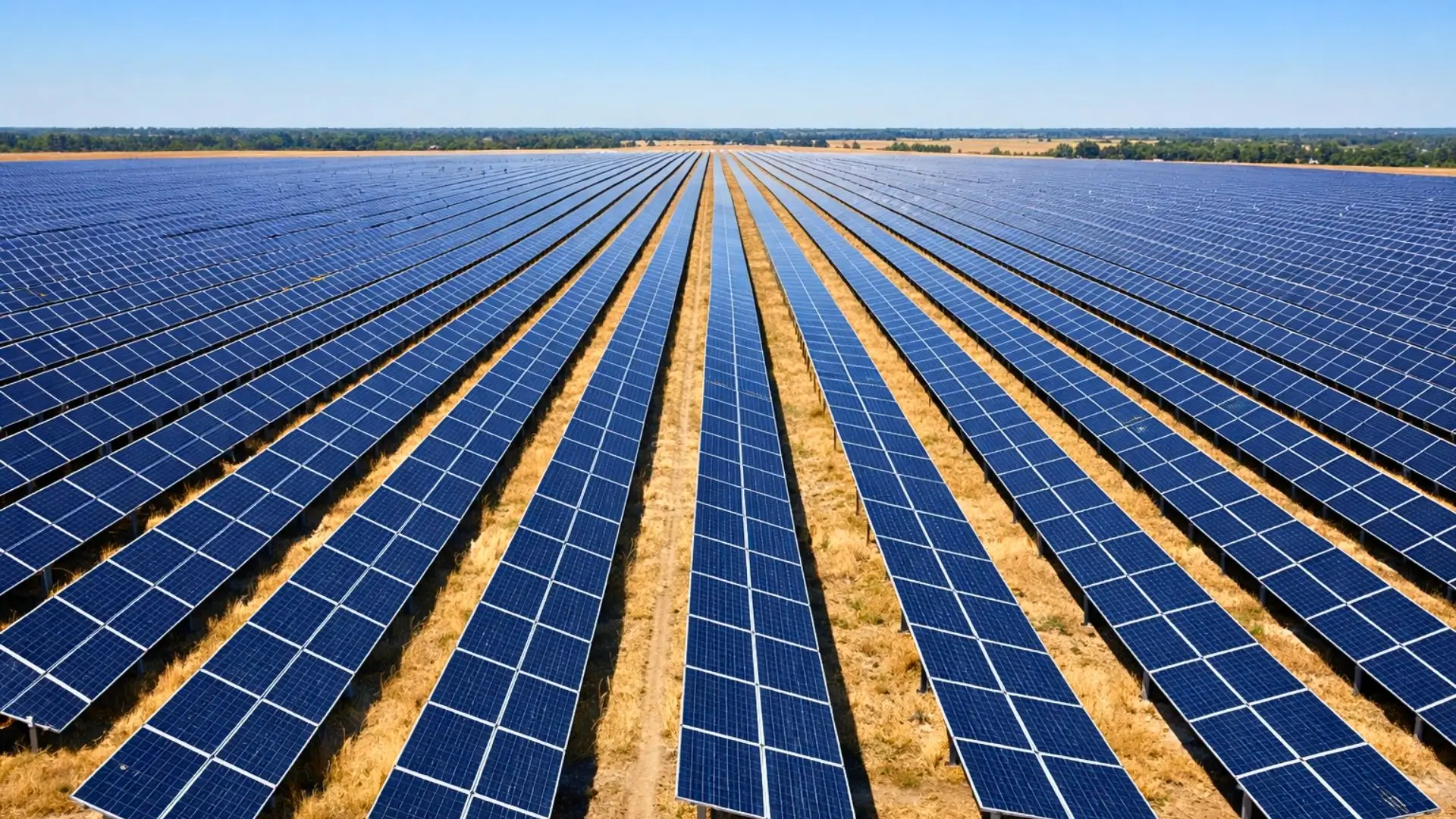
The Ember report published on March 18, 2026 reveals a striking figure. In 2025, the world added 814 gigawatts of solar and wind capacity. At that level, these sectors no longer act as add-ons. They weigh on the system.
In total, wind and solar now exceed 4 terawatts installed. It’s a quiet but massive shift. According to Ember, their production has already avoided the equivalent of about 330 terawatt-hours of gas-fired electricity since the start of the conflict.
Ember also estimates the potential savings at 40 billion dollars. The figure remains theoretical, but it sheds light on the debate. Every kilowatt-hour produced locally by wind or sun reduces exposure to ships, straits and military responses.
Importing countries remain the most exposed, and LNG in Asia now stands at the forefront
The core of the problem remains there. About three-quarters of the world live in net fossil-fuel importing countries. When sea routes wobble, these economies see costs rise, budget pressures mount, and political tensions flare.
For LNG, exposure is concentrated mainly in Asia. Ember places Taiwan at the top with 24%. Japan follows at 20%, ahead of South Korea at 17%. The vulnerability thus touches major industrial powers.
The real turning point is happening now: producing at home, storing better, and finally loosening the geopolitical grip
That is where renewables are changing their nature. They no longer serve only the climate. They also reduce import dependency, especially for electricity. The more a country produces locally, the less it endures delayed cargoes, embargoes and strained routes.
Today, solar is advancing faster than wind, and batteries are finally catching up. Solar, wind, batteries now form a decisive trio. They spread quickly, cost less than before, and bypass the major chokepoints of oil and gas.
The message of spring 2026 is clear. Renewables don’t solve everything, but they are already buffering shocks. In a crisis where ships count as much as missiles, producing your own electricity on-site begins to look like insurance.

Contact details
Address:
Farmers Forum,
36, Dominick Street,
Mullingar,
Co. Westmeath,
Ireland
Phone:
+353 (0)44 9310206
Or email us:
For technical issues please check out our FAQ's page or email - [email protected]
For general Queries email - [email protected]
Request to add event to our Calendar - [email protected]
Send us your mart reports - [email protected]
Suggestions and feedbacks - [email protected]
News Items / Press Release - [email protected]
To Advertise on Farmers Forum - [email protected]