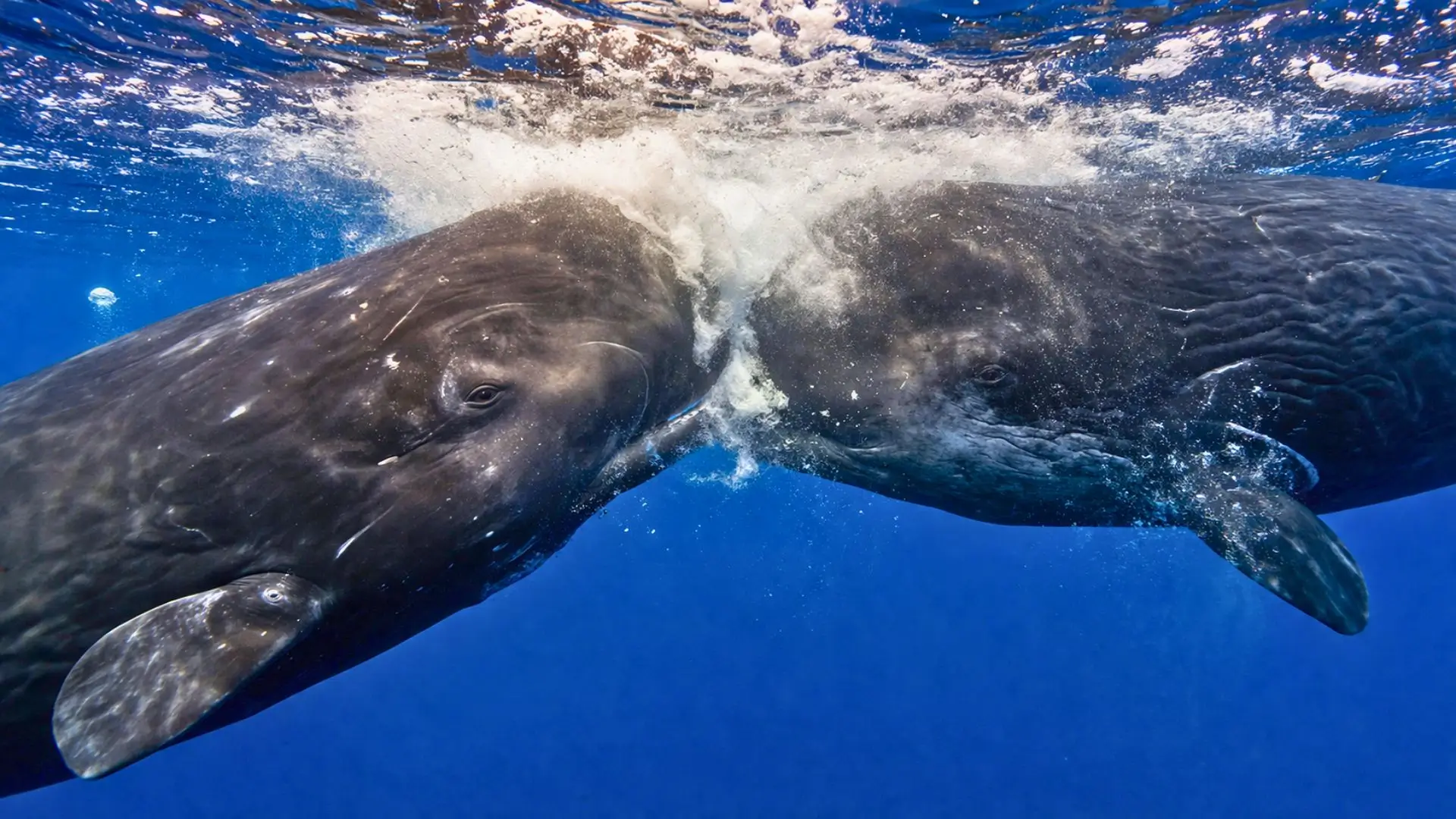
Researchers have filmed, for the first time, sperm whales colliding head-to-head. The footage, shot between 2020 and 2022, confirms a long-standing debate that began in the 19th century. But it also raises another question: why do these collisions happen?
Filmed in the Azores and the Balearic Islands, this gesture long recounted by sailors finally enters the scientific field
Marine Mammal Science published the study on March 23, 2026. It brings together three drone observations in the Azores and the Balearic Islands. More importantly, it documents finally a behavior that generations of sailors described, without solid visual proof until now.
This development changes a lot. Sailors’ tales of sperm whales capable of striking with their heads had seemed exaggerated. The Essex case, in 1820, feeds this memory. The researchers remain cautious, because their footage shows encounters between conspecifics, not attacks on ships.
What the drones really saw surprises biologists: the blows mainly come from young sperm whales
The videos do not show a single scenario. In one instance, two young animals collide head-on. In another, a male strikes the side of a female. Finally, a sequence shows repeated impacts between two sperm whales.
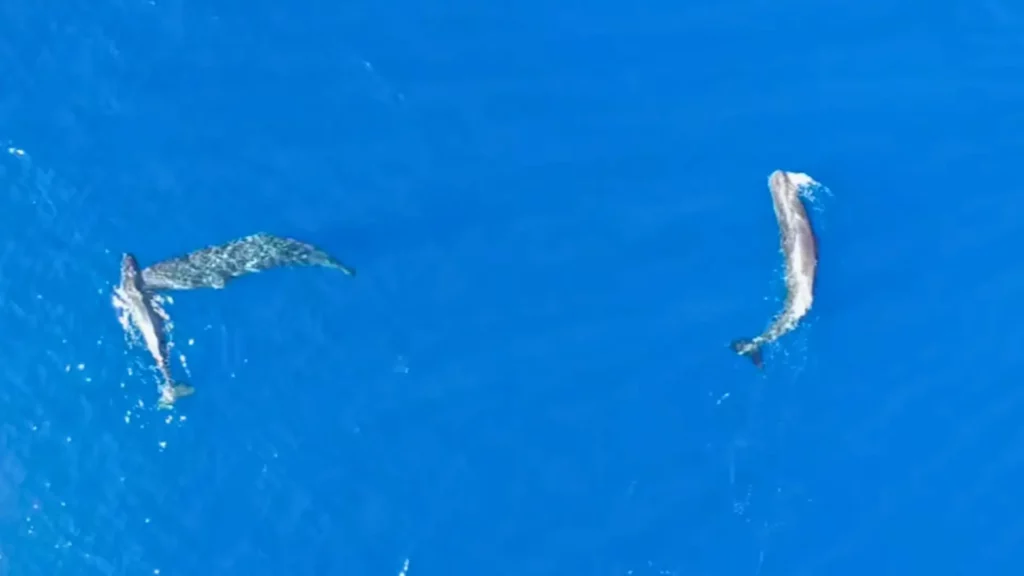
The most intriguing detail concerns the ages of the individuals observed. The researchers had primarily expected large adult males engaged in sexual competition. Yet the footage shows rather subadults, who still live in groups with females and calves.
This nuance matters a lot. It does not rule out male-male rivalry, but it shifts it. The collisions could serve as early training, social testing, or even brutal play. For now, no hypothesis clearly dominates.
Why these collisions occur remains unclear, but a key stage in male social life comes back to center
A line of inquiry keeps returning. In the sperm whale, young males gradually leave their natal group before living among other males and then more solitary lives. These blows could accompany this social transition. They might be used to measure strength, establish positions, or channel tensions.
Another possibility remains on the table. The collisions could also reflect a highly marked physical social play. The footage shows several contacts, not a single assault. This rhythm feeds the idea of repeated interactions, sometimes rough, but not necessarily aimed at harming.
Why their enormous head does not yield to the impact also fascinates, because the anatomy of the sperm whale adds still more complexity
The topic is intriguing partly because the whale’s head concentrates vital functions. It helps the animal produce and focus its sounds. Yet the brain sits further back. In the front, fatty and oily tissues may better distribute the impact.
Earlier work on the front’s anatomy already suggested an absorption capacity. But it also pointed to a clear limit. Hitting with the most sensitive area could damage the sound-producing apparatus. That is why scientists still avoid certainty about the exact usefulness of these blows.
What the study changes, however, is already solid. The ram-sperm whale moves beyond pure folklore. With drones, it enters scientific observation. And now, each new flight can help determine when, how, and with what consequences these shocks occur.

Contact details
Address:
Farmers Forum,
36, Dominick Street,
Mullingar,
Co. Westmeath,
Ireland
Phone:
+353 (0)44 9310206
Or email us:
For technical issues please check out our FAQ's page or email - [email protected]
For general Queries email - [email protected]
Request to add event to our Calendar - [email protected]
Send us your mart reports - [email protected]
Suggestions and feedbacks - [email protected]
News Items / Press Release - [email protected]
To Advertise on Farmers Forum - [email protected]