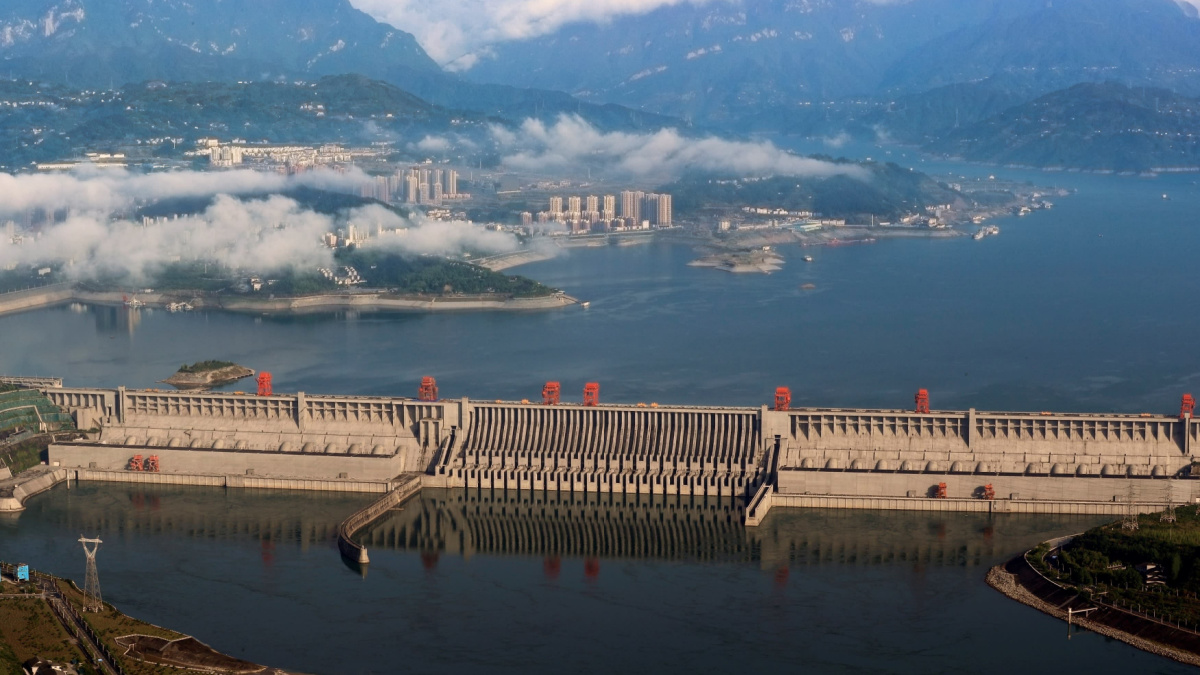
A broad study reveals that our planet loses, each decade, a significant portion of its freshwater storage capacity due to sediment buildup. By 2060, half of our reservoirs could be deemed “functionally dead.”
A Global Situation
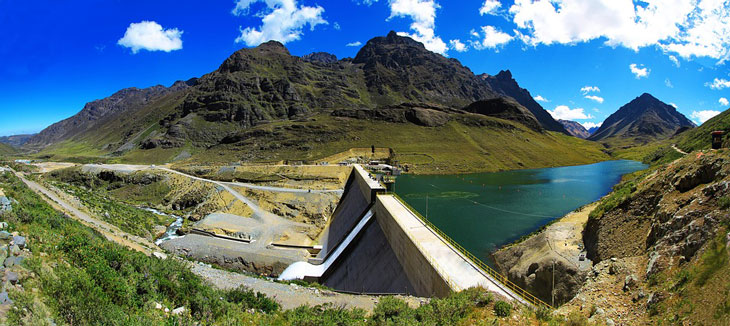
Dams prevent silt, sand, and gravel from flowing downstream, so over time these materials accumulate in these artificial reservoirs, thereby reducing the amount of water they store. To make matters worse, this phenomenon can also compromise the safety of such facilities and affect local ecosystems.
Recently, Kai Liu of the Chinese Academy of Sciences and colleagues combined satellite imagery, sediment analyses, and machine learning to assess the state of more than 550 000 reservoirs worldwide. Their work reveals an amount of freshwater lost annually due to sedimentation exceeding 36 cubic kilometers, a volume comparable to that stored by the Three Gorges Dam in China.
According to the team, a freshwater reservoir becomes “functionally dead” once its sediment concentration exceeds 50 %. This fate is expected to befall nearly 85 % of Australian reservoirs and 75 % of Spanish reservoirs by 2060. Globally, this scenario will affect the vast majority of water bodies in arid regions and half of those in wetland areas.
« The world loses more than 7 % of its freshwater storage capacity every decade, meaning that the water supply for more than 2 billion people, as well as irrigation for over a quarter of our cultivated lands, are at risk », write the authors of the new study, published in the journal Nature Sustainability.
A Global Situation
Un problème, des solutions
Un problème, des solutions
Pour Ian Wright, de l’université occidentale de Sydney, ces conclusions sont particulièrement préoccupantes. « Avec la hausse des précipitations liée au changement climatique, la situation devrait s’aggraver, en gardant à l’esprit que ces réservoirs devront approvisionner une population croissante », détaille-t-il.
Afin de remédier à cela, l’équipe évoque le reboisement, ainsi que d’autres stratégies de stabilisation des sols en amont des barrages pour lutter contre l’érosion.
« Des solutions d’ingénierie telles que le dragage et la construction de tunnels de dérivation seront également nécessaires, mais leur coût sera faramineux », explique Liu. « Probablement de l’ordre de 100 milliards de dollars. »
Il y a quelques semaines, des chercheurs avaient annoncé la découverte d’un vaste réservoir d’eau à faible salinité sous l’océan Atlantique, qui pourrait contribuer à répondre aux pénuries se profilant.

Contact details
Address:
Farmers Forum,
36, Dominick Street,
Mullingar,
Co. Westmeath,
Ireland
Phone:
+353 (0)44 9310206
Or email us:
For technical issues please check out our FAQ's page or email - [email protected]
For general Queries email - [email protected]
Request to add event to our Calendar - [email protected]
Send us your mart reports - [email protected]
Suggestions and feedbacks - [email protected]
News Items / Press Release - [email protected]
To Advertise on Farmers Forum - [email protected]