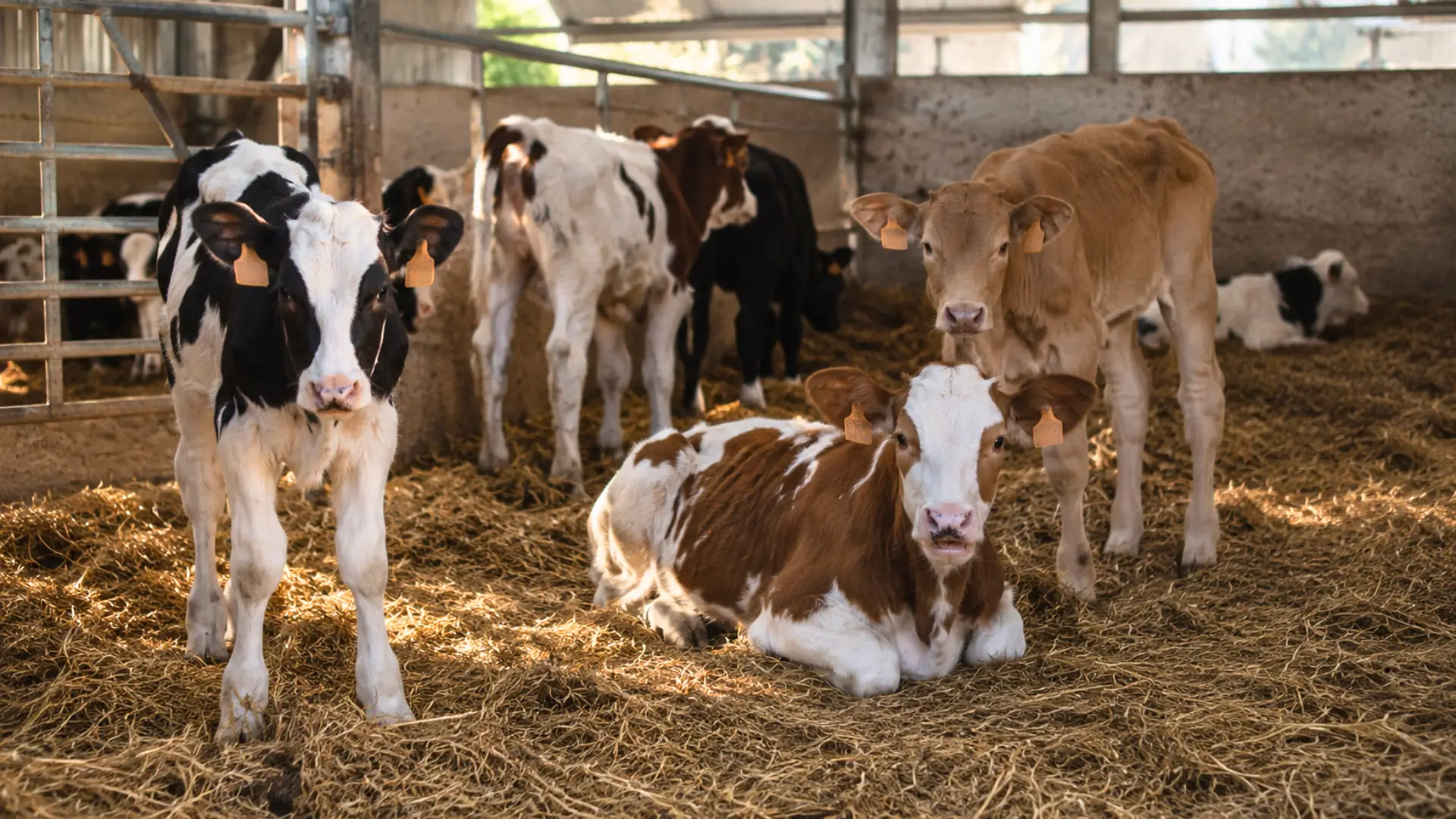
What if cutting agricultural pollution meant calves able to use latrines? Behind this almost comic scene, a scientific study reveals that cattle can learn to urinate in the right place, with possible benefits for air and water.
An idea born as a joke to curb farm pollution
The idea reads like a provocation sprung from a casual chat: why not teach cows to go to the bathroom? In farming, bovine urine is far from trivial. Rich in nitrogen, it becomes a problem when excreta mix and trigger a cascade of chemical reactions that are hard to control.
In modern farming buildings, concrete floors facilitate certain movements, but not always the fine management of waste. When urine joins fecal matter, it promotes the formation of ammonia. This gas pollutes the air and can, indirectly, contribute to the formation of nitrous oxide, a potent greenhouse gas.
The MooLoo trains calves to urinate in a designated area
To test this hunch, scientists linked to the University of Auckland and German institutes imagined an installation nicknamed MooLoo. The setup seems almost banal: a closed space, an adapted floor, a guided entrance, and above all a food reward. The principle is simple: urinate in the right place to earn a treat.
The experiment, published in 2021 in the journal Current Biology, involved 16 calves. The researchers first rewarded the animals when they urinated in the designated area. Then they gradually moved the calves away from the latrine to see if they could go there voluntarily before relieving themselves.
Calves capable of rapid learning and of changing our preconceptions
The striking thing about this study is the reversal of perspective. Cattle are often described as placid, slow, almost programmed to ruminate without much cognitive finesse. Yet these calves showed they could associate a place, a bodily sensation and a reward, then adjust their behavior accordingly.
The researchers even compared their learning pace to that of young children when they are toilet training. The comparison may bring a smile, but it is revealing: farm animals can learn, anticipate, and adapt much more than we often imagine. This finding goes beyond mere scientific curiosity.
A promising path to reduce ammonia, but difficult to deploy
The environmental interest is evident. If a large portion of urine could be captured before mixing with feces, ammonia emissions could fall sharply. Some models cited by the researchers point to a significant reduction when farms recover 80% of the urine, with benefits for air and waterways.
But between a protocol with 16 calves and a farm operation with hundreds of cattle, the gap remains vast. Training each animal by hand would require time, adapted facilities and an organization that few farmers could absorb. The researchers therefore aim to automate the process, without turning the farm into a permanent laboratory.
This path is by no means a magical solution. It does not erase questions about herd size, nor about the farming model. But it opens an astonishing door: what if reducing pollution also depended on a better understanding of animal intelligence?

Contact details
Address:
Farmers Forum,
36, Dominick Street,
Mullingar,
Co. Westmeath,
Ireland
Phone:
+353 (0)44 9310206
Or email us:
For technical issues please check out our FAQ's page or email - [email protected]
For general Queries email - [email protected]
Request to add event to our Calendar - [email protected]
Send us your mart reports - [email protected]
Suggestions and feedbacks - [email protected]
News Items / Press Release - [email protected]
To Advertise on Farmers Forum - [email protected]