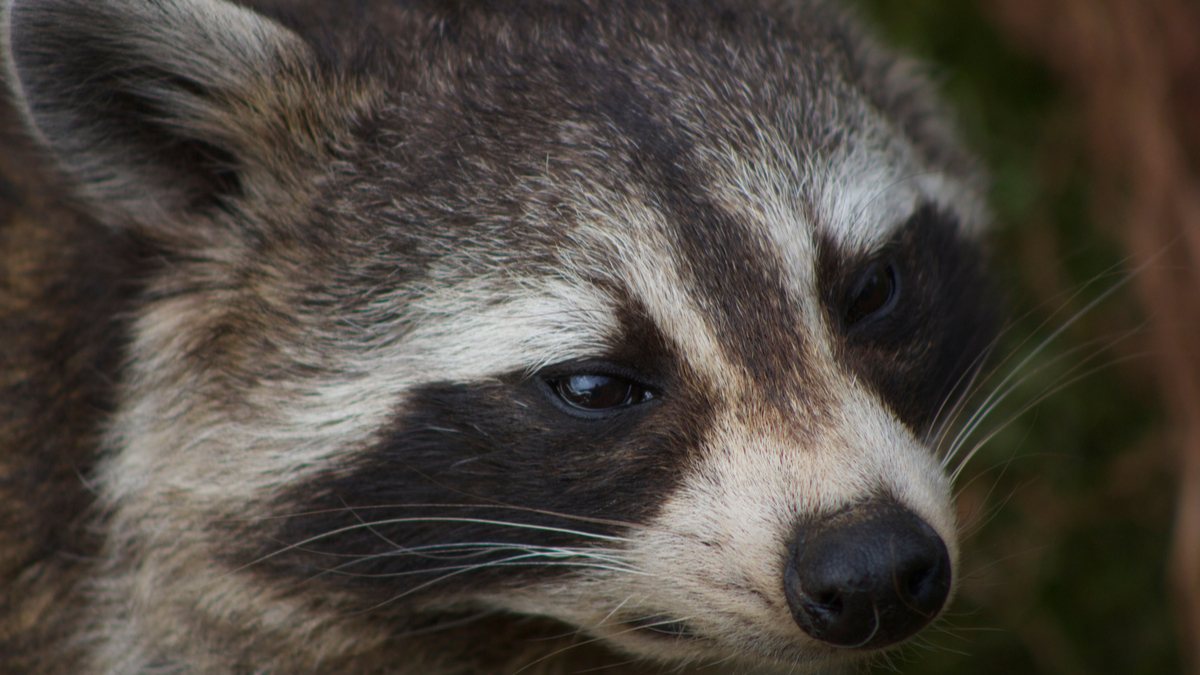
Often portrayed as mischievous beings and depicted in popular culture as petty thieves, raccoons are also notable for their appetite for puzzles, which they solve through play.
With or Without Marshmallow
To gauge their propensity for this kind of activity, researchers from the University of British Columbia created a tailored “puzzle box” featuring nine openings equipped with mechanisms such as latches, sliding panels, and buttons, housing a prized marshmallow at its center.
The specimens tested had 20 minutes to open it, with different levels of difficulty assigned (easy, medium and hard), and they far exceeded the researchers’ expectations. “We did not expect them to find all three solutions in a single attempt,” explains Hannah Griebling. “They kept at it even when there was no marshmallow at the end.”
In animals, such a tendency generally signals information-seeking behavior. By repeating trials, the raccoons progressively uncovered the box’s secrets, even when no reward was at stake. For simple mechanisms, they adopted a global approach, testing different orders and types of openings. When tasks grew more complex, they returned to proven solutions while demonstrating flexibility if those solutions failed.
UBC researcher suggests raccoons may not just be opportunistic—they may be genuinely curious. The findings help explain why raccoons thrive in urban centres like Vancouver. @ZoologyUBC https://t.co/MVOq2R7S6O
— UBC Science (@ubcscience) March 9, 2026
“You see this pattern when you order at a restaurant,” illustrates Griebling. “Will you choose your favorite dish or try something new? If the risk is high [an expensive dish you might not like], you opt for the safe choice. Raccoons explore when the cost is low and quickly decide to play it safe when the stakes become higher.”
The Secret to the “Trash Panda”’s Success?
According to the team, this form of curiosity, the raccoons’ apparent love of puzzles, and their remarkable dexterity largely explain their ability to flourish in urban environments, notably by raiding trash bins… and banks.
“Raccoon intelligence is often highlighted, but scientific research into their cognitive abilities remains limited,” remind the study’s authors, published in the journal Animal Behaviour. “Such work provides empirical evidence that underpins their reputation.”
Previously, American scientists had documented characteristic morphological changes in raccoons living in American cities, a consequence of their close contact with humans.

Contact details
Address:
Farmers Forum,
36, Dominick Street,
Mullingar,
Co. Westmeath,
Ireland
Phone:
+353 (0)44 9310206
Or email us:
For technical issues please check out our FAQ's page or email - [email protected]
For general Queries email - [email protected]
Request to add event to our Calendar - [email protected]
Send us your mart reports - [email protected]
Suggestions and feedbacks - [email protected]
News Items / Press Release - [email protected]
To Advertise on Farmers Forum - [email protected]