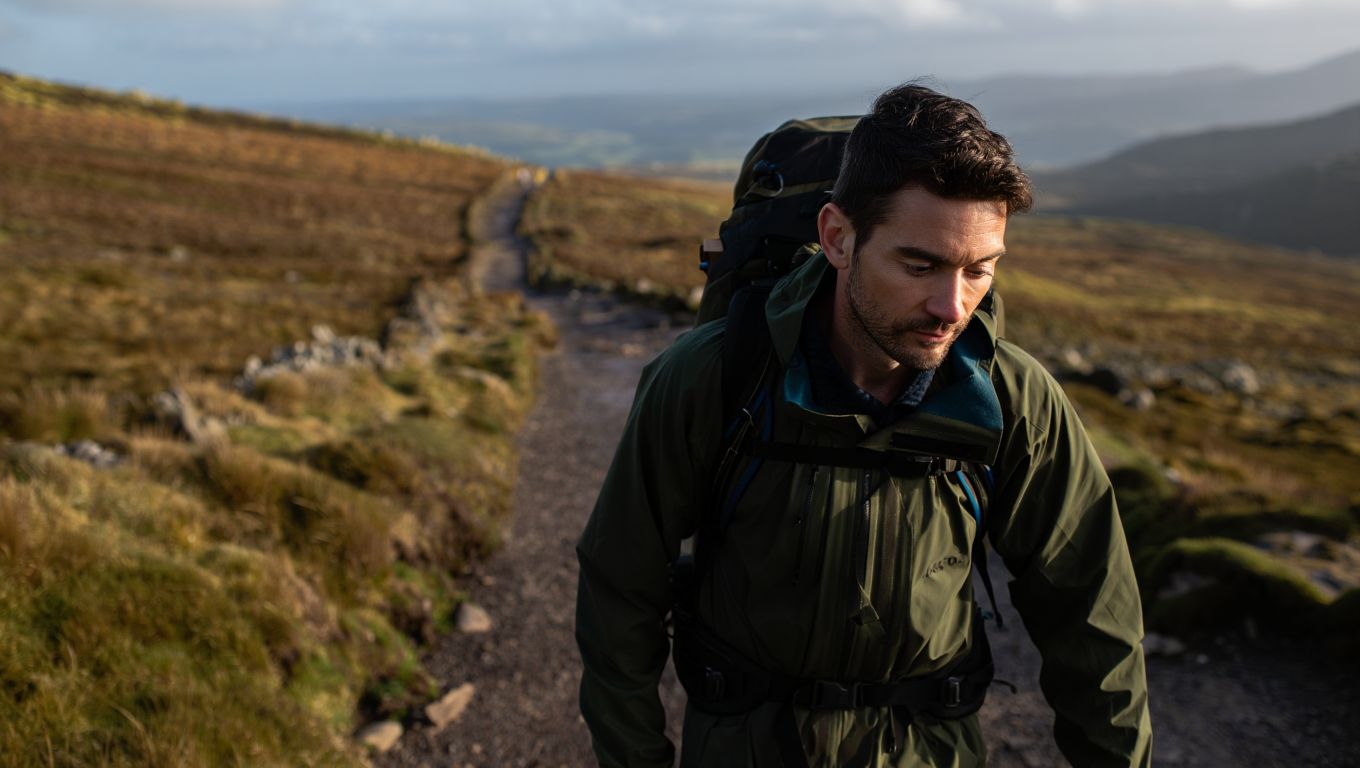
Sea wind on your face, heather at your boots, and a horizon that doesn’t blink. This is Ireland at full scale, a long green corridor where roads fade, voices thin, and weather writes its own script across the sky. Walk it, and your map shrinks to footsteps, cloud, and the small brave clink of a spoon in a mug.
A spine of quiet from coast to border
The Beara–Breifne Way traces an old march, a 500km thread that pulls you from ocean edges to soft lakelands. It begins on the Beara Peninsula, where cliffs lean toward Dursey Sound, and ends near Blacklion, where limestone hills turn pale in evening light. Between those points, you cross a mosaic of uplands, farm lanes, river curves, and peat tablelands that feel empty in the best possible way.
History hangs low and close, stitched into ruined towers and fords where feet learned to be patient. The route braids existing ways, so one day is bog, the next is beech, the next is faint sheep prints guiding you up a gentler line. “You walk into your own head and back out again,” a local walker told me, smiling like weather breaking.
Why it feels far from the world
Out here the scale is human, yet the silence carries the reach of a continent. Peatlands answer with spongy resilience, and corrie lakes pinch the air into something bright and metallic. The Atlantic is a rumor behind you, but the wind keeps telling it in chapters of salt.
The path seldom shouts, and that’s its richness: you earn views by trusting small signs, old gates, and the soft logic of a valley’s fall. “Take your time, you’ll make it,” said a farmer at a gap, waving me through as clouds grazed his field. You will meet people, but the company is mostly birds, stone, and your pulse gathering its own rhythm.
Season, pace, and the stubborn joy of weather
Spring brings primrose light and long evenings, while early autumn sets the hills to slow amber. High summer is lush, but midges can be bold, and winter’s short days press your planning hard. Expect rain the way you expect breath, and you’ll find a deeper ease in every break of blue.
Pace this journey like a conversation, not a contest, and aim for 20–30km days with room for surprise. B&Bs dot the route, small pubs hold warmth, and simple hostels feel like harbors after weather with teeth. Wild camping is a privilege, not a right, so ask permission and practice Leave No Trace with fierce care.
Navigation and safety without the drama
Waymarks are good, but carry maps, a charged phone, and a GPS trace you’ve checked at home. Signal can be patchy, streams can rise, and fog can flatten every useful line. Solid boots, real waterproofs, and dry-bagged layers pay their way with interest.
If one rule leads the rest, make it respect for land and livestock: leave gates as you found them, avoid dogs, and step lightly when wet ground bleeds. Your reward is a welcome that runs quiet, a nod at a door, and the warm gravity of a seat by the fire. “You’re grand,” someone will say, and you’ll feel taller for the small shared trust.
How to bite it off in beautiful chunks
Think of this route as chapters, not one breathless speech, and plan sections you can savor with ease. Start with a week on the ocean edge, or go inland for valleys braided with rivers and old rail beds. Let your transport be simple: buses reach peninsulas, and you can stitch returns with local taxis and slow trains.
Three to four weeks will walk the lot at a thoughtful pace, but two weeks feels honest and complete. You’ll finish with more energy than when you started, but a different kind of energy, the steady current of a long going. And you’ll carry a map in your muscles, not just your pack.
Moments worth the blisters
Dawn on a ridge when the bog turns copper and skylarks thread the air like bright wire. A roadside well where the water is cold as a promise, and your hands remember simple gratitude. A rainburst that empties the world, and then the sudden clean of silence so wide you grin.
You’ll step through fields that breathe milk, past walls stitched with fern, and a fox-red track carrying your footprint alone. Rivers run brown and musical, carrying peat like tea through alder shade. The best views are not the highest heights, but the soft angles where villages hum beyond a bend.
Why this walk can rival anywhere
- Vast quiet, intimate detail, and a day-to-day weave of culture and land you can touch with your boots.
Getting yourself to the start, and back again
Castletownbere is a solid launch, reachable by bus from Cork, and the northern end links back to Dublin with a couple of connections. Book early in small places, travel light, and keep your plan elastic like weather itself. “If the mountain says wait, you wait,” an old climber shrugged, and the trail smiled through his eyes.
When you’re ready to go, bring curiosity as currency, patience as rope, and humility as your compass. This path answers to time, not tricks, and it opens in proportion to your listening. In that steady opening, you’ll find a true remedy for crowds, a long homecoming in every quiet mile.

Contact details
Address:
Farmers Forum,
36, Dominick Street,
Mullingar,
Co. Westmeath,
Ireland
Phone:
+353 (0)44 9310206
Or email us:
For technical issues please check out our FAQ's page or email - [email protected]
For general Queries email - [email protected]
Request to add event to our Calendar - [email protected]
Send us your mart reports - [email protected]
Suggestions and feedbacks - [email protected]
News Items / Press Release - [email protected]
To Advertise on Farmers Forum - [email protected]