
An Île-de-France Garden That Has Become Unusable
At the end of August 2026, 7:30 p.m., a suburban garden south of Paris. Three bites after lifting the table. Seven bites in half an hour. The evening ends indoors, windows shut, with it 26 °C outside. This scenario isn’t exceptional in Île-de-France this year: the Asian tiger mosquito has been present in all eight Île-de-France departments since January 1, 2020, and the regional health agency now deploys 435 surveillance ovitraps distributed across the departments, sensitive healthcare facilities, and the three airports, from May 1 to November 30.
The natural reaction, when you reach that point, is to order the first product that promises to solve the problem. Bracelet, UV lamp, ultrasonic device, miraculous spray. It’s almost always money down the drain. This first part of the report sorts natural, free or inexpensive solutions—those that work, those that help a little, those that are completely useless. The second part looks at the tech terminals and traps, with a full comparison of brands available in France.
Brief summary for the in-a-hurst hurry: the only action that truly reduces the mosquito population around a house costs nothing and takes ten minutes per week. Everything else, including equipment priced at €1,500, comes later.
Before buying anything: identify your mosquito
This is the step that 90% of buyers skip, and it’s the one that determines whether a solution will work or not. Not all species behave the same, and they don’t cover the same distances.
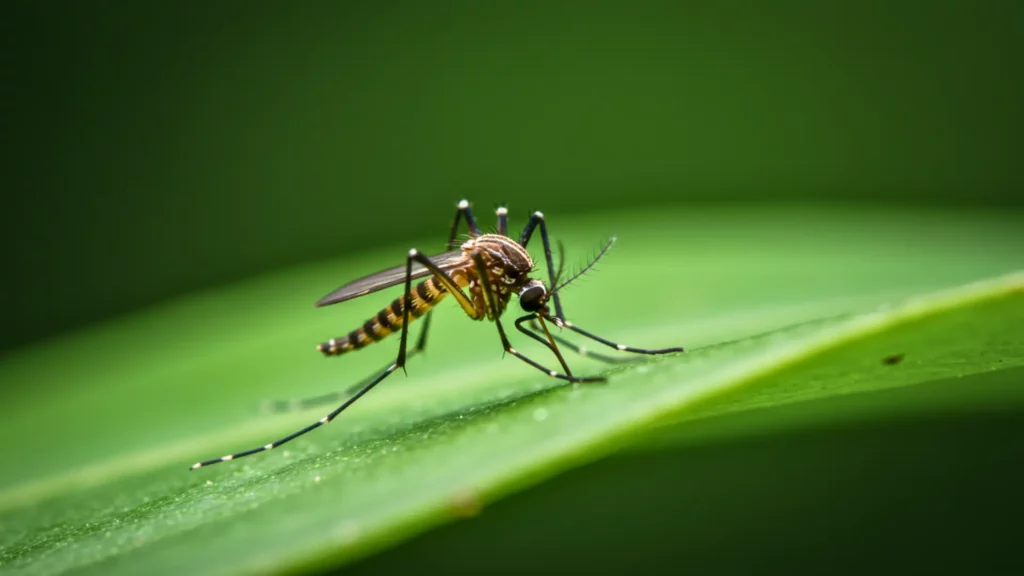
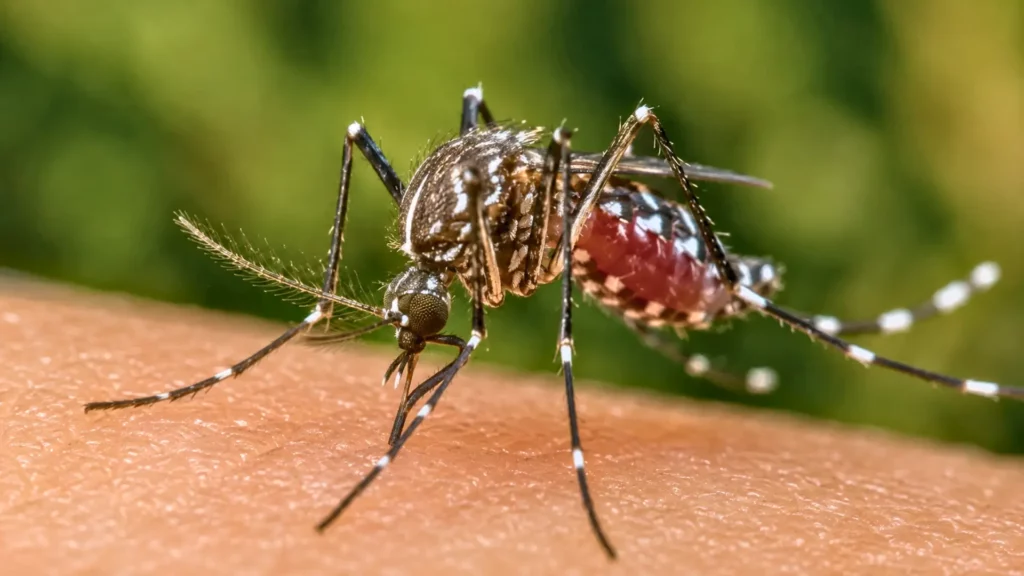
A tiger mosquito (Aedes albopictus) born in a flower pot saucer rarely travels more than about 150 meters from its birthplace. In other words: the one that bites you in your garden was born at your place, or at the neighbor’s. That’s excellent news, because it makes local action effective.
A marsh mosquito (Aedes caspius, Aedes detritus, Aedes vexans) can travel several kilometers, and up to fifty kilometers when carried by the wind. That one you will never eliminate from your terrace. No barrier, no trap, no individual action will make it retreat; that’s the job of public demoustication operators like EID Méditerranée.
| Species | Where it lives | Larval habitats | Flight radius | When it bites |
|---|---|---|---|---|
| Aedes albopictus (mosquito tiger) | Urban and peri-urban zones, 81 metropolitan departments | Small artificial containers: saucers, buckets, gutters, tires, manholes | ~150 m | Daytime, peak morning and late afternoon |
| Culex pipiens (common mosquito) | All of France, strong urban presence | Stagnant waters rich in organic matter: manholes, basins, pits | Several hundred meters to 1-2 km | Night, audible flight |
| Aedes caspius / detritus | Mediterranean coast, Camargue, salt marshes | Salty, swampy wetlands with temporary submersion | Several km, up to 50 km with the wind | Dawn and dusk |
| Aedes vexans | River valleys: Rhine, Rhône, Saône, Loire | Floodplain meadows after floods | Several kilometers | Late afternoon |
| Aedes japonicus | Grand Est, Bourgogne-Franche-Comté | Artificial containers and tree cavities | Several kilometers | Daytime |
| Culiseta sp. | Marshes, banks, retention basins | Permanent wetlands | Variable | Evening and night |
The rule derived from this table can be summed up in one sentence: if your nuisance comes from the tiger mosquito or the common mosquito, a per‑plot action has a real effect. If it comes from mosquitoes in wetlands, it has none. In Île-de-France, in the urban Great West, and in the southern metropolitan areas, we are overwhelmingly in the first case.
The move that halves the population: cut the water
A female tiger mosquito lays between 50 and 200 eggs per cycle, and repeats several times in her life. At 25-28 °C, it takes seven to fourteen days to go from egg to adult mosquito capable of biting. Under 20 °C, count two to three weeks. That short cycle explains why one forgotten saucer under a pot can produce dozens of mosquitoes in a week of heat.
The takeaway: a majority of tiger mosquito larval habitats are found in private spaces. Not in municipal ditches, not in parks. At your place, and at the homes of your five closest neighbors.
Just a few drops in a saucer suffice. A bottle cap filled suffices. The threshold isn’t “a pond,” it’s “a little water that stagnates for more than five days.”
The weekly garden tour checklist
- Saucer pots — empty them, or fill with damp sand that holds moisture without free standing water
- Gutters and downspouts — clean in spring and autumn; a blocked gutter is an industrial-scale breeding ground
- Rainwater harvesters — cover with a stretched mosquito net, not just a lid placed on top
- Pool, barbecue, and outdoor furniture covers — depressions collect water after every storm
- Manholes, terrace siphons, sumps — pour a handful of sand or lay a fine grille
- Tires, pots, watering cans, toys, outdoor ashtrays — turn over or store away from the elements
- Air conditioner and water heater trays — often forgotten, often full
- Trees in cemeteries, if you maintain one — one of the most productive habitats identified by the ARS
- Flat roofs and parapets — water retention on flat roofs is a documented hotspot by ARS PACA
The useful cadence is after every rain, and systematically before and after being away for more than a week. A full round takes ten minutes once the spots are identified.
The honest limit of this method: it only works at full strength if the neighborhood cooperates. With a 150-meter flight radius, an impeccably maintained garden surrounded by three neglected plots remains a bite target. It’s frustrating, and this is the main reason people end up buying a trap. In a housing estate, a collective action, even informal, changes everything and costs zero.
Bti, the only domestic larvicide that actually holds up
When water cannot be removed from a decorative basin, well, a damp crawl space, a poorly drained roof terrace, or a natural pond, there remains a validated biological solution: Bti, for Bacillus thuringiensis israelensis.
It is a bacterium whose toxins are ingested by mosquito larvae and kill them within a few hours. It is specific to dipteran larvae: it does not affect fish, amphibians, or pollinators. ANSES authorizes it for both professionals and individuals, and the treated water remains usable for watering plants.
The product comes in powder, granules, or tablets to be dispersed on the water’s surface. The action lasts several weeks, then it needs refreshing. For a garden pond, anticipate a treatment every two to four weeks during the season.
Its limitations, never stated on packaging: Bti kills only larvae, never adults; the effect on the nuisance felt takes two to three weeks to appear. It degrades quickly under UV light and dilutes with heavy rainfall. And its mass use in natural environments is debated ecologically because mosquito larvae feed an entire food chain. For a 2 m² pond in an Île-de-France garden, the question doesn’t arise. For a wetland area, that’s another discussion.
Available products: SOLU’BTI 200 g on Amazon (around €20, treats several hundred liters), or VectoBac DT in tablets for larger volumes.
Physical barriers: the most cost-effective protection in the file
Nothing dramatic here, and that’s precisely why this chapter matters. A mosquito net has no mobile app, doesn’t need recharging, never breaks down, and protects 100% of the time.
Window screens
Three formats based on budget and opening type. Magnetic models with adhesive strips can be installed in ten minutes, washable, and cost between €10 and €20 per window—that is the best protection-to-cost ratio in this dossier. Example: magnetic screen 125 × 140 cm. Removable rigid frames, like Windhager with a magnetic frame, hold up better over time for €30 to €50. Bespoke roll-up screens between €150 and €400 per opening.
The cautionary point that no one mentions: the standard mesh of 1.2 mm lets through gnats and some small dipterans, but it blocks tiger mosquitoes and Culex without issue. It’s useless to pay for a finer mesh if the mosquito is your only target.
The fan, the most underestimated weapon
A mosquito flies at about 1.5 km/h, barely 40 cm per second. A terrace fan set to medium speed generates an airflow it cannot climb. Side effect: it disperses the CO₂ and lactic acid plume you emit, which is what the mosquito uses to home in on you at ten meters.
On a table for six people, a standing fan aimed at the legs—the most bite-prone zone—removes a large portion of bites without any product. It’s empirical, but reproducible, and it costs €40. The drawback: it only protects the blown zone, and it becomes uncomfortable when the temperature drops.
Clothing and timing
The tiger mosquito bites through thin fabric stretched over the skin. Leggings don’t protect. Loose cotton pants do. Dark colors attract more than light colors, a real but modest effect compared to CO₂ and body odor.
Topical repellents: what is validated, what isn’t
On this terrain, consensus among ANSES, DGCCRF, and UFC-Que Choisir is clear. Four molecules have demonstrated efficacy; the others do not.
| Molecule | Useful concentration | Protection duration | Restrictions |
|---|---|---|---|
| DEET | 25 to 50 % | 4 to 8 h | Not recommended for very young children outside high-risk zones; attacks some plastics and varnishes |
| Icaridine (picaridine, KBR3023) | 20 to 25 % | 4 to 8 h | Better tolerated than DEET, odorless; best daily-use compromise |
| IR3535 | 20 to 35 % | 4 to 6 h | Most often recommended for pregnant women and children |
| Citriodiol (PMD, lemon eucalyptus) | 20 to 30 % | 4 to 6 h | Natural origin, real efficacy but more variable by formulation |
The classic mistake is under-dosing. A repellent must be generously applied to all exposed areas, otherwise the mosquito simply bites the square centimeter you forgot. In the field, that explains the majority of “it doesn’t work.”
Common products: Insect Screen Mosquito Zones (DEET, 8 h), Insect Screen 50% DEET pocket format, or Care Plus Citriodiol for a plant-based formula.
A word on indoor ultrasonic diffusers: DGCCRF notes that health authorities discourage them because of continuous dispersion of pyrethroids in a closed space. A bed net performs the same job without inhalation.
Plants, essential oils, bats: the triage
Potted plants do not protect a garden
That’s the best-selling myth in garden centers in May. Lemongrass, scented geranium, lavender, basil, lemon balm: these plants do contain active molecules citronellal, geraniol, eucalyptol that disrupt the mosquito’s sense of smell. The problem is mechanical: those molecules are released only when the leaves are crushed. A non-moving plant in a pot barely emits anything.
To obtain a measurable repellent effect, you would need a concentration of volatile compounds that no terrace planting will ever produce. We hoped for better, but the facts are stubborn: three stalks of lemongrass on a francilien balcony are decorative at best.
Essential oils: real effect, very short duration
Extracted and concentrated, the same molecule works; this is exactly what citriodiol is. Applied pure or homemade diluted, the repellent effect lasts generally less than an hour, versus four to six hours for a pharmaceutically dosed formulation. Add the risk of skin irritation and contraindications for pregnant women and children, and practical usefulness collapses.
Bats: useful, but not against mosquitoes
The figure of “3,000 mosquitoes per night” circulates everywhere. It comes from a laboratory experiment conducted in a closed chamber where mosquitoes were the only prey available. In real conditions, guano analyses show mosquitoes represent a marginal part of the European bats’ diet, which prefer larger, richer prey like moths, beetles, and chironomids.
Installing a bat box remains a good idea for garden biodiversity. Selling it as an anti-mosquito solution is dishonest.
Aquatic predators: the pond’s good idea
If you have a permanent pond, a few goldfish or dragonfly larvae effectively consume mosquito larvae. Be careful with gambusia, often recommended: it is an invasive exotic species whose introduction into natural habitats is problematic. A well-populated and oxygenated pond hardly produces mosquitoes; it’s the neglected pond that poses a problem.
What Doesn’t Work: the Official List
DGCCRF is explicit about devices to avoid. This isn’t a whim of editors; it’s an official stance of the French administration.
- Mosquito bracelets — the molecule only diffuses a few centimeters around the wrist; the rest of the body is fully exposed
- Ultrasonic devices — no demonstrated effect, regardless of price; the mosquito has no receptor for these frequencies
- Smartphone apps — same principle, same lack of effect
- Vitamin B1 and oral supplements — no proven efficacy
- Homeopathic remedies — likewise
- UV “insect-killing” lamps — the mosquito is not attracted to UV light but to CO₂; these lamps mostly kill moths and helpful insects. They’re even counterproductive to a garden’s ecosystem
- Electric swatters alone — entertaining, but no effect on a population
Add to this a frequently forgotten point: spraying insects on hedges and flowerbeds, a common spring reflex, is regulated. These treatments kill pollinators, promote resistance among mosquitoes, and their effect lasts only a few days. Some uses are regulated and can be penalized.
Recap: cost, effort, real effectiveness
| Solution | Cost | Effort | Real Effectiveness | Verdict |
|---|---|---|---|---|
| Elimination of larval habitats | €0 | 10 min / week | Very strong on Aedes albopictus | Essential, to do before any purchase |
| Window screens | €10 to €50 / opening | One-time installation | Complete protection indoors | Best value-for-money in the dossier |
| Bti larvicide | €15 to €25 / season | 1 application / 2–4 weeks | Strong for waters that can’t be emptied | Excellent targeted supplement |
| Terrace fan | €30 to €80 | None | Good in the blown zone | Underrated, worth trying before investing in better |
| Topical repellent (properly dosed) | €8 to €15 / bottle | Reapplication every 4–6 h | Strong, individual | The only truly mobile option |
| Potted plants | €5 to €30 | Watering | Negligible | Decorative, nothing more |
| Essential oils homemade | €10 to €25 | Reapplication < 1 h | Weak and brief | Only a quick fix |
| Nest box for bats | €25 to €60 | One-time installation | Marginal effect on mosquitoes | Good for biodiversity, not for nuisance |
| Ultrasounds, bracelets, apps | €10 to €40 | None | Null effect | To avoid, per DGCCRF |
| UV lamp that kills insects | €20 to €60 | Cleaning | Null on mosquitoes | Harmful to beneficial insects |
Strategy by region and climate
The same solution doesn’t yield the same results in Nanterre, Arles, or Strasbourg. Here is the regional-context reading.
| Context | Dominant species | Priority #1 | What’s of little interest |
|---|---|---|---|
| Île-de-France, northern and central urban areas | Aedes albopictus + Culex pipiens | Eliminate habitats at home and nearby, window screens, Bti on drains and ponds | Nothing is useless here: local action pays off |
| PACA, Occitanie, Rhône Valley (urban areas) | Aedes albopictus, April to November pressure | Same actions, but over a season twice as long; this is the only context where a garden trap becomes economically defendable | Insecticide treatments for comfort, with no lasting effect |
| Camargue, Mediterranean littoral, salt marshes | Aedes caspius, detritus | Physical protection and repellents; demoustication falls to EID Méditerranée | Garden traps: mosquitoes arrive from several kilometers away |
| Alsace, Rhine valley, Loire and Saône valleys | Aedes vexans, post-flood peaks | Window nets, repellents, fan; nuisance in waves related to floods | Any local solution claiming to lower the population |
| Grand Est, Bourgogne-Franche-Comté | + Aedes japonicus | Artificial habitats and tree cavities; the species flies several kilometers | Efficiency of per-plot action weaker than in Île-de-France |
| Britanny, Normandy, Atlantic coast | Culex pipiens dominant, a. albopictus spreading | Window nets (nocturnal nuisance), drain organic stagnants | Heavy investment rarely justified by current pressure |
| Mountain areas, above 600–800 m | Low pressure, short season | Window nets and repellents suffice | Any fixed equipment |
| Caribbean, Guyana, Reunion, Mayotte | Aedes aegypti, Aedes albopictus | Public health stakes: dosed repellents, treated window nets, strict elimination of gîtes; follow local ARS guidelines | Any “comfort” approach: here it’s about preventing arboviral diseases |
Frequently asked questions
What is the most effective natural solution against mosquitoes in a garden?
The elimination of larval habitats, without competition. Empty every week anything that holds water—a saucer, gutters, tarps, buckets—because this species only flies within roughly 150 meters of its birthplace.
Do mosquito-repellent plants really work?
No, not in pots. Lemongrass, scented geranium, or lavender contain repellent molecules, but they’re released only when the leaves are crushed. A plant immobile in a pot emits almost nothing to protect a terrace. Only distilled essential oils, like citriodiol, have a measurable effect.
Is BTi dangerous for fish or bees?
No. Bacillus thuringiensis israelensis acts specifically on mosquito and some related fly larvae. Fish, amphibians, and pollinators are not affected. ANSES authorizes it for private individuals, and the treated water remains usable for irrigation.
Are ultrasonic insect-repellent devices effective?
No. DGCCRF explicitly lists them among products with no demonstrated efficacy, just like bracelets, mobile apps, vitamin B1, and homeopathic remedies. The mosquito has no receptor for those frequencies.
Is a fan sufficient to keep mosquitoes away from a terrace?
Partly. A mosquito flies at about 1.5 km/h and will not overcome a steady airflow. The fan also disperses the CO₂ beacon that helps the insect locate you. Protection is real but limited to the blown zone: it does not replace a mosquito net or a repellent.
Should the entire garden be treated with insecticides against mosquitoes?
Not recommended. Spraying hedges and flowerbeds kills pollinators, fosters resistance among mosquitoes, and its effect lasts only a few days. Some uses are regulated. A targeted larvicide on standing water yields better results with far less impact.
Verdict
A garden in Île-de-France in August 2026 defends itself first with a bucket, a pair of gloves, and ten minutes per week. It’s not dramatic and it doesn’t appear in any shopping list, but it’s the only action whose impact on tiger mosquito populations is documented and reproducible.
Then come three modest investments that truly change daily life: window screens on bedrooms, a correctly dosed bottle of repellent, and a fan on the terrace. Total: under €150 for a house. The result-to-euro ratio far exceeds that of any connected barrier.
There remain situations where none of this suffices: a very exposed garden, passive neighbors, a long season, daily pressure that makes the outdoors unusable. That’s the domain of traps and tech barriers — from €70 to €1,700 depending on models, with considerable efficiency gaps and consumables that no one calculates before buying. This is the subject of the dossier’s second part.

Contact details
Address:
Farmers Forum,
36, Dominick Street,
Mullingar,
Co. Westmeath,
Ireland
Phone:
+353 (0)44 9310206
Or email us:
For technical issues please check out our FAQ's page or email - [email protected]
For general Queries email - [email protected]
Request to add event to our Calendar - [email protected]
Send us your mart reports - [email protected]
Suggestions and feedbacks - [email protected]
News Items / Press Release - [email protected]
To Advertise on Farmers Forum - [email protected]