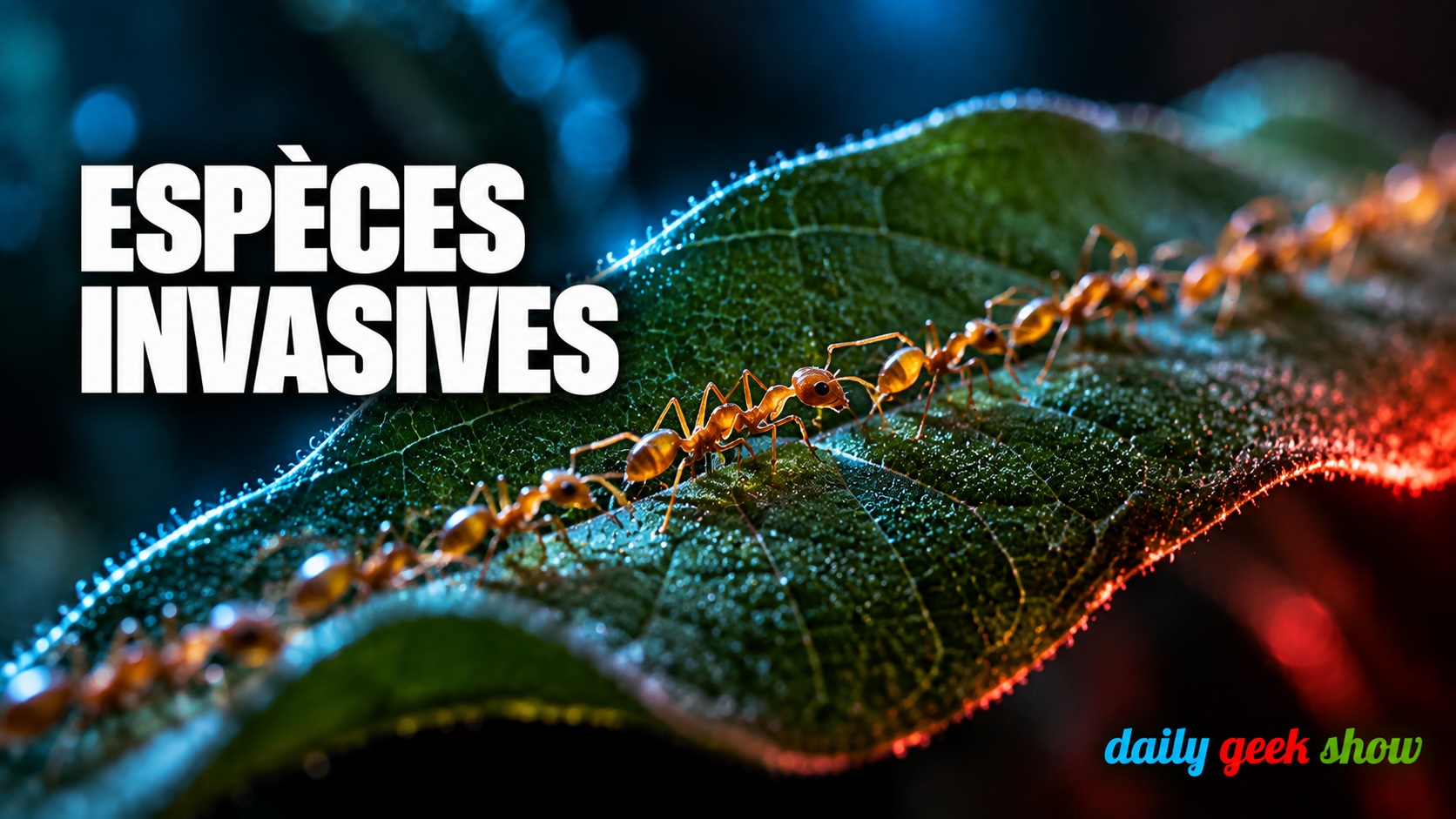
Seven hectares. That is the total area in France occupied by the electric ant, one of the hundred most invasive species on the planet according to the IUCN, spread over three foci along the Var coast. Seven hectares is tiny—and that is precisely what makes the topic interesting. The Aedes mosquito occupies 81 departments, the Asian hornet is firmly established: in both cases, the game is already decided. For the electric ant, it is not yet. What separates a species that can be eradicated from a species we will live with forever is not climate or resources: it hinges on the moment it is detected. Here is where the main species stand, and what a private individual can actually do.
The legal framework, first and foremost, because it conditions everything else. European Regulation No. 1143/2014 establishes a list of invasive exotic species of concern to the Union. A species on that list becomes banned from import, transport, sale, possession, cultivation, and introduction into the environment, across the entire territory of the Union.
This list has expanded. An update effective August 7, 2025 added eight plants, bringing the total to more than ninety animal and plant species. Among these additions is a plant that hundreds of thousands of French owners know all too well: Japanese knotweed. We had covered the case of the Asian hornet in early September, when its national control plan, launched on March 27, 2026, entered its first full season.
This dossier completes this series from a different angle. Not how to fight a given species, but how those that are arriving are classified, and why some will remain a local problem while others become a fait accompli. This is the missing piece after our two reports on mosquito control.
The Table of Arriving Species
| Species | Status in France | Eradication Still Possible? |
|---|---|---|
| Electric ant Wasmannia auropunctata |
Three foci in the Var, about 7 hectares in total | Yes, and it’s now |
| Japanese knotweed Reynoutria japonica |
Present in nearly all departments | No, only containment |
| Asian hornet Vespa velutina |
Metropolitan territory almost fully colonized | No, national regulation plan since March 2026 |
| Tiger mosquito Aedes albopictus |
81 departments out of 96 | No, only health surveillance |
| Ambrosia Ambrosia artemisiifolia |
Strong along the Rhône corridor, expanding | No, local destruction required |
Read the right-hand column from top to bottom. Only one line bears a “yes,” and it is for the species that no one has heard of. The other four are known to the public precisely because it is already too late: media coverage of an invasive species only happens once it has become impossible to remove.
The Electric Ant, or the Window Slamming Shut
Measuring about 1.2 to 1.5 millimeters, it ranges from yellow-orange to light brown and takes on a golden sheen in natural light. It moves slowly, in dense lines. At this size, it goes unnoticed until someone is stung.
And the sting is what gave the species its name. The sensation is described as a sudden, localized jolt that can last up to three hours, followed by red papules and prolonged itching. The risk of anaphylactic shock exists for allergic individuals. A point less often mentioned concerns domestic animals: repeated stings to the face can cause partial or total blindness in cats and dogs.
The French progression of this species is documented and relatively recent. Toulon in 2022, about one hectare. La Croix-Valmer in 2023, about four hectares. Cavalaire-sur-Mer in 2024, about two hectares. An undetected presence is considered probable in Bouches-du-Rhône and the Alpes-Maritimes, which is the cautious way of saying that we are not looking everywhere yet.
What this species produces elsewhere measures the stakes. In New Caledonia, in invaded zones, it accounts for up to 92% of the ant fauna captured: it does not add to the ecosystem, it replaces it. Along the Mediterranean rim, the agricultural threat passes through scale insects, which it promotes on citrus, olive trees, and vines.
Japanese Knotweed Has Just Changed Status
It’s regulatory information that no one has disseminated to individuals. Since August 7, 2025, the Japanese knotweed appears on the European list, along with its two cousins, Bohemian knotweed and Sakhalin knotweed.
The practical consequence lies in what is forbidden: transport, sale, and introduction into the environment. And that is exactly how this plant spreads. It reproduces mainly by rhizome fragments; a piece of a few centimeters is enough to establish a new patch.
Three common actions to avoid. Throwing cut stems or roots into green waste, which redistributes them to communal composting. Moving soil from a contaminated area to another plot, which is the primary vector of spread on construction sites. And cutting the plant without managing the residues, which multiplies fragments instead of containing them.
For a private individual whose garden already contains it, listing does not create an obligation to eradicate, which would be unrealistic. It creates a responsibility regarding the circulation of fragments, and that is the key point: do not remove anything from the ground without routing it through an appropriate treatment channel.

Why Detection Is Everything
The four established species in the table share one common trait: they were all detected too late, at a moment when the area already exceeded intervention capacity.
Tiger mosquito is the clearest illustration. First detected in Menton in 2004, in a single municipality. It took fifteen years for the surveillance system to reach its current form, and during those fifteen years the species crossed the threshold of fifty departments. It moves itself about 150 meters in its lifetime: its conquest of territory happened by car and truck, along major roads, while the system was being built. We detailed this mechanism and its health consequences in our dossier on the tiger mosquito and arboviruses.
The Asian hornet follows the same curve. Arrived in 2004 in a shipment of pottery, it occupied nearly the entire territory before a national plan was adopted. The system launched on March 27, 2026 no longer aims at eradication but at regulation, that is to limit damage to the beekeeping sector.
The electric ant is today exactly where the tiger mosquito stood in 2005: a few foci, a surface measurable in hectares, a technical possibility to treat each focus in full. The difference this time is that the detection system already exists. The question remains whether it will be used early enough.
What Detection Really Changes
That is the only lever available to a individual, and its effectiveness is not symbolic. A large portion of the first departmental detections, both for the tiger mosquito and for the new arrivals, come from photographs sent by residents before any capture by an operator.
The procedure for the electric ant is precise. Take a close-up photograph of the insect, including, if possible, a scale reference. Preserve a few individuals in alcohol or in the freezer, because formal identification requires examination under a binocular microscope. Record the exact geolocation. Then transmit to the regional FREDON, to your town hall, or via the national platform for reporting exotic invasive species.
A word on what distinguishes a useful report from a wasteful one. A blurry photograph of any random ant adds nothing and burdens the teams. A clear photograph accompanied by a sample and a precise location triggers a verification. The difference comes down to five minutes of attention.
What Not to Do
Trying to treat a suspected colony yourself is the first mistake. A broad-spectrum pesticide applied to an electric ant nest often results in colony budding: surviving queens disperse and establish multiple foci where there was only one. This species has multiple queens per colony, which makes fragmentation particularly easy.
Moving potted plants, soil, or mulch from an affected area is the second mistake. It is the main vector for the spread of the electric ant as well as knotweed, and it is a gesture that no one recognizes as risky.
The third mistake is more insidious: waiting for official confirmation before reporting. Early reporting is precisely what enables official confirmation. A resident who thinks it is better to wait and see whether it spreads wastes the only season that mattered.
The Three Others to Watch
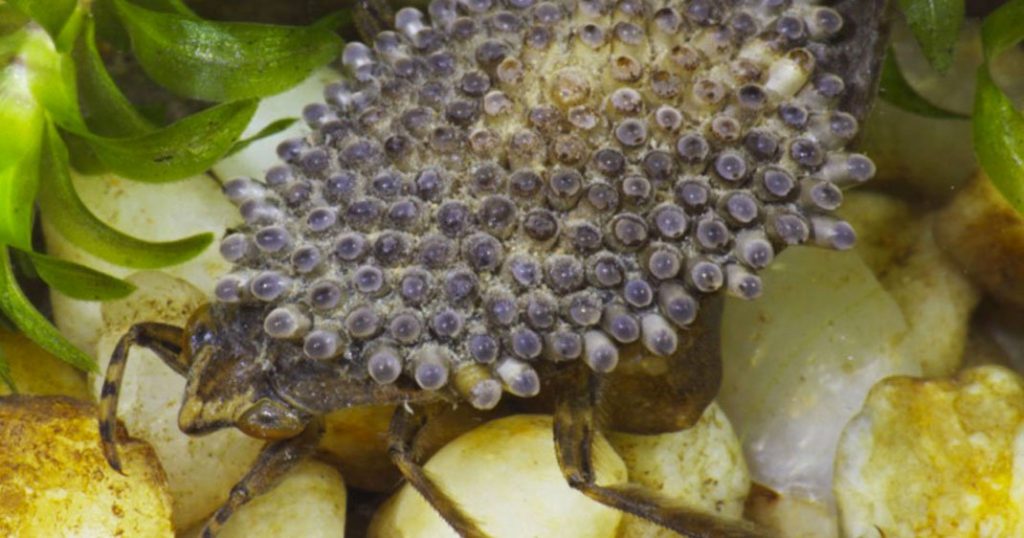
The diabolical stink bug, Halyomorpha halys, arrived by freight and has been advancing from the east of the country. It does not sting and poses no health risk, but it attacks a wide range of fruit and market crops, and it invades homes in autumn to overwinter. Its status is that of an established pest: the question is no longer containment but protecting orchards.
The Asian freshwater clam is a small freshwater bivalve that has been colonizing French waterways since the 1980s. It filters water at a rate that alters aquatic ecosystems and clogs industrial intake pipes. This is the classic example of the species nobody talks about because it lives beneath the surface, and the cost is borne by water-management operators.
Jussie, an ornamental aquatic plant introduced to beautify ponds, forms dense beds that suffocate habitats and block navigation. It appears on the European list. Its case illustrates the most common route of introduction in France: ornamental horticulture, and the seemingly harmless act of emptying a pond into a ditch.
Who Pays, and How Much
The cost question is what determines the means used, and it is poorly framed in public debate because the bill is split among several payers who do not talk to each other.
Communities pay for uprooting and mowing on public lands, with ragweed and knotweed mobilizing entire teams along roads and riverbanks each year. Farmers bear losses in crops and additional treatments—a case in point is the diabolical stink bug on orchards, and that would be the electric ant on Mediterranean crops if it were to leave the Var. Network operators pay for the clogging of water intakes. The beekeeping sector bears the losses of colonies due to the hornet.
Private individuals pay twice: through local taxes that fund uprooting campaigns, and directly when they must treat their land or remove contaminated soil through a specialized firm. One thing is certain in this landscape: eradicating a single focal point of seven hectares costs far less than the perpetual management of a species installed across eighty departments. This is the only economic argument that matters in this subject, and it argues for early detection.
The Five Gardener’s Questions
How can one tell the electric ant from a regular ant? Its extremely small size, about a millimeter, its golden color under natural light, its slow advance in dense lines, and above all the sting: a focal discharge unlike the bite of a common ant.
What should be done with an existing knotweed patch? Contain it rather than fight it: repeated mowing without leaving fragments on site, no soil or residues exported off the property, and above all no disposal in green waste. Eradication of an established patch is beyond a private individual’s means.
Should we declare ambrosia? Yes, and in many departments it is already mandatory where prefectural orders impose destruction before flowering. Ambrosia pollen is a major allergen and the critical period runs from August to October.
Are garden center traps against invasive species effective? The answer is the same as we gave for hornet traps: selectivity is the problem. A non-selective trap captures a large number of non-target insects, and its effectiveness against the targeted species remains weak; the same goes for the mosquito traps we compared.
Can one still buy a plant listed on the European list? No. The commercialization is prohibited throughout the Union, including between private individuals, including online. Check the list before purchasing an exotic ornamental plant, especially from foreign sellers.
Frequently Asked Questions
Where is the electric ant present in France?
Three confirmed foci in the Var: Toulon since 2022, La Croix-Valmer since 2023, and Cavalaire-sur-Mer since 2024, for about seven hectares in total. An undetected presence is considered likely in Bouches-du-Rhône and the Alpes-Mritimes.
Is the sting of the electric ant dangerous?
It causes intense, localized pain that can last up to three hours, with papules and prolonged itching. Anaphylactic shock is possible for allergic individuals. In cats and dogs, repeated stings on the face can lead to partial or total vision loss.
Is Japanese knotweed banned in France?
It has been on the European list of invasive exotic species since August 7, 2025, which forbids its transport, sale, and introduction into the environment. An already-present patch does not compel eradication, but it prohibits removing fragments and soil from the site.
How many species are listed on the European list?
More than ninety animal and plant species as of the update that took effect on August 7, 2025, which added eight plants including the three knotweeds. The framework is set by European Regulation No. 1143/2014.
How to report an invasive exotic species?
With a clear photograph, precise geolocation, and, for insects, a sample preserved in alcohol or frozen. The report can be submitted to the regional FREDON, to the town hall, or via the national platform dedicated to invasive exotic species.
Can one treat an electric ant nest oneself?
No, and it is counterproductive. A broad-spectrum pesticide dispersed on a nest disperses surviving queens and turns a single nest into multiple colonies. This species has several queens per colony, making fragmentation easy. The report always precedes the treatment.
What to Remember
In France there exists one species among the world’s hundred most invasive, occupying seven hectares, still technically eradicable, and almost nobody knows of its existence. That is the plainest summary of this dossier, and it is also what makes it useful: articles on invasive species typically arrive after the fact.
The decisive factor is neither climate, nor budget, nor technique. It is the delay between a species’ arrival and its detection. The tiger mosquito and the Asian hornet each benefited from fifteen years of invisibility; the electric ant is at four years, with three identified foci. That difference is the only one that truly matters.
For a private individual, the entire game hinges on a gesture that costs nothing: a clear photograph and a report. It may seem negligible in the face of the subject’s magnitude, yet it is the only individual contribution that has proven effective. We would have liked to recommend a product or treatment for this specific subject, but those do more harm than good.

Contact details
Address:
Farmers Forum,
36, Dominick Street,
Mullingar,
Co. Westmeath,
Ireland
Phone:
+353 (0)44 9310206
Or email us:
For technical issues please check out our FAQ's page or email - [email protected]
For general Queries email - [email protected]
Request to add event to our Calendar - [email protected]
Send us your mart reports - [email protected]
Suggestions and feedbacks - [email protected]
News Items / Press Release - [email protected]
To Advertise on Farmers Forum - [email protected]