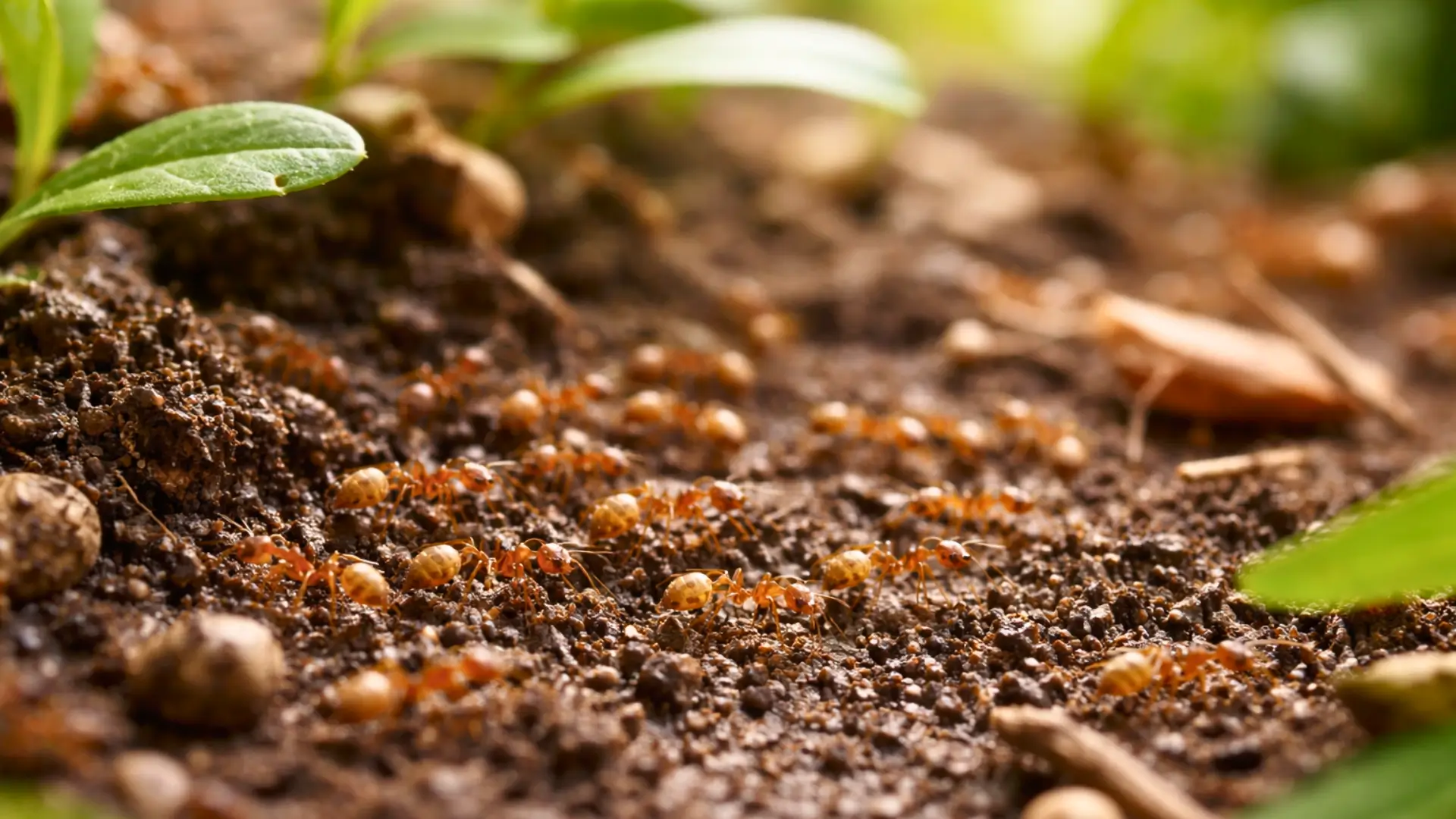
In the south of France, a tiny species is already upending the ecological balance. The discovery of a third electric ant outbreak in the Var region alerts authorities and scientists, while an unprecedented treatment is set to be deployed to curb their worrying progression.
A formidable invasive species with impacts already well documented by science
Invisible to the casual eye, the electric ant is as intriguing as it is alarming. Native to Central and South America, this ultra-aggressive invasive species is now regarded as one of the world’s most problematic, according to several scientific studies on its global distribution and ecological expansion. Its rapid adaptability enables it to colonize a wide range of environments.
Research has shown that Wasmannia auropunctata can form extremely dense supercolonies, while other studies have confirmed its capacity for rapid expansion across different habitats. These socially complex and invasive structures gradually displace native species and permanently alter the ecosystems where they take hold.
A painful sting and cascading consequences for wildlife and local human activities
At first glance, this ant may seem harmless, but it delivers a particularly painful sting. The intense skin reaction and allergic risks frequently appear, notably in regions already affected such as the Caribbean or certain parts of the Pacific.
But the effects do not end there. By targeting insects, birds, and even small mammals, the species profoundly disrupts biodiversity. The massive predation and the disruption of food chains weaken ecosystems already subjected to other environmental pressures.
In agricultural areas, the impact becomes even more insidious. These ants protect and breed aphids and scale insects, thus promoting their proliferation. This harmful symbiotic relationship to crops leads to significant economic losses for growers.
The Var becomes an open-air laboratory facing an invasion still limited in France
At this stage, the Var remains the only French department officially affected. The discovery of a third outbreak nevertheless confirms active progression. Enhanced surveillance and citizen reports allow rapid identification of contaminated zones.
The local authorities, in collaboration with scientific and health bodies, are stepping up prevention measures. They plan public meetings to inform residents about the actions to take. Public awareness and collective vigilance are essential levers to contain the spread.
A novel insecticide treatment tested for the first time to contain the spread
Facing this threat, authorities have made an exceptional decision. They authorize a dusting treatment with insecticide over two hectares in Toulon and La Croix-Valmer. This experimental targeted control strategy marks a first in France.
This choice draws on international experiences, particularly in overseas territories. Teams aim to limit the spread while avoiding excessive environmental impact. The delicate balance between effectiveness and ecological preservation remains at the heart of concerns.
Finally, authorities will outline strict precautions for residents before the operations begin, scheduled for May. They anticipate access restrictions, health recommendations, and post-treatment monitoring. The managed and gradual handling of this intervention seeks to prevent any drift while maximizing the chances of eradication.

Contact details
Address:
Farmers Forum,
36, Dominick Street,
Mullingar,
Co. Westmeath,
Ireland
Phone:
+353 (0)44 9310206
Or email us:
For technical issues please check out our FAQ's page or email - [email protected]
For general Queries email - [email protected]
Request to add event to our Calendar - [email protected]
Send us your mart reports - [email protected]
Suggestions and feedbacks - [email protected]
News Items / Press Release - [email protected]
To Advertise on Farmers Forum - [email protected]