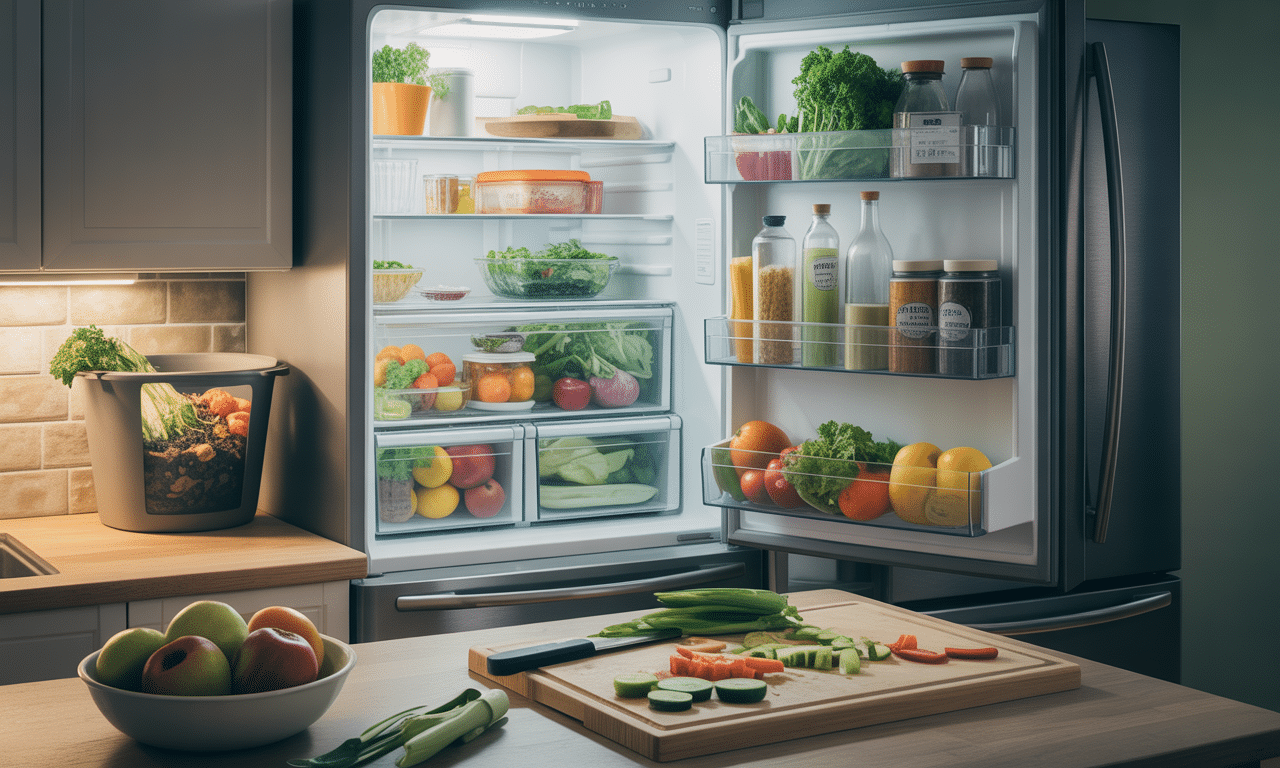
The verdict is relentless: while the planet strains under scarce resources, a large portion of what we produce to feed ourselves never makes it onto our plates. The FAO estimates that a very significant portion of global production is lost or discarded each year, a waste that weighs as much on household budgets as on the environment. Yet it is not necessary to wait for national reforms to act: simple daily actions substantially change the balance between purchasing and consumption. By prioritizing meal planning, applying the FIFO (first in, first out) rule in the refrigerator, or turning to freezing and composting, we reduce losses and lighten the bill. Digital tools, such as anti-waste apps, complement these practices by giving a second life to unsold goods. Beyond domestic efficiency, every reduction in food waste contributes to tangible savings and to the preservation of resources: individual responsibility becomes a lever for collective transformation.
Meal planning and stock management
Meal planning isn’t just a handy organizational trick: it’s a concrete lever to reduce food waste and to control one’s budget. By establishing a weekly menu and taking stock of the fridge and cupboards beforehand, one avoids buying duplicates and accumulating unused foods. This step reduces the chances of discarding an entire dish because it wasn’t anticipated.
Adopting the FIFO — First In, First Out — means consuming the oldest products first. Organize your shelves and place at the front what needs to be used quickly: a simple rearrangement that markedly reduces losses. Official resources provide practical sheets and tips for implementing these routines daily, useful for all households (practical advice).
Making a shopping list before heading to the supermarket is an act of refusal against impulsive buying. The rule is simple: shop according to the meal plan and the stock. Financial gains accompany environmental benefits: less food wasted, less packaging consumed. Media studies highlight the scale of the problem: alarming projections of tonnes of wasted food confirm that every action counts (see numerical analysis and outlook here).
Finally, involve household members in the planning: making everyone responsible changes behaviors and turns planning into a durable habit. Planning isn’t a constraint but a rational strategy to eat better, limit losses and rediscover meaning in our purchases.
Optimize preservation and extend shelf life
How you store a food item often determines its lifespan. Simple actions — airtight containers, vacuum bags, proper fridge settings — significantly extend the life of fresh produce. Investing a few minutes in good storage pays off in savings and natural resources. Classical techniques are now combined with innovations: research into edible films or protective coatings promises to extend the life of fruits, as illustrated by a recent advance on an edible biofilm applicable to strawberries (read).
The freezing is a powerful weapon against waste: by chopping and freezing surplus, you preserve nutrients and secure quick future meals. Learning to make homemade preserves, to sterilize, or to prepare portions ready to freeze transforms excess into a resource. Practical resources and tutorials offer safe methods to master these preservations (practical guides).
Here is a concise table useful for choosing a preservation technique by food item:
The combination of simple habits and technological innovations enables optimizing preservation and minimizing losses.
Valorize leftovers and foster culinary creativity
Transforming leftovers is not a minor trick: it is a political and economic choice. Reusing portions to create new dishes — soups, pies, salads, gratins — immediately reduces the volume of organic waste. Each transformation of a leftover into a consumed dish is a victory against waste. Numerous anti-waste recipes exist and inspire varied, nutritious and economical menus (practical examples).
Composting completes home valorization: peels, cores, coffee grounds and eggshells become a valuable amendment. Composting turns waste into a resource for the garden and reduces the volume of household rubbish. Guides and municipal programs explain how to compost easily, even in apartments.
For unsold and surplus foods, apps and local networks offer complementary solutions. Buying a basket of unsold items via anti-waste apps allows cheaper purchases and prevents the destruction of products. Too Good To Go is a widely publicized example; other local platforms offer similar solutions and tips to integrate these practices into daily life (practical resources).
Recent policies reinforce these dynamics: the gradual prohibition on destroying certain unsold items pushes for creative commercial and solidarity solutions (reform). Valorizing leftovers also means changing the social norm around the “perfection” of foods and accepting imperfect products as perfectly edible.
Reduce waste through technology and apps
Technology offers concrete tools to curb losses and optimize consumption. Mobile apps connect consumers and businesses to move surplus, smart thermostats manage energy use and sensors enable rapid detection of water leaks. Digital innovation changes behaviors and makes virtuous daily actions easier to implement.
Anti-waste platforms let you purchase baskets of unsold goods at reduced prices, discovering local businesses while avoiding disposal. Regular use of these services shifts purchasing habits and helps to consume more responsibly (example).
Smart thermostats and connected assistants, like some popular models, reduce energy expenditure by adjusting heating to actual needs. These devices often deliver substantial savings on the bill and lower the household’s carbon footprint. Meanwhile, apps and administrative guides help identify water leaks and install water-saving devices (aerators, showerheads, dual-flush toilets) to preserve the resource (ADEME resources).
Reasoned adoption of technology combines practicality and responsibility: data and automation amplify the impact of good individual practices.
Fight obsolescence and encourage repair
Fighting planned obsolescence is a key dimension in reducing waste beyond the kitchen. Buy less but better, maintain and repair to extend the life of devices and limit the flow of still-functional equipment to the waste stream. Prioritizing repair is a powerful economic and ecological act.
Local initiatives like repair cafes enable people to learn to repair devices themselves, share skills and reduce costs. Reuse and exchange platforms promote a second life for objects and reduce the extraction of new resources. Laws and measures aim to encourage these practices, holding manufacturers and consumers accountable (examples of reforms).
The recycling sector and the transformation of food waste into useful materials also illustrate the opportunity of a circular economy: projects convert biodigestible waste into plastics or fertilizers, revealing paths to valorize streams once lost (industrial innovation).
Adopting a sustainable logic involves informed consumption choices: favor repairable products, check labels and inform yourself via guides of best practices or in-depth articles that enumerate effective solutions (analysis, recommendations). Changing our purchasing and consumption habits is the condition to transform waste into an opportunity to preserve resources.
Synthesis of levers to reduce food waste at home
The conclusion is unequivocal: food waste wastes resources and weighs on the household budget as much as on the environment. Acting at home is not a cosmetic option but a pragmatic necessity. Meal planning and a rigorous shopping list turn simple intentions into concrete results: you reduce impulse purchases, avoid duplicates, and consume what you already have.
Adopting stock management methods like FIFO (first in, first out) and visually organizing the fridge and cupboards greatly reduces forgotten products that end up in the trash. Proper preservation — airtight containers, labeling, freezing surplus — extends the shelf life of foods and provides culinary security that translates into immediate savings.
Valuing leftovers and accepting fruits and vegetables that are “less than perfect” challenges superficial norms while boosting food efficiency. Transforming leftovers into new recipes or composting to enrich a home soil makes every waste into a resource. These simple acts create a virtuous circle that is economically positive and environmentally necessary.
It is also strategic to integrate digital tools and collective behaviors: anti-waste apps, sharing responsibilities within the home, and learning preservation techniques. These levers act both on waste reduction and on sustainable awareness.
More than a mere addition of good practices, the fight against waste requires a systemic logic: organize, preserve, reuse, repair. Each thoughtful domestic action translates into less waste, lower expenditure, and a tangible impact on preserving resources. Adopting these principles turns constraint into daily opportunity.
FAQ — How to limit food waste at home
Q : What is the real scale of food waste and why act at home?
R : Globally, nearly a third of produced food is discarded each year according to the FAO, and in France the figure reaches about 29 kg per person per year. Acting at home has a double effect: it reduces environmental impact (wasted resources, emissions) and yields concrete savings on the food budget. It is therefore an effective and immediate lever to reduce our footprint.
Q : How does meal planning genuinely help limit waste?
R : Planning forces you to buy and consume based on real needs and existing stocks. It avoids double purchases and unconsumed surpluses. In practice, make a weekly menu based on your refrigerator and cupboards: you will reduce losses and optimize your grocery budget.
Q : What do you gain by making a shopping list before going to the store?
R : A list limits impulse purchases responsible for waste. By sticking to the list, you buy only the ingredients needed for planned meals and avoid products that expire and end up in the trash.
Q : Should we buy fruits and vegetables that are “less than perfect”?
R : Yes. Products that are aesthetically imperfect are often just as nutritious and cheaper. Buying them reduces upstream waste and supports more sustainable consumption. It’s a simple gesture that also signals economic realities to supply chains.
Q : How to reuse leftovers intelligently?
R : Leftovers can become new dishes (salads, sandwiches, soups, gratins). Transforming surpluses stimulates culinary creativity and reduces waste. Store them in appropriate portions and note simple recipe ideas so they don’t go to waste.
Q : What are the essential rules to preserve properly foods?
R : Read the labels, use airtight containers, keep products visible and accessible, and separate foods according to their needs (wet/dry, fridge/pantry). Good preservation extends shelf life and avoids premature losses.
Q : Is the freezer really useful to reduce waste?
R : Absolutely. Freezing saves fruits, vegetables and prepared dishes that are starting to spoil. Portion before freezing, label with the date and use these reserves for smoothies, soups or quick meals: it’s a simple way to avoid waste and save time.
Q : What is the FIFO method and how to apply it at home?
R : FIFO = First In, First Out: consume the oldest products first. Do regular inventories, place newer items at the back and those to be used quickly at the front. This discipline reduces spoiled products and improves domestic stock management.
Q : Is composting suitable for small homes?
R : Yes: there are compact and odor-free solutions for balconies or kitchens. Compost peels, coffee grounds and vegetable scraps to create a useful amendment. Composting reduces the volume of household waste and valorizes organic matter.
Q : How to adjust portions to avoid cooking too much?
R : Measure or weigh ingredients to estimate the amount needed per person, or prepare individual portions you can freeze. If you like cooking in large quantities, immediately divide the dish into portions to keep: this limits uneaten leftovers.
Q : Are reusable containers relevant against waste?
R : Yes. Reusing boxes and jars avoids disposable dishware and makes storing leftovers easier. Transparent, labeled containers improve stock visibility and encourage consumption before expiration.
Q : How to raise family awareness about sorting and reducing waste?
R : Involve every member in meal planning, composting and fridge inventory. Explain the stakes (economic and environmental) and assign simple tasks: make the list, check dates, prepare leftovers. Collective responsibility yields durable results.
Q : Are anti-waste apps useful for consumers?
R : Yes: they allow purchasing unsold items at reduced prices and prevent still-usable products from being discarded. Using these services strengthens the local economy and complements domestic waste-reduction efforts.
Q : How to correctly interpret packaging dates to avoid throwing away unnecessarily?
R : Differentiate the Date of Minimum Durability (“best before” indicating possible quality loss) from the Use-By date (“consume by”) tied to safety. Learn to use your senses (smell, look) to complement these indications and avoid waste driven solely by fear of dates.
Q : Which simple techniques extend the freshness of fruits and vegetables?
R : Store ethylene-producing fruits (apples, bananas) separately from those sensitive to this gas; cut and freeze overly ripe products for smoothies; use perforated bags or airtight containers to control humidity. Making homemade preserves is also a solution to enjoy seasonal produce longer.

Contact details
Address:
Farmers Forum,
36, Dominick Street,
Mullingar,
Co. Westmeath,
Ireland
Phone:
+353 (0)44 9310206
Or email us:
For technical issues please check out our FAQ's page or email - [email protected]
For general Queries email - [email protected]
Request to add event to our Calendar - [email protected]
Send us your mart reports - [email protected]
Suggestions and feedbacks - [email protected]
News Items / Press Release - [email protected]
To Advertise on Farmers Forum - [email protected]