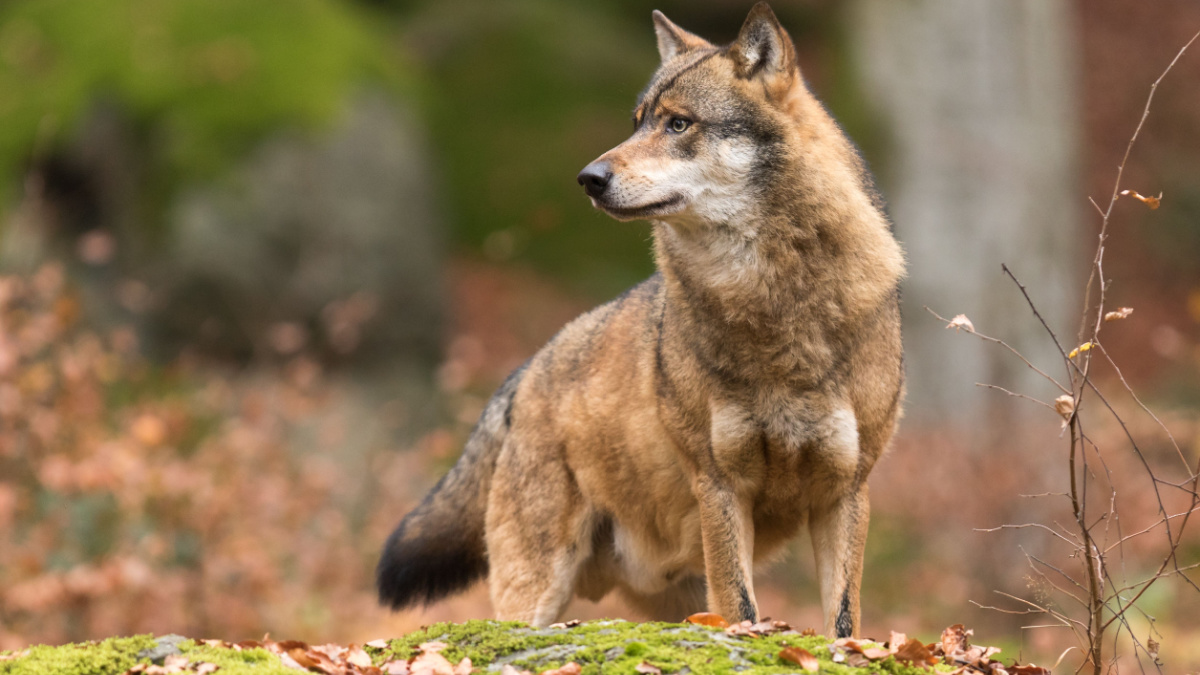
Examination of bones from Europe, Asia and North America has helped clarify the influence of environmental and human pressures on the cranial morphology of the gray wolf, one of the terrestrial predators with the widest geographic range.
Three main factors
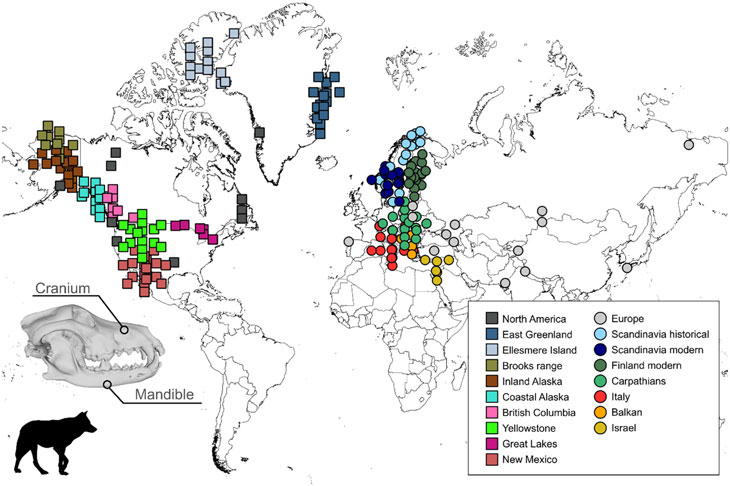
It turned out that the shape of the skull of Canis lupus was essentially influenced by three factors. The first was historical geographic location: wolves living at higher latitudes displayed a larger cranial volume than those in more southern regions. This finding aligns with Bergmann’s rule, which holds that animals living in colder environments develop larger bodies to better retain heat.
The second factor boiled down to the size of the prey. Overall, wolves feeding on large herbivores had larger skulls. As an illustration of its influence, Yellowstone wolf populations, known to feed mainly on elk, displayed cranial volumes comparable to those of gray wolves living in regions much farther north in North America.
Finally, habitat and population fragmentation, resulting essentially from human development and centuries of widespread hunting of the animal, constituted the third factor. Concretely, when a new animal population grows from a small group of individuals, the accompanying loss of genetic diversity can translate into a strengthening of certain morphological traits.
If such a trajectory has been documented in Italy, as well as in the Arctic and on the coast of Alaska, the gray wolves of Norway and Sweden provide a striking example. On the brink of extinction in the 1960s, the species experienced a rebound after the establishment of a small, more eastern population in this part of Scandinavia. The result: these animals today are distinguished by wider frontal bones, more prominent cheekbones, and a snout angled more downward.
Des implications pour la conservation du loup gris
Illustrating our impact on wildlife, these works published in the journal Diversity and Distributions could guide gray wolf conservation efforts, which help regulate populations of wild ungulates known to damage crops.
As the authors note, these results show once again that human influence is not limited to changes in the numbers of a given population. It can also alter their evolutionary trajectory across multiple generations.
Last year, a study revealed a 58% increase in wolf populations in Europe within just ten years.

Contact details
Address:
Farmers Forum,
36, Dominick Street,
Mullingar,
Co. Westmeath,
Ireland
Phone:
+353 (0)44 9310206
Or email us:
For technical issues please check out our FAQ's page or email - [email protected]
For general Queries email - [email protected]
Request to add event to our Calendar - [email protected]
Send us your mart reports - [email protected]
Suggestions and feedbacks - [email protected]
News Items / Press Release - [email protected]
To Advertise on Farmers Forum - [email protected]