
The decree went almost unnoticed. On December 26, 2025, the government pushed back by three years the obligation to fit existing homes with a programmable thermostat: from January 2027 to January 2030. New buildings, for their part, remain bound by the January 1, 2027 deadline. Nine months later, most French pages devoted to the subject still announce a 2027 obligation for everyone.
That postponement carries two messages. The first is administrative: the sector was not able to equip thirty million homes in eighteen months, and the measure would have caused shortages and a surge in installation prices. The second is more interesting for a resident: you are not required to buy anything this winter. The question returns to an economic one—how much does it really save, in what time frame, and no longer regulatory.
This dossier is the second part of our heating series. The first looked at what costs nothing and the real comparison of heating energies; this one focuses on control equipment, with quantified gains depending on the starting point. Because this is the point brochures gloss over: the thermostat does not guarantee a fixed percentage saving. It yields what your current installation is letting you lose.
All figures below start from two reference invoices: a gas-heated house consuming 12,000 kWh of heating per year, about €2,065 at the reference price in effect since September 1, 2026, and a fully electric house consuming 9,000 kWh of heating, about €1,814. Adapt pro rata to your own bill.
What the obligation actually says, and what it does not require
A decree from June 2023 established the principle: all buildings with a heating or cooling system must have automatic temperature regulation. Decree no. 2025-1343 of December 26, 2025 pushed its application to existing housing.
| Situation | Deadline |
|---|---|
| New buildings | January 1, 2027 |
| Existing buildings, individual dwellings, condominiums, tertiary sector | January 1, 2030 |
The level of obligation is modest. The device must allow regulation by room or by heating zone, and offer at least four modes: comfort, reduced, frost protection, and off. A wired programmable thermostat at €120 satisfies these criteria. Nowhere does it say that you need a gateway, an app, or a subscription.
The burden falls on the owner, occupant, or landlord; maintenance is the occupant’s responsibility. And there is a release clause: the installation can be omitted when it is “technically and economically unfeasible,” notably when the payback period exceeds ten years or when the heating equipment has no automated fuel supply, such as a wood stove.
No sanction is provided for a private individual who does not equip themselves. The real lever lies elsewhere: the energy performance diagnostic, the resale value of the property, and eligibility for renovation aid. Treating the issue as a regulatory constraint misses the heart of the argument, which is a financial argument.
ADEME’s 15%: what the number covers
The agency states “up to 15%” in heating savings with a programmable thermostat. The figure is echoed everywhere, almost always without its most important word: up to.
These 15% are measured relative to a home with no regulation at all: boiler set manually, radiators left open, temperature imposed rather than controlled. This is the most unfavorable starting point, and it is increasingly uncommon. The real gain depends entirely on what is already in place.
| Starting Point | Expected Gain | Gas house 12,000 kWh | Electric house 9,000 kWh |
|---|---|---|---|
| No regulation: boiler alone, manual valves | 12 to 15 % | €247 to €309/year | €217 to €272/year |
| Non-programmable room thermostat | 6 to 10 % | €123 to €206/year | €108 to €181/year |
| Programmable thermostat installed but never programmed | 8 to 12 % | €165 to €247/year | €145 to €217/year |
| Proper programming already in place | 2 to 4 % | €41 to €82/year | €36 to €72/year |
The third row is the one worth pausing on. A programmable thermostat installed and left in manual mode yields no savings. We regularly see recent installations, correctly fitted, where no one has ever opened the programming menu. In this specific case, the gain of €165 to €247 per year is obtained in twenty minutes, with the equipment already on the wall, at no cost. It is the best return on effort in this dossier, and it is not sold.
The fourth line deserves the same honesty in the opposite direction: if your heating is already correctly programmed, replacing a wired box with a connected model will not bring much. Comfort of use, yes. The bill, only marginally.
The equipment, with their real payback times
Assumed for this table: a gas dwelling equipped with a non-programmable thermostat, representing the most common case, with a median gain of 8%.
| Equipment | Material price | Estimated gain | Payback |
|---|---|---|---|
| Wired programmable thermostat | €90 to €180 | ~€165/year | less than one year |
| Connected thermostat | €180 to €280 | ~€165/year | 1.4 years |
| Connected thermostatic heads, 8 radiators + gateway | €550 to €700 | ~€165 to €250/year | 3 to 4 years |
| Outdoor sensor and water-temperature law (boiler-compatible) | €350 to €500 installed | ~€200/year | 2 to 2.5 years |
Two cautions about these figures. They assume autonomous installation of a wireless thermostat; expect €150 to €300 in labor for a wired installation by a professional, which doubles the payback time for the first item. And they assume actual use of programming, which brings us back to the previous paragraph.
The outdoor sensor case is special and underestimated. On a compatible boiler, it adjusts the water temperature in the circuit to the outside temperature rather than keeping it at a fixed setpoint. On a correctly dimensioned radiator system, it is often the most profitable item after programming, and no one talks about it because it is not sold in supermarkets. Our tests and our article on connected thermostats detail compatibility by boiler brand.
The one-degree rule, and its limits
Reducing the setpoint by one degree, about 7% less heating consumption: that is ADEME’s reference rule, and it holds. In our two sample invoices, one degree is worth €145 per year on gas and €127 per year on electric.
This is substantial, and that is why the setpoint takes precedence over hardware. Dropping living spaces from 21°C to 19°C yields more savings than any device and can be done the same evening.
Limitations of the rule, rarely stated: it applies to an average setpoint, not to a targeted drop. It assumes a home with inertia that can actually descend. And it reaches a physical boundary around 16°C when occupied, below which the relative humidity rises to promote condensation on cold walls. Lowering a room to 14°C to save, only to see mold appear in a corner, is a poor overall calculation.
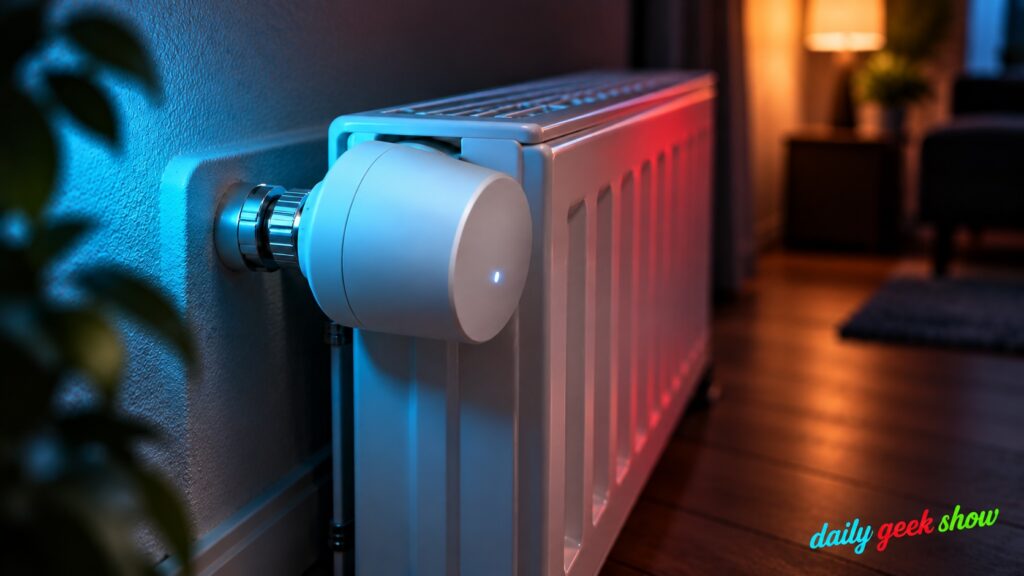
The night setback: the nuance that inertia imposes
“Lower by 3°C at night” is universal advice that becomes false for part of installations. You must distinguish according to the system’s inertia.
Hydronic radiators or electric convectors, low-inertia dwelling. The setback works perfectly. Temperature falls quickly, rises quickly, and the savings are real. A 3°C setback over eight hours yields a net gain.
Underfloor heating, heat pump, highly inert dwelling. A deep setback is counterproductive. The system takes hours to cool down, hours to warm up, and the warming occurs at the most disadvantageous moment—the early morning when outside temperature is lowest and the heat pump’s efficiency is at its weakest. For these installations, a setback of 1 to 1.5°C maximum, or a constant setpoint, yields a better result than a pronounced drop.
This is probably the most widespread error among owners of recent heat pumps, who apply a boiler-derived reflex and see a bill that does not drop. Controlling a heat pump is about smoothing, not alternating.
For absences, however, the rule holds steady regardless of the installation: 18°C for a night or a day away from the dwelling, 16°C after more than 24 hours, 14–16°C for absences longer than three days. Below that, the recovery cost outweighs the savings.
What does not work
Completely close the radiators in unoccupied rooms. The logic seems airtight but it is false in a house. An unheated room becomes a cold sink: it steals heat from neighboring rooms through walls, increasing their consumption, and its cold surfaces become condensation points. The useful setpoint for an unused guest room or office is 16°C, not 0.
Turn off heating during the day in a well-insulated house. In a recent build, the loss over eight hours is small and the recovery costs as much as was saved. The setback remains useful; turning it off is not.
Multiply connected thermostatic heads on every radiator. It is the easiest way to overspecify. Eight heads at €70 each plus a gateway total about €600, with a payback of three to four years, for a gain that actually concentrates on three or four rooms where usage varies. Equipping the kitchen, bathroom, and bedrooms makes sense; equipping the corridor does not.
Relying on the app to do the job. Geolocation and machine learning features work, but their impact on the bill is marginal compared with a correct weekly programming. They sell comfort, not kilowatt-hours.
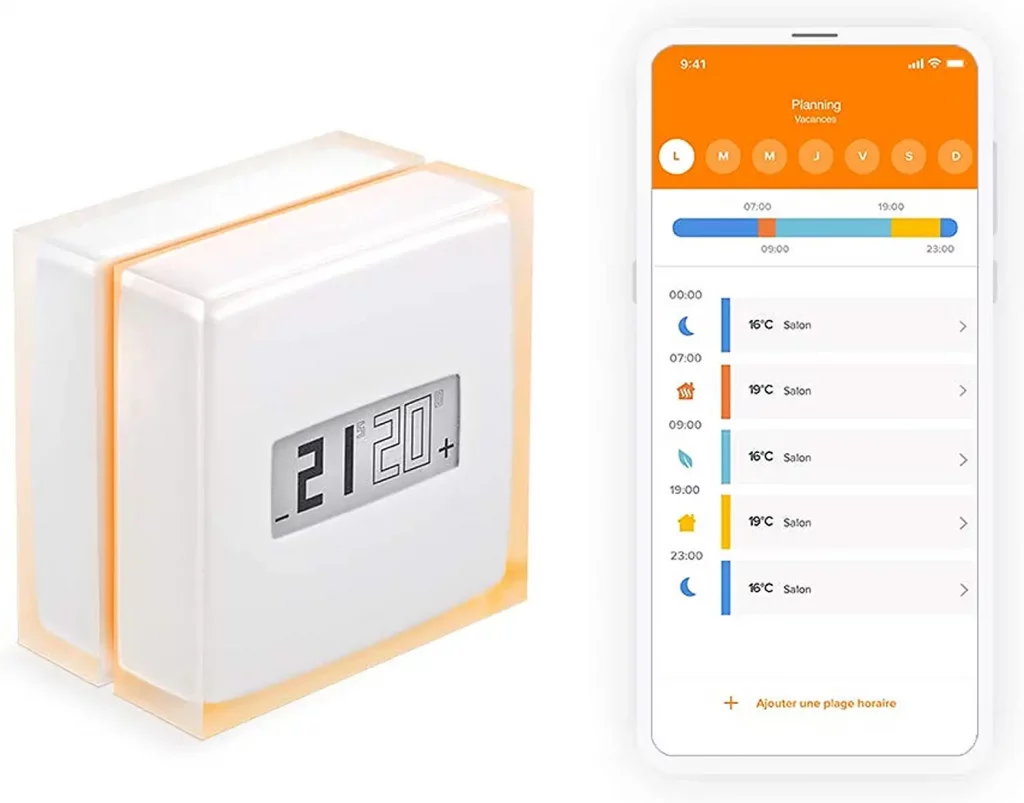
Control beyond the thermostat
Two levers go beyond simple temperature adjustment and deserve evaluation this autumn.
The first is pricing. For a home heated with electricity, hourly control weighs as much as thermal control: shifting heating, hot water, and major loads to off-peak hours changes the bill without altering comfort. We quantified the break-even thresholds between the Base, Off-Peak Hours, and Tempo options in our tariff-options comparison with a counterintuitive result: the break-even point for the off-peak option is around 25% of the consumption shifted, and Tempo is better suited to small consumers than to homes heated with electricity.
The second lever is shedding. Devices like the Voltalis system we examined in our Voltalis dossier control electric radiators via micro-cuts to smooth network peaks, with no installation cost to the occupant. The stated gain is real but modest, and the real trade-off is the counterparty: a third party controls part of your heating and exploits the associated data. It must be a knowing choice, not just a claim of “free.”
Finally, for a dwelling with electric heating, replacing old convectors with programmable inertia radiators is justified more for comfort and regulation than for efficiency—a convector and an inertia radiator both transform one kilowatt-hour into one kilowatt-hour of heat. The gain comes from tighter control and temperature stability, not from higher thermal efficiency, as we detailed in our analysis of so-called economical radiators.
Frequently Asked Questions
Is a programmable thermostat mandatory in 2027?
For new buildings, yes, as of January 1, 2027. For existing dwellings, the deadline has been extended to January 1, 2030 by decree no. 2025-1343 of December 26, 2025. Many online pages still announce 2027 for everyone.
How much can be saved with a programmable thermostat?
Between 2% and 15% depending on the starting point. The maximum 15% claimed by ADEME corresponds to a home with no regulation at all. With a room thermostat that is already non-programmable, the realistic gain is 6 to 10%, i.e., €123 to €206 per year on a gas bill of €2,065.
Should heating be reduced at night with a heat pump?
Little, or not at all. A deep setback makes the early morning temperature rise, when outdoor temperature is lowest and the heat pump’s efficiency is weakest. For these installations, a setback of 1 to 1.5°C or a constant setpoint yields a better result than a 3°C drop.
What is the right temperature in an unoccupied room?
16°C, not 0. An unheated room steals heat from neighboring rooms through walls and its cold surfaces become condensation points, with a risk of mold. Total shutdown is only justified for a space not adjacent to living areas.
Are connected thermostatic heads worth their price?
Yes, for three or four rooms where usage varies; the payback is around three years. Across an entire dwelling, no: eight heads and a gateway cost around €600, with savings concentrated in a few rooms. Equipping bedrooms, the kitchen, and the bathroom makes sense; equipping the hallway does not.
Does one degree less really save 7%?
Yes, it is ADEME’s reference rule and it holds for an annual average setpoint. Specifically, one degree equals about €145 per year on a gas bill of €2,065 and €127 on an electricity bill of €1,814. The limit sits near 16°C when occupied, below which condensation risk rises.
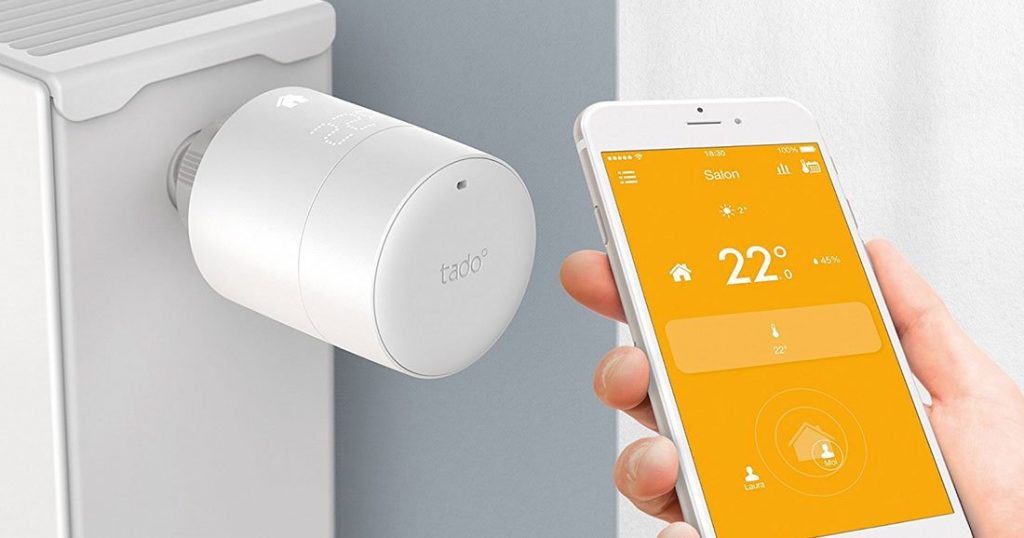
The order of actions
This weekend, for free: open the thermostat’s programming menu and write a typical week. Then lower the living-space setpoint by one degree and wait three days before judging. These two actions cover the majority of available gains and cost nothing.
Before December, if there is no regulation at all: a programmable thermostat, wired or wireless, €90–€180. The payback time is shorter than a heating season. The connected version is justified if presence schedules are irregular; otherwise the wired version delivers the same bill impact.
Next year, if budget allows: thermostatic heads on three or four rooms with variable usage, and the outdoor sensor if the boiler accepts it. In that order, not the other way around.
What we would not do: buy a full room-by-room regulation system in September to anticipate an obligation that does not apply until 2030, in a home where programming has never been used. That’s €600 spent for a result that was available in twenty minutes.
The third part of this series will cover insulation of singular points—uninsulated attics, electrical boxes, joints in joinery—and what the aid schemes actually cover after the restrictions effective from September 1, 2026.

Contact details
Address:
Farmers Forum,
36, Dominick Street,
Mullingar,
Co. Westmeath,
Ireland
Phone:
+353 (0)44 9310206
Or email us:
For technical issues please check out our FAQ's page or email - [email protected]
For general Queries email - [email protected]
Request to add event to our Calendar - [email protected]
Send us your mart reports - [email protected]
Suggestions and feedbacks - [email protected]
News Items / Press Release - [email protected]
To Advertise on Farmers Forum - [email protected]