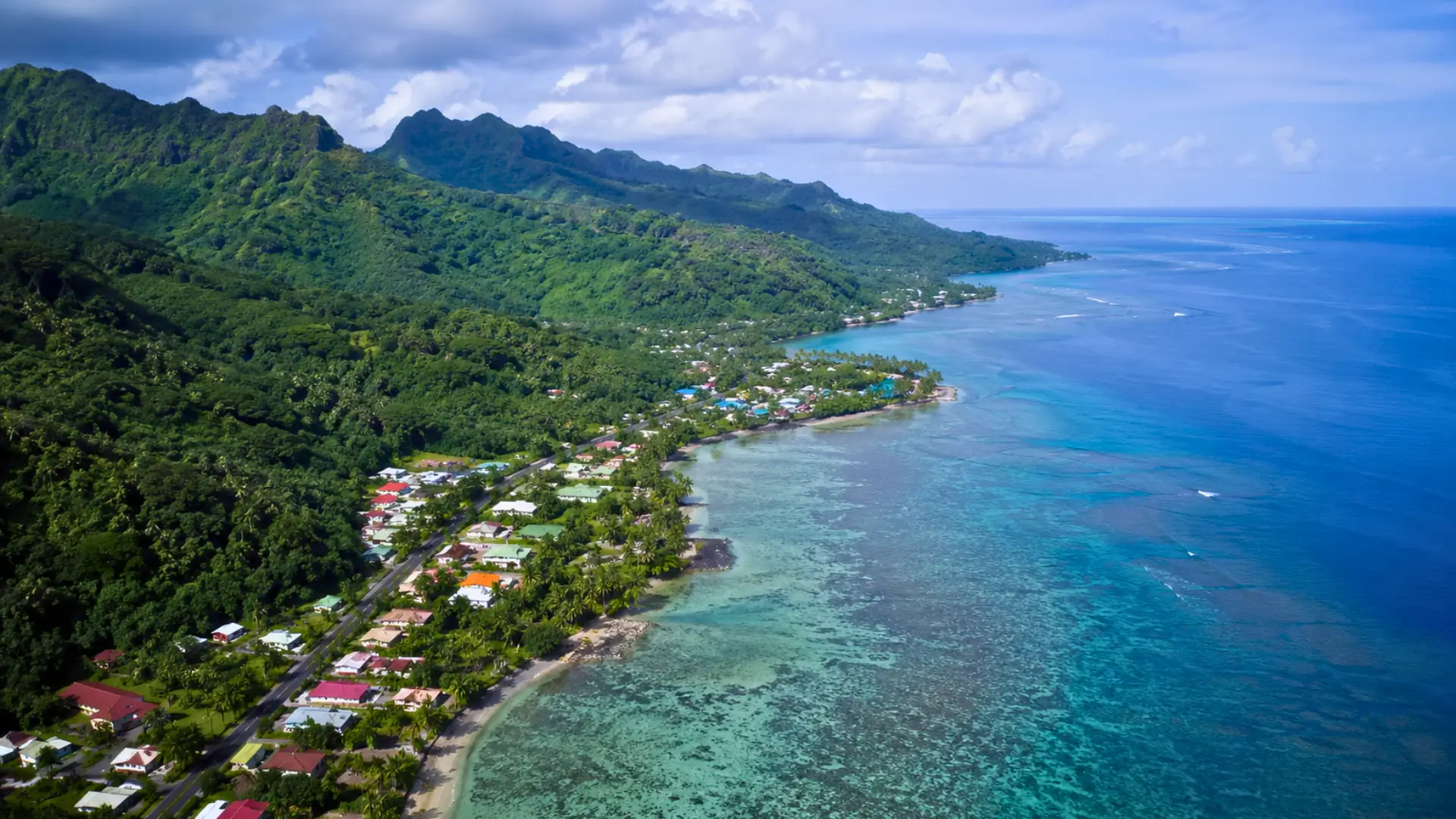
They seem isolated, almost shielded by the sea. Yet islands concentrate exceptional biodiversity and threats that are accelerating. A global study reveals that France, thanks to its overseas territories, is more exposed than one might imagine to this insular crisis.
The Global Inventory of Islands Reveals Their Fragility in the Face of Global Pressures
For a long time, the risks weighing on islands were studied separately. Here, sea-level rise. There, a forest replaced by crops or an invasive species. For the first time, scientists have linked these pieces to produce a planetary view of the dangers threatening island ecosystems.
Published in the scientific journal PNAS, the study examined islands larger than one square kilometer by cross-referencing multiple environmental databases. The researchers then projected their trajectories through 2050. The result draws a worrisome map where pressures stack, sometimes on tiny territories.
Island Ecosystems Facing a Climate Pressure Intensifying by 2050
According to projections, 65 % of island ecosystems will be principally exposed to climate change by 2050. Behind this statistic lie concrete upheavals: prolonged droughts, extreme rainfall, shifts in climatic zones, warming waters and the progressive disappearance of habitats that have become too hot or too unstable.
Climate does not arrive alone. For 22 % of the studied ecosystems, the main threat would arise from land-use transformations. Urbanization, agriculture, tourist infrastructures or deforestation can fragment already narrow environments. On an island, a few kilometers of road can sometimes permanently sever a wildlife population from its habitat.
Biological invasions would dominate the risk for 13 % of territories. Accidentally introduced by a ship, an airplane or goods, a predator can trigger a true ecological earthquake. Island species, long deprived of competitors, often have few natural defenses against rats, snakes, insects or plants from elsewhere.
When France’s Overseas Territories Become Global Climate Sentinels
Seen from Europe, France resembles a continental country. Its actual geography stretches from the Caribbean to the Pacific, passing through the Indian Ocean and the southern seas. This global presence grants it an immense ecological responsibility, but also exposes it to the threats documented by the researchers.
French Polynesia and certain metropolitan islands notably host “exposure hotspots,” where climate, urbanization and invasive species are likely to combine. France thus belongs to the quarter of nations most affected, alongside Fiji, Seychelles, Japan, India or Micronesia.
The Global Race to Preserve Island Biodiversity in the Face of Climate Threats
Islands occupy only about 7 % of the land but host nearly 20 % of global biodiversity. This concentration makes every disappearance particularly heavy. When an endemic species goes extinct on its sole island, it cannot recolonize a neighboring territory. It simply vanishes from the planet.
The authors notably recommend restoring degraded habitats and developing protected areas tailored to local realities. Restoring a mangrove can mitigate storms, welcome species and slow erosion. Protecting an island thus involves more than drawing a boundary on a map; it means repairing its balances.
Yet the assessment remains incomplete. The available data still poorly describe plastic pollution, artificial lighting at night, chemical substances or the overexploitation of resources. The current figures could therefore underestimate certain threats. By 2050, the fate of islands will depend as much on climate models as on decisions made today, sometimes thousands of kilometers from their shores.

Contact details
Address:
Farmers Forum,
36, Dominick Street,
Mullingar,
Co. Westmeath,
Ireland
Phone:
+353 (0)44 9310206
Or email us:
For technical issues please check out our FAQ's page or email - [email protected]
For general Queries email - [email protected]
Request to add event to our Calendar - [email protected]
Send us your mart reports - [email protected]
Suggestions and feedbacks - [email protected]
News Items / Press Release - [email protected]
To Advertise on Farmers Forum - [email protected]