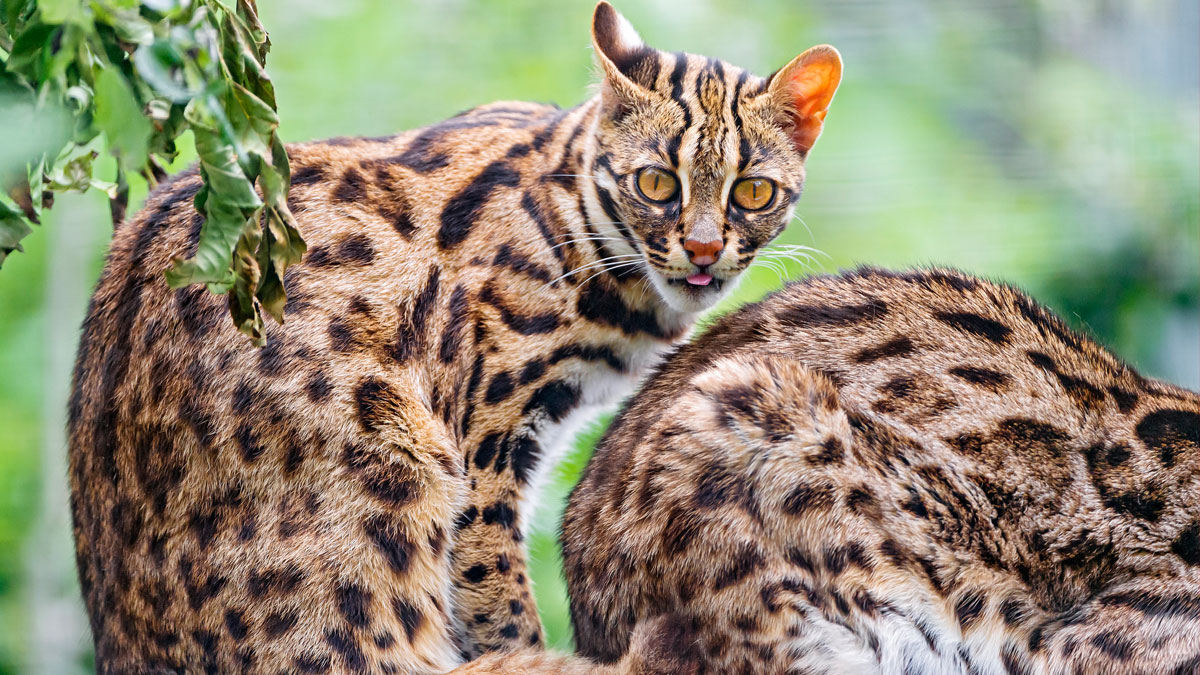
Although domestic cats arrived in China via the Silk Road, it turns out that over the course of previous millennia the locals had another “companion feline”: Prionailurus bengalensis.
Sustainable Coexistence
Analysis of the remnants of 22 animals from 14 ancient settlements scattered across the country shows that the leopard cats lived alongside local populations for nearly 3,500 years. About the size of a typical domestic cat, these Asian-origin felines, distinguished by their spotted coats that recall a far more formidable species, would have helped curb the spread of rodents.
The oldest documented example dates to around 5,400 years ago, in the Neolithic era, P. bengalensis disappears from archaeological records around 150 CE. According to the study authors, published in the journal Cell Genomics, this trajectory could reflect the profound social and economic upheavals that shook China following the collapse of the Han dynasty.
Lower harvests would have led to a drastic reduction in rodent populations, prompting inhabitants to part ways with their four-legged companions. A situation echoing the durable disappearance of black rats in Europe, following the fall of the Roman Empire.
It took six centuries before this gap was filled, as evidenced by the first remains of domestic cats found in China, from the city of Tongwan, an important Silk Road trading outpost. Genetic analyses indicate a close kinship with populations of the Levant and Central Asia, reinforcing the idea of an introduction by merchants originating from those regions.
A Notable Return
C’est également à cette époque que les petits félidés ont fait leur retour dans la culture chinoise, avec des représentations notamment trouvées sur des sépultures associées à la dynastie Tang (VIIᵉ au Xe siècle de notre ère).
Le fait que près de 85 % des chats représentés dans les peintures anciennes soient blancs suggère que les anciennes élites locales affectionnaient particulièrement les animaux au pelage clair.
Globalement, ces découvertes indiquent que la fin du « commensalisme entre l’Homme et le chat léopard », retourné à la vie sauvage, a essentiellement coïncidé avec la domestication du chat sauvage africain et sa diffusion en Europe.

Contact details
Address:
Farmers Forum,
36, Dominick Street,
Mullingar,
Co. Westmeath,
Ireland
Phone:
+353 (0)44 9310206
Or email us:
For technical issues please check out our FAQ's page or email - [email protected]
For general Queries email - [email protected]
Request to add event to our Calendar - [email protected]
Send us your mart reports - [email protected]
Suggestions and feedbacks - [email protected]
News Items / Press Release - [email protected]
To Advertise on Farmers Forum - [email protected]