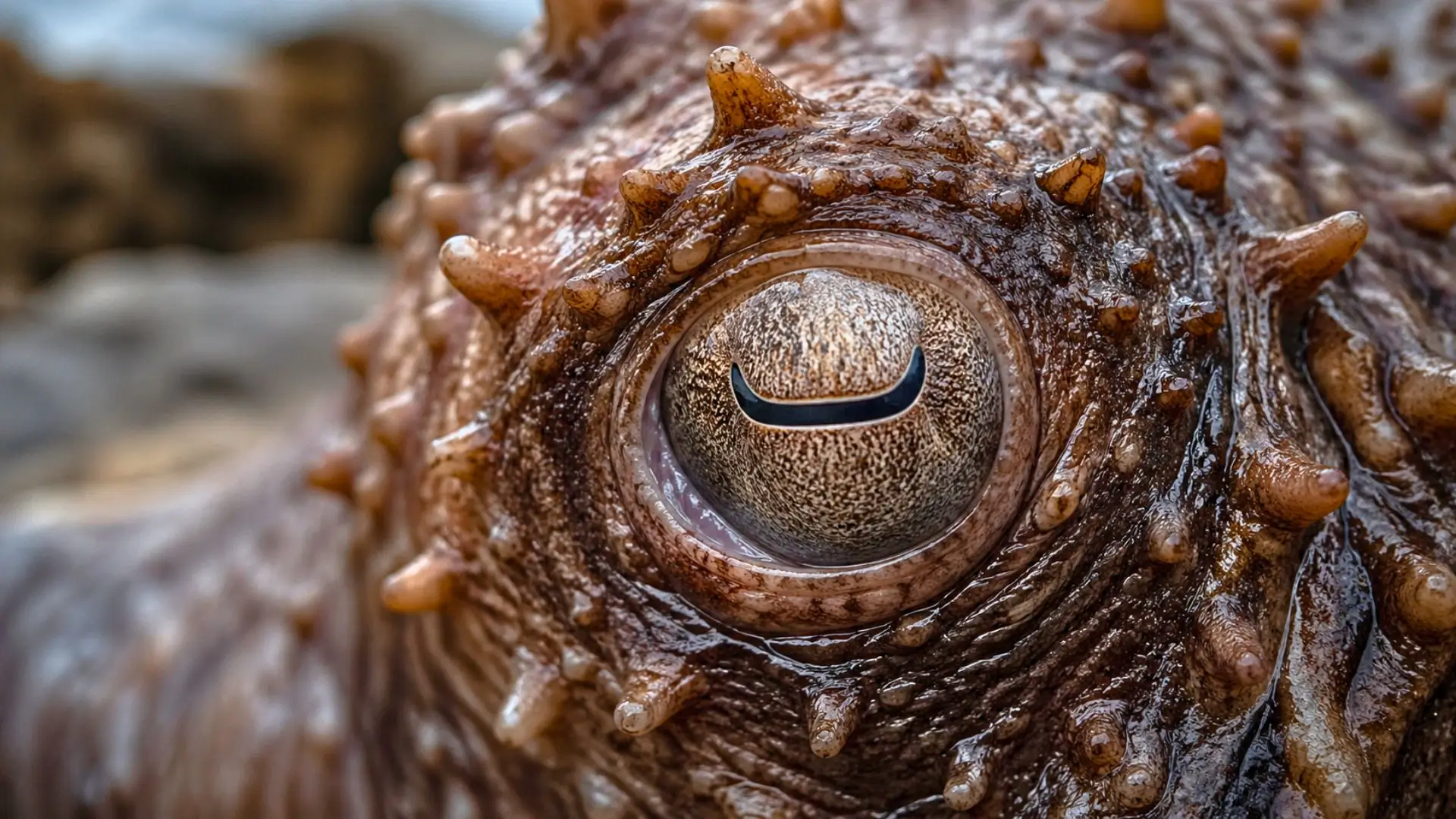
The University of Hokkaido announced on Thursday the unprecedented discovery of giant Cretaceous octopuses. Several colossal marine predators pulverized their prey using extraordinarily powerful jaws. You will soon see how such hunters radically redefine the scientific view of ancient oceanic ecosystems.
Twenty-seven fossilized jaws prove the existence of sea monsters reaching nineteen meters in length
Twenty-seven fragments unearthed in Japan and Canada document the historical presence of Cretaceous giant octopuses. The Japanese research team classifies the extinct creatures into two distinct species. Their colossal size far exceeds that of today’s giant squid.
Moreover, the largest specimen measured up to nineteen meters. Picture there a gigantic invertebrate, roughly the volume of a six-story building. Its exceptional dimensions vastly surpassed the typical scale of the great reptiles that have long dominated the expansive oceanic realms.
Thanks to artificial intelligence, algorithms extract jaws designed to crush shells
Because of their soft anatomy, ancient mollusks leave very rare traces. Yet their sturdy chitinous beaks cross the geological ages largely intact. Twelve new rock samples complete the existing museum collection to bolster a meticulous morphological study.
To analyze these pieces, the computer algorithm virtually separates the rock matrix from the fossil. First, scientists meticulously photograph finely abraded strata. Then a specialized program generates a 3D model of a deadly buccal apparatus, designed to fracture resistant shells.
The asymmetric wear of the jaws betrays the existence of a keen intelligence in this feared marine predator
Additionally, Japanese specialists note a pronounced wear on only one edge of the fragments. Such physical asymmetry demonstrates that the creature consistently favored a dominant tentacle during hunts. This reveals a lateralized behavior typical of evolved beings.
Today, among modern cephalopods, such a motor specialization signals a powerful brain. Scientists therefore assign substantial cognitive capabilities to these colossal mollusks, challenging long-held evolutionary dogmas. Their groups undoubtedly developed multiple ambush strategies beneath the waves.
Until now, the scholarly community believed that reptiles alone ruled the oceans. Yet the extraordinary prowess of the Cretaceous giant octopuses shatters this old hierarchy. You now understand that magnificent invertebrates hunted victoriously in direct competition with the enormous mosasaurs.
A brutal rivalry erupted between the massive octopuses and the fiercest pelagic reptiles of their era
The exact details of the diet of these sea titans remain unknown to experts. Nevertheless, their sturdy mandibles almost certainly crushed solid ammonite shells. The giant prehistoric shark regularly faced an unexpected rival during its harsh quest for nourishment.
Moreover, the morphology of Nanaimoteuthis haggarti highlights a striking evolutionary success. Abandoning the external protective shell granted the octopuses extraordinary mobility for attacking. Natural history thus gains formal evidence of the adaptation of these immense invertebrates.
From now on, future excavations will focus on exploring Asian sedimentary deposits. The use of specialized algorithms promises to model numerous other extinct organisms. The twenty-seven rock fragments studied place the reign of the giant octopus firmly around one hundred million years ago.

Contact details
Address:
Farmers Forum,
36, Dominick Street,
Mullingar,
Co. Westmeath,
Ireland
Phone:
+353 (0)44 9310206
Or email us:
For technical issues please check out our FAQ's page or email - [email protected]
For general Queries email - [email protected]
Request to add event to our Calendar - [email protected]
Send us your mart reports - [email protected]
Suggestions and feedbacks - [email protected]
News Items / Press Release - [email protected]
To Advertise on Farmers Forum - [email protected]