Know your plant before you prune
Not all hydrangeas behave the same, and that difference is crucial in autumn. The most common types are easy to spot once you know their habits.
Hydrangea macrophylla bears big, round heads and generally blooms on last year’s wood. Hydrangea paniculata forms conical panicles and flowers on the current season’s growth. Hydrangea arborescens makes globe-shaped clusters and also flowers on new wood.
Autumn is for assessment, not overhaul
When the days cool, the instinct to clean and cut is strong, but restraint brings better blooms. Autumn is the time to assess structure, remove hazards, and set the plant up for winter, not to reshape it hard.
“Cut with purpose, not impulse; the buds you save today are the flowers you’ll celebrate tomorrow,” as many seasoned gardeners like to say.
A light trim that protects next year’s display
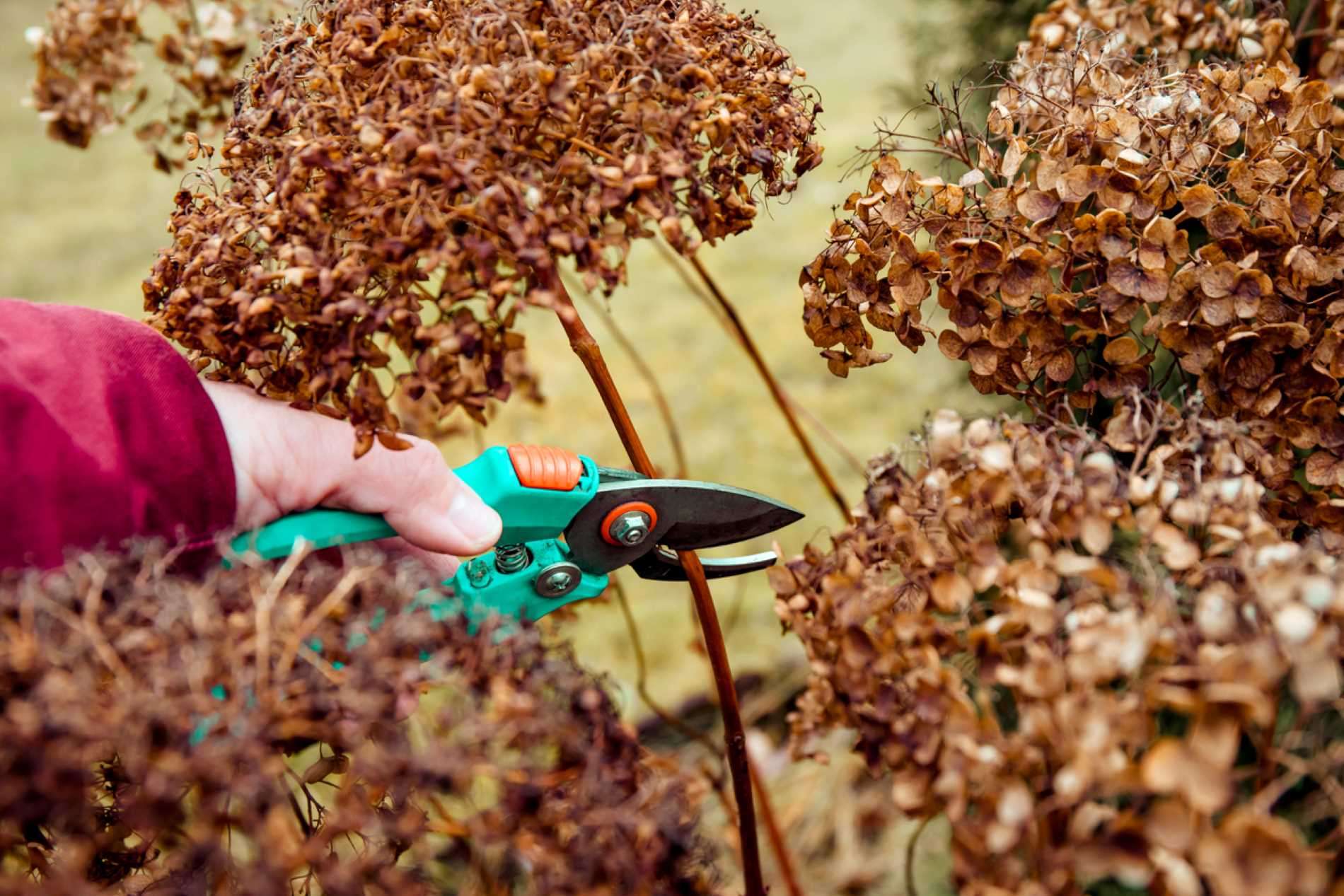
A modest, well-aimed trim keeps energy where it matters. Snip spent blooms just above the top pair of healthy buds, leaving enough stem to shield them from frost. Remove dead, diseased, or crossing wood to improve airflow and reduce stress.
Avoid heavy shaping now, because major cuts can stimulate soft, late growth that cold will quickly damage. Think of fall work as “tidy and defensive,” not “bold and decorative.”
Head or stem: how far to go?
For Hydrangea macrophylla, keep cuts at the “head,” right beneath the faded flower, and stop above the upper, swollen buds. Cutting lower on macrophylla risks removing next year’s flowers, since those buds formed in late summer.
For H. paniculata and arborescens, a slightly deeper trim is safe because they bloom on new wood. Even so, limit fall reductions to the upper third, or about 10–20 cm, and save stronger pruning for late winter. This approach preserves structure, reduces wind-rock, and protects latent buds.
Timing and technique that work
Aim to prune after bloom but before hard frosts, when stems are still firm and visible. Choose a dry day, make clean 45-degree cuts, and avoid tearing or crushing. If you’re unsure about a stem, cut less now and correct more confidently at season’s end.
- Use sharp, disinfected pruners to prevent disease spread.
- Cut above outward-facing buds to encourage open growth.
- Step back often to check balance and light penetration.
- Keep labels or notes on each variety to tailor future pruning.
Mistakes that cost you blooms
The most common error is overcutting macrophylla, which removes pre-formed buds and cancels spring color. Another is pruning paniculata or arborescens too hard in early fall, prompting tender regrowth that winter will burn.
Avoid cutting during or right before a freeze, when tissues are more fragile. Don’t skip tool hygiene; a quick alcohol wipe between plants reduces pathogens. Resist stripping too much interior growth, which can sunscald stems and unbalance sap flow.
Aftercare that sets the stage for spring
Mulch 5–8 cm around the base, keeping it off the stems to prevent rot. In colder zones, leave some spent flower heads on macrophylla as natural caps against wind and ice. If deer or rabbits browse, consider a loose barrier or repellent to protect tender buds.
Water deeply before the ground freezes, particularly in dry autumns. Hydration reduces winter dieback and supports early-spring push.
How hard should you prune—by the numbers?
Macrophylla: remove only the faded heads and dead wood in fall; in late winter, thin 1–3 oldest canes from the base if needed. Paniculata: in fall, take 10–20 cm from the tips; in late winter, reduce by up to one third to control size and boost vigor. Arborescens: in fall, a light tip trim; in late winter, cut back to 30–60 cm for sturdy, floriferous stems.
These guidelines protect current buds while setting a clear plan for structural renewal.
Read the buds, and let them guide you
Buds tell the truth: plump and rounded buds are often flower buds, while slimmer ones are typically leaf buds. On macrophylla, those top pairs carry next year’s show, so guard them like small treasures. On paniculata and arborescens, focus on healthy framework and confident late-winter cuts.
Patience pays in petals
Strong hydrangea bloom is a two-season story, written in cautious fall choices and confident late-winter actions. When in doubt, reduce your cut by one node, and save the shaping for the season designed for repair. With careful timing and variety-aware technique, your shrubs will return in spring with fuller heads and longer-lasting color.

Contact details
Address:
Farmers Forum,
36, Dominick Street,
Mullingar,
Co. Westmeath,
Ireland
Phone:
+353 (0)44 9310206
Or email us:
For technical issues please check out our FAQ's page or email - [email protected]
For general Queries email - [email protected]
Request to add event to our Calendar - [email protected]
Send us your mart reports - [email protected]
Suggestions and feedbacks - [email protected]
News Items / Press Release - [email protected]
To Advertise on Farmers Forum - [email protected]