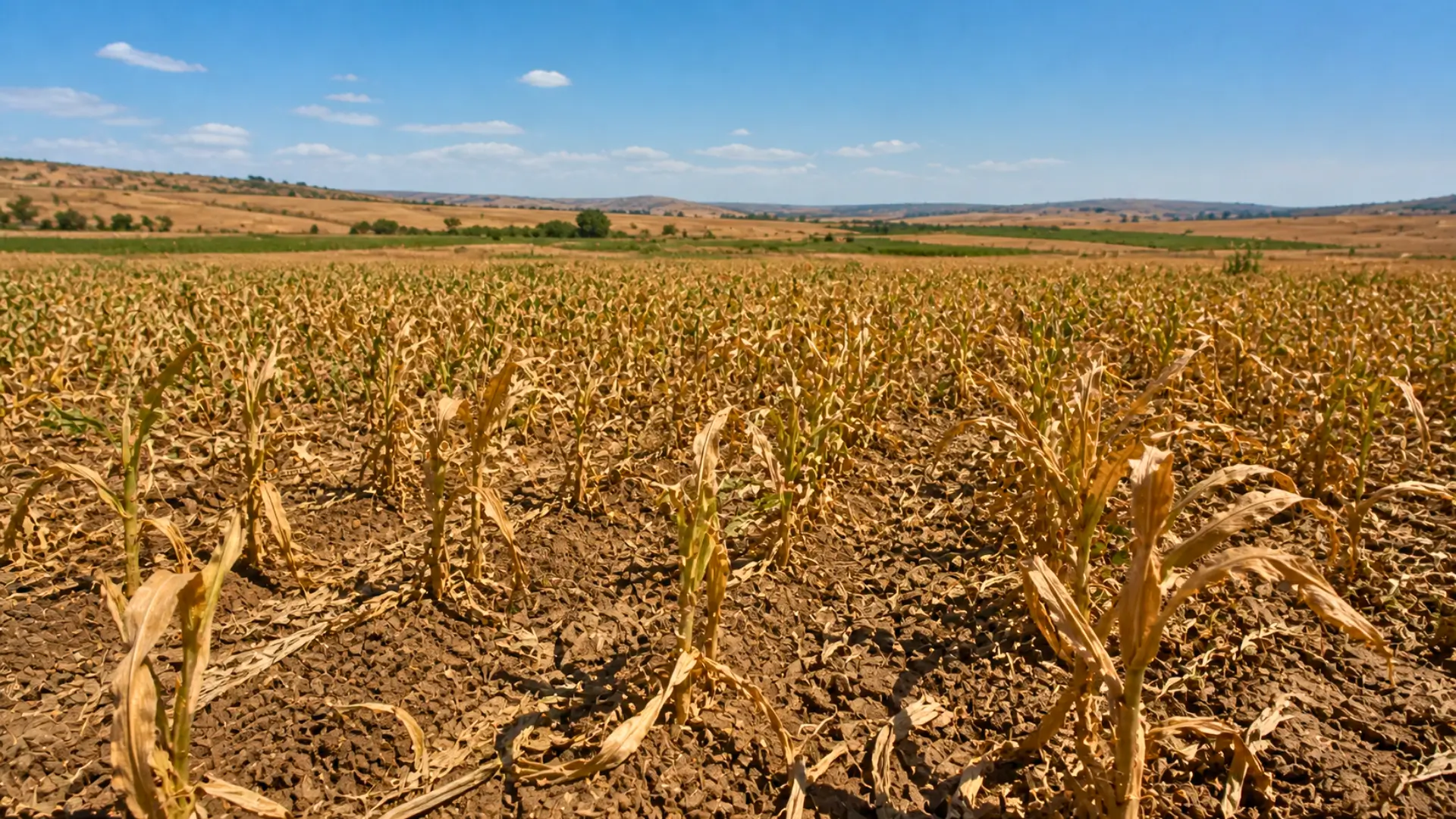
What if the planet could no longer “pay its ecological debts”? Behind this perplexing idea lies a troubling reality: our food relies on a fragile balance, now threatened by multiple crises. An emerging concept could indeed change how we view the world.
Nature as a Vital Capital: Understanding the Emergent Notion of Planetary Solvency
Behind the workings of the global economy, a concept is gaining traction. In truth, nature acts as an invisible form of capital. It is indispensable to any human activity. Thus, potable water, pollination, and a stable climate provide essential services. Consequently, they directly support global economic stability.
Moreover, British researchers have proposed a striking concept: the “planetary solvency.” In other words, the Earth operates like a business. If its resources are depleted, it becomes “insolvent.” Put plainly, it cannot sustain the human economy any longer.
From there, the verdict is clear. For decades, humanity has been making ecological withdrawals. Indeed, deforestation, overfishing, and pollution accumulate. As a result, these pressures undermine the foundations of the economic system. Yet awareness remains limited.
Decline of Pollinators and Fragile Biodiversity: A Direct Risk to Agricultural Production
Among the warning signs, the decline of pollinators is a major cause for concern. Bees and butterflies are essential, as they drive a large portion of plant reproduction. Today, around 75 % of global crops depend on them.
Thus, their disappearance has ripple effects. It isn’t only flowers that vanish; entire food chains waver. As a result, yields fall. Then prices rise. And thus, food insecurity grows.
Furthermore, the crisis does not only affect insects. Indeed, terrestrial and marine ecosystems are under heavy pressure. Their capacity to adapt declines. Consequently, they resist climate shocks less effectively. This, in turn, worsens agricultural crises.
Climate and Ecological Tipping Points: When Ecosystems Become Irreversible
Today, scientists speak of “tipping points”. In other words, critical thresholds. Once crossed, an ecosystem does not revert. Changes become rapid and irreversible. Moreover, they are difficult to forecast.
For instance, the Amazon could soon alter its functioning. Indeed, it risks losing its ability to generate its own rainfall. From there, the impacts would be major. Thus, the global carbon cycles would be disrupted. And agricultural yields too.
Similarly, coral reefs already show these tipping points. In certain zones, the threshold has been exceeded. As a result, marine biodiversity declines sharply. At the same time, food resources diminish for millions of people.
Toward a Global Economic Shock: Food Inflation and Instability of Supply Chains
In this context, the economic consequences are worrying. Indeed, they could be massive. Some models point to as much as 50 % of global GDP lost. And that by the end of the century. Thus, the problem extends far beyond the environment.
Moreover, supply chains are already fragile. Geopolitical tensions disrupt them. On top of that, climate shocks strike. Together, they amplify the scarcity of resources. Consequently, a structural inflation could set in. Therefore, one question remains: how long can this system endure? And above all, when will the balance tip?

Contact details
Address:
Farmers Forum,
36, Dominick Street,
Mullingar,
Co. Westmeath,
Ireland
Phone:
+353 (0)44 9310206
Or email us:
For technical issues please check out our FAQ's page or email - [email protected]
For general Queries email - [email protected]
Request to add event to our Calendar - [email protected]
Send us your mart reports - [email protected]
Suggestions and feedbacks - [email protected]
News Items / Press Release - [email protected]
To Advertise on Farmers Forum - [email protected]