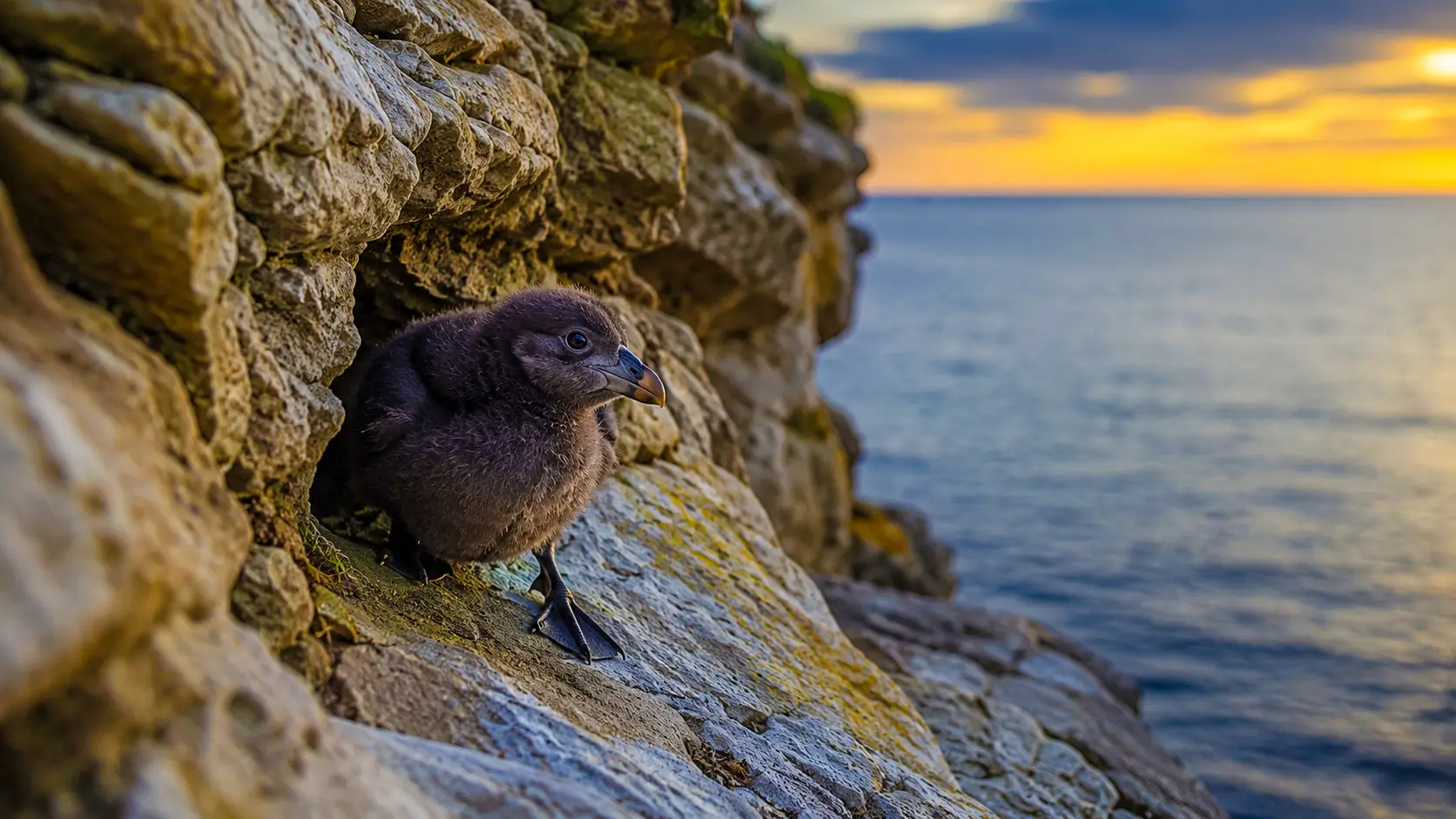
On the Purbeck coast, volunteers surprised a young puffin at the foot of the cliffs. This unprecedented sighting in thirty years confirms a fertile nest along the southern coast of England. A hopeful sign for the species’ preservation.
A fifteen-week monitoring of the Purbeck cliffs rewards the patience of the ornithologists
Thirteen enthusiasts from the Purbeck Natural History Forum spent nearly four months wandering the rugged rocks near Swanage. In April, the presence of six adult birds suggested a potential return of breeding on this historic coastline.
The collective effort gained momentum through regular trips of adults delivering fish to rock crevices. The team carefully calculated the likely hatching dates to organize a targeted expedition at the base of the cliffs.
On July 7, after several hours of waiting aboard a boat, the chick finally appeared around 7 p.m. At roughly 38 days old, this puffin briefly ventured out of its shelter under the vigilant eye of a parent.
An immediate departure to the open sea pushes the next nesting stage to 2030
According to the ornithologist Richard Caldow, the young bird reached the ocean the very next night to begin its solitary life. These seabirds abandon the family nest quickly and do not linger for any further provisioning from their parents.
The juvenile will remain at sea for at least two full years before approaching the rocky outcrops again. Biologists do not anticipate its first breeding attempt before the year 2030.
From last century’s thriving colony to the survival of three breeding pairs
The Purbeck region represents the last regular nesting zone for the species along the southern English coast. During the 1950s, around 80 individuals were a common sight on these cliffs before the population underwent a steady decline.
Today, the colony numbers only three breeding pairs. The complete absence of young for three decades had raised fears of a definitive extinction at this biodiversity-crucial site.
The successful take-off of a chick confirms that these birds can still lay fertile eggs and find enough marine prey. This intermittent success demonstrates that the habitat retains favorable conditions for chick birth.
Solar-powered cameras embedded in the rock to unravel the mystery of decline
To understand the recurring egg losses, the National Trust is examining several potential threats such as the presence of rats, predation by peregrine falcons, or climate change. Assessing these factors remains a priority in order to tailor protective measures.
Motion-triggered cameras powered by solar energy have been placed two metres deep within the crevices. According to Ben Cooke, the in-depth study of the footage will allow refining protective actions.

Contact details
Address:
Farmers Forum,
36, Dominick Street,
Mullingar,
Co. Westmeath,
Ireland
Phone:
+353 (0)44 9310206
Or email us:
For technical issues please check out our FAQ's page or email - [email protected]
For general Queries email - [email protected]
Request to add event to our Calendar - [email protected]
Send us your mart reports - [email protected]
Suggestions and feedbacks - [email protected]
News Items / Press Release - [email protected]
To Advertise on Farmers Forum - [email protected]