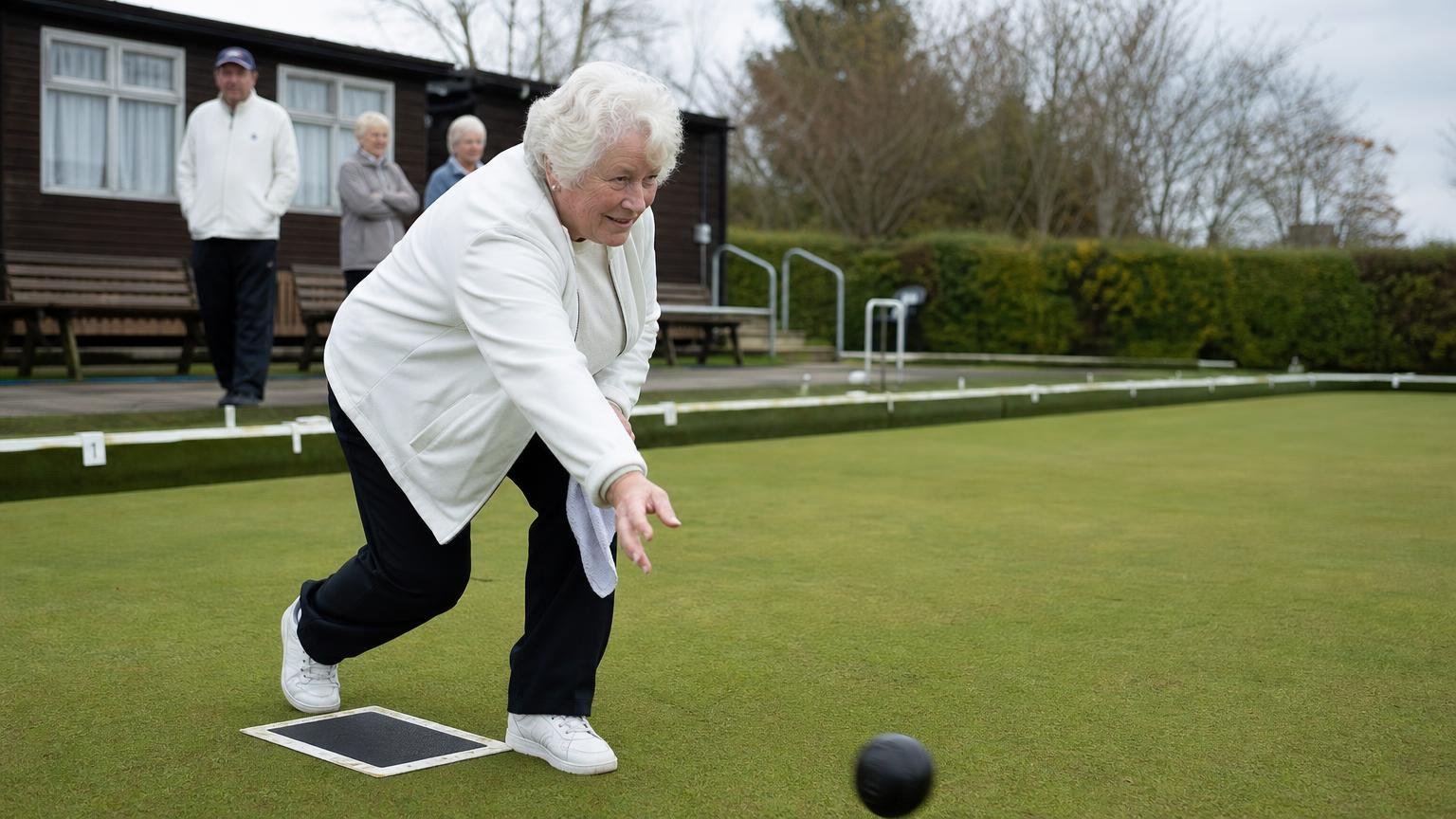
Sunday in County Armagh begins with the hum of tires, the whistle of wind, and the small iron bowl warming in an old woman’s palm. She takes her time, squints down the grey ribbon of road, and nods to the hedgerow like it’s an old, patient friend. Then she steps, releases, and the metal sings its bright, rolling song.
People gather because they know the sound means skill, the stance means story, the follow-through means years. At seventy-one, she shows up with a smile, a wrapped right wrist, and a hunger that won’t fade with the mist. August proved it again when she outfoxed the youngest in her line, leaving her grandson grinning and a little bit stunned.
The road and the ritual
She arrives early to mark the bend, pace the first stretch, and feel the camber under her boots. The road is her map, but also her mirror, telling truths that age can’t quite hide. “You read the crown, not the crowd,” she says, “and you trust your arm more than your eyes.”
The ritual is part prayer, part practice, and part stubborn northern weather. She warms each finger, oils the groove where iron kisses skin, and checks the breeze for a telltale roadside shiver. “You can’t fight the slope,” she adds, “you can only learn its temper.”
A game older than the hedgerows
Road bowling in Armagh is iron on asphalt, tradition on open miles, and a score measured in the fewest throws. The bowl—twenty-eight ounces of tight-knit steel—is cast to flirt with the road’s crown and bounce hard off its sneaky stone seams.
The language is proud and plain: a good pitch is a clean road; a bad bounce is a cursed pothole; a match is a score, and each bit of ground is marked by chalk and cheer. History runs under every shot, back through families and fields, through Sundays thick with story and steam.
Beating the bloodline
In August the family came in laughing and left with a lesson, learned at the far gate where the hill runs cruel and fast. Her grandson opened with a young man’s fire, a shoulder like a spring and a stride like a drum. She watched the bowl kick left, then right, then die just shy of the white mark.
She stepped in with quiet feet, borrowed the camber for sly speed, and set a line that felt like gravity had signed its name. “Don’t chase a bad bounce,” she told him later, “invite a good roll instead.” He laughed and shook his head, “Granny’s a shark in church shoes.”
Neighbors clapped the way people clap for a favorite song, half in pride and half in pure surprise. She lifted a small paper cup, took tea like a trophy, and winked, “Age is a crafty old coach.”
Why she still throws
She keeps showing up for reasons that feel both fierce and simple, stitched from habit and hope, and the clean drama of a long, shared road.
- To keep her body honest and her mind bright
- To stay inside the county’s living story, not just its soft memory
- To measure Sunday by the length of a single bright roll, not by silent hours
- To remind young legs that angles beat muscle nine times out of ten
League life and quiet legends
The league is a ring of voices, a rope of patience, and a handful of ground-down roads looping through hedged lanes. There’s a starter with chalky hands, a bookie with a sly nod, and a mother juggling flasks and two loud kids.
Stories grow legs and run the ditches, about impossible one-shot corners, or a bowl that rode a rut to history-making length. “You don’t just watch a throw,” an elder says, “you watch a whole life’s timing.” Around here, that sounds less like poetry and more like plain, practical truth.
What it takes at seventy-one
She trains like a careful gardener, pruning what hurts and watering what works. Mornings mean band work for the right arm, slow squats for stubborn knees, and a farmer’s walk with a bag of potatoes for old-school grit.
Grip is half science, half superstition: two fingertips chalked, thumb bare, wrist snug under a faded elastic wrap. “Strength is rented, not owned,” she says, “and the rent is always due.” She eats like a market stall, bright with apples, oats, and the occasional butter-soaked scone.
The next bend
She talks about winter like it’s a blunt, honest coach, the way rain makes the tarmac bite and the air sharpen into clean glass. She’ll keep turning up on Sundays, not to count the years but to count the soft white marks between hedges and gates.
“I’ll stop when the road stops teaching,” she says, with a small, weathered grin. Until then, she wants more women at the chalk and more girls at the back with hungry eyes. “Take the line you earn,” she tells them, “and take your praise like a solid, square hit.”
Some heroes carry bright medals; she carries a scuffed iron bowl. Different kind of shine, same stubborn light. And when the league settles and the last cheer thins to a country quiet, you can still hear her Sunday lesson rolling on, steady as a heartbeat, certain as a well-chosen bend.

Contact details
Address:
Farmers Forum,
36, Dominick Street,
Mullingar,
Co. Westmeath,
Ireland
Phone:
+353 (0)44 9310206
Or email us:
For technical issues please check out our FAQ's page or email - [email protected]
For general Queries email - [email protected]
Request to add event to our Calendar - [email protected]
Send us your mart reports - [email protected]
Suggestions and feedbacks - [email protected]
News Items / Press Release - [email protected]
To Advertise on Farmers Forum - [email protected]