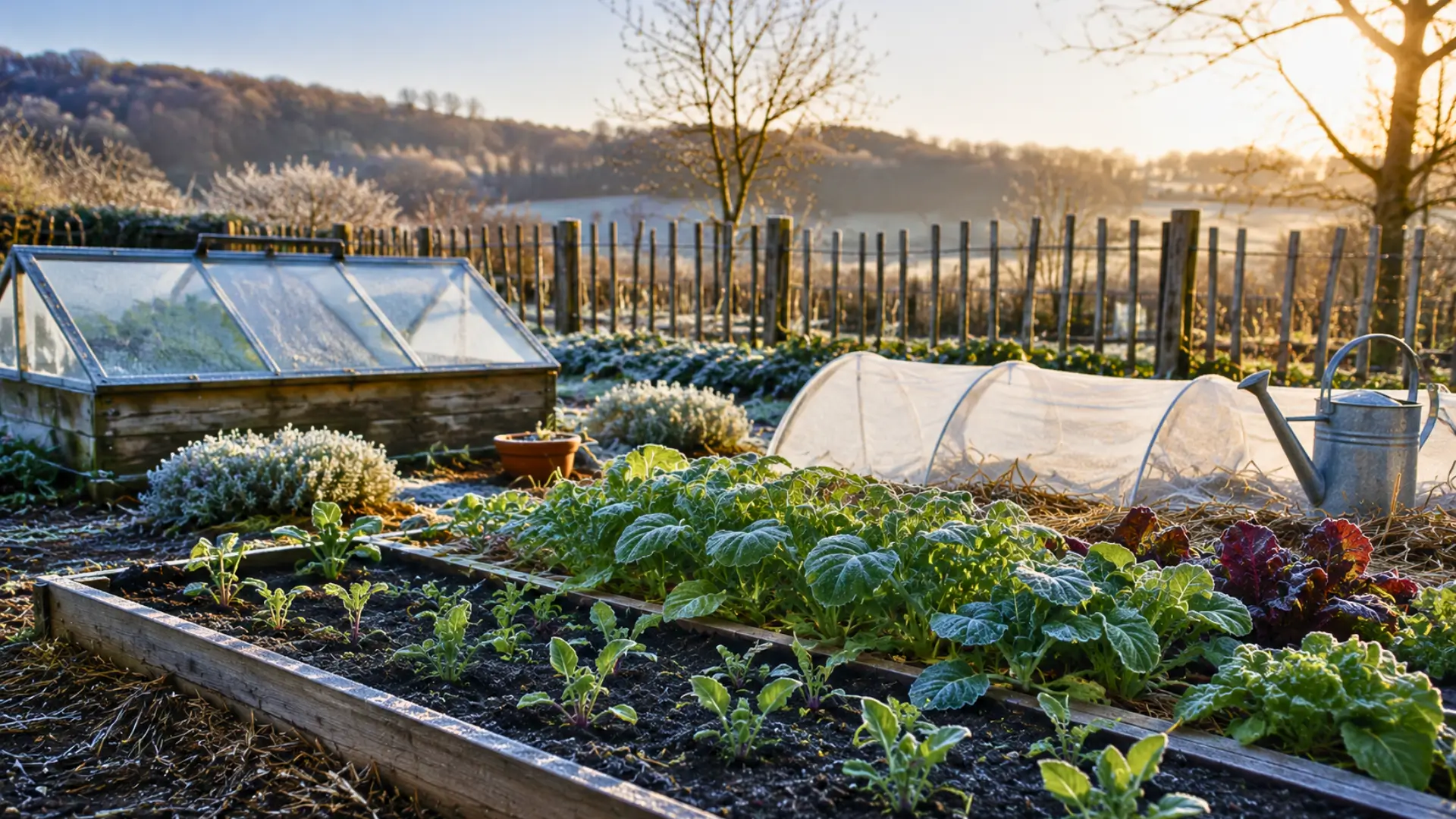
For generations, gardeners have waited until mid-May to plant. Yet a study from Météo-France upends this popular belief: the famous Ice Saints correspond to no particular cooling event. The frost risk persists after mid-May as well.
Météo-France records contradict five centuries of popular beliefs
Each May, the same discussions reappear in gardens, at markets, or in tomato-enthusiast groups on Facebook. Should one really wait until May 14 to plant? Behind this prudence lie three ancient figures, Saint Mamert, Saint Pancrace and Saint Servais, associated for centuries with the last spring frosts.
The belief seemed solid because it rested on lived experiences. A cold night on May 12 leaves a stronger imprint than a week of mild and incident-free weather. Over time, these memories hardened into popular certainty. Yet modern measurements tell a much less clear story.
Météo-France analyzed data from 130 weather stations spread across metropolitan France between 1951 and 2023. The result surprises even some climatologists: May 11th, 12th, and 13th show no particular anomaly. The temperatures observed during those days remain statistically comparable to those on neighboring dates.
Two years out of three, the last frosts arrive after the Ice Saints
The most puzzling result does not concern the Ice Saints themselves, but what happens afterward. Across 73 years studied, climatologists recorded episodes of late frost after May 13 in 67% of cases. In other words, waiting for the end of the Ice Saints does not protect at all against a cold snap returning.
The phenomenon has become subtler, yet more unpredictable. Since the 2000s, widespread frosts have become rarer on a national scale. By contrast, pockets of cold continue to appear abruptly in certain regions. A garden situated in a hollow can still suffer a devastating night while a neighboring municipality remains perfectly spared.
Recent years illustrate this climate paradox. Springs often begin earlier due to warming, pushing plants to bud quickly. As a result, a light late frost is now sufficient to cause spectacular damage to vegetation that is already fragile and developed.
The 1582 calendar reform may have shifted the true risk dates
The most fascinating explanation may not come from the weather, but from history. In 1582, the Pope Gregory XIII reformed the calendar to correct the drift accumulated with the solar cycle. Ten days disappear officially. The dates observed by medieval farmers no longer correspond exactly to our current mid-May.
According to several climatologists, the old Ice Saints would today point to a period around May 21 to 23. This hypothesis sheds new light on centuries-old popular sayings. Medieval peasants probably observed a real risk window, but it no longer matches the current calendar dates.
The microclimate of each garden matters more than the calendar dates
Modern data remind us of one essential thing: spring frost depends mainly on the local microclimate. A clear, windless night can sometimes cause the temperature to plunge sharply at ground level. Leaves can then freeze even when the official thermometer shows several positive degrees.
Low-lying areas remain particularly vulnerable. Cold air, heavier, naturally accumulates there during the night. That is why two gardens separated by a few hundred meters can experience completely opposite situations. The Ice Saints give the illusion of a universal rule, while the risk operates mostly at the field level.
Climate change makes the situation even more tricky. Plants now bud earlier in spring, which exposes them more to late frosts. A small drop in temperatures can then cause massive losses in orchards and vegetable gardens, even at the end of May.

Contact details
Address:
Farmers Forum,
36, Dominick Street,
Mullingar,
Co. Westmeath,
Ireland
Phone:
+353 (0)44 9310206
Or email us:
For technical issues please check out our FAQ's page or email - [email protected]
For general Queries email - [email protected]
Request to add event to our Calendar - [email protected]
Send us your mart reports - [email protected]
Suggestions and feedbacks - [email protected]
News Items / Press Release - [email protected]
To Advertise on Farmers Forum - [email protected]