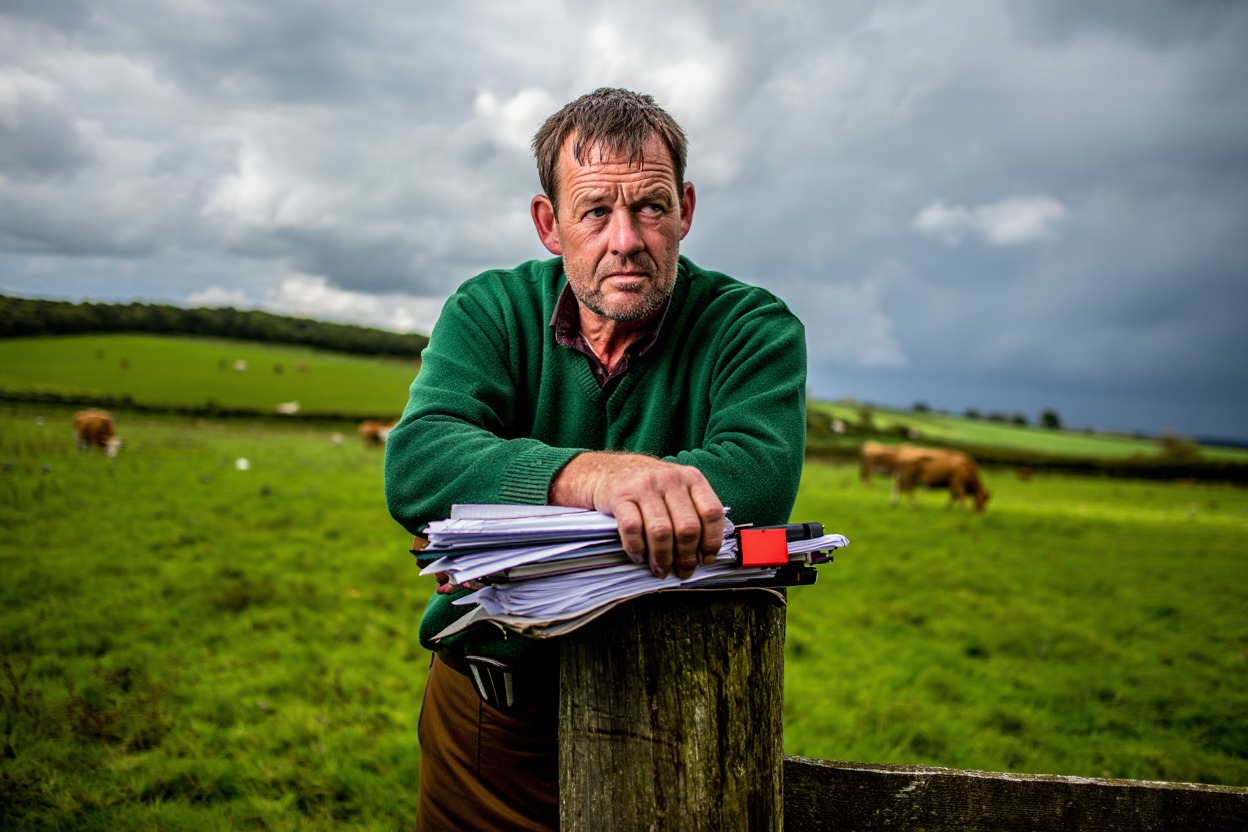
Across rural Ireland, a question is being asked more frequently in farm kitchens, co-op meetings and agricultural discussion groups.
Are Irish farmers being asked to go further — and faster — than their counterparts across Europe?
Environmental targets, nitrates regulations and climate commitments are reshaping agriculture across the EU. Yet many Irish producers believe the pace and scale of change demanded from them feels particularly intense.
For a sector that has expanded rapidly over the past decade, the pressure is increasingly visible.
A Farming Model Under Scrutiny
Ireland’s agricultural system is unique in Europe. Much of its dairy and beef production relies on grass-based farming, with cattle grazing outdoors for much of the year. This model has traditionally been presented as environmentally efficient compared with intensive indoor systems elsewhere.
However, expansion following the abolition of EU milk quotas in 2015 significantly increased herd numbers. Dairy production grew quickly, especially in counties such as Cork, Tipperary and Limerick.
That growth has placed the sector under closer environmental scrutiny.
Nitrogen emissions, water quality and greenhouse gas targets are now central to policy discussions. As a result, Irish farmers face a combination of regulatory adjustments, including tighter nitrates limits, emissions reduction strategies and increased monitoring of fertiliser use.
Many producers argue that these measures are arriving simultaneously.
The Nitrates Debate
One of the most controversial issues is the nitrates derogation. This rule allows certain farms to operate with higher stocking densities than the standard EU limit, provided they meet strict environmental conditions.
Ireland has relied heavily on this flexibility to maintain dairy output.
But in recent years, the permitted nitrogen threshold has been reduced in some areas due to water quality concerns. For affected farms, that means either reducing herd size or securing additional land to remain compliant.
Farm organisations argue that the adjustments are happening faster in Ireland than in many other member states.
From their perspective, the sector is already implementing major environmental changes while continuing to supply food to European markets.
Climate Targets and Methane Reduction
Another area of concern involves greenhouse gas emissions, particularly methane from cattle.
Ireland’s climate strategy includes ambitious targets to reduce agricultural emissions. Because livestock farming represents a large share of the country’s total emissions, the burden of reductions inevitably falls heavily on agriculture.
Farmers do not dispute the need to address climate change. However, many question whether the expectations placed on a grass-based system are proportionate compared with more industrial agricultural models elsewhere in Europe.
Some argue that shifting production away from Ireland could simply move emissions to regions with less efficient systems.
Rising Costs and Administrative Pressure
Beyond environmental targets, farmers point to the growing complexity of compliance.
Nutrient management plans, slurry storage requirements, fertiliser reporting and inspection procedures all demand time and investment. For larger farms, consultancy support is often required to navigate regulations.
These administrative layers add costs in an already volatile economic environment. Milk and beef prices fluctuate, input costs remain high and financing conditions have tightened.
Smaller family farms, in particular, worry about their ability to keep pace with constant policy adjustments.
The Other Side of the Argument
Not everyone agrees that Ireland faces a disproportionate burden.
Environmental groups note that agriculture represents a larger share of national emissions in Ireland than in many other EU countries. From this perspective, stronger action is necessary to meet climate commitments and protect water quality.
Policymakers also argue that maintaining Ireland’s international reputation for sustainable food production is essential for export markets.
They believe environmental performance will become a key competitive advantage in the years ahead.
A Sector at a Crossroads
The debate reflects a deeper tension within Irish agriculture. Farmers want to remain productive and competitive while also adapting to new environmental expectations.
Most acknowledge that change is unavoidable. The real question is how that change is managed.
If reforms arrive too quickly, some farms may struggle to adapt. If they arrive too slowly, environmental targets may be missed.
For now, conversations continue across rural Ireland.
Farmers compare policies with colleagues in France, the Netherlands and Germany. They analyse new regulations, attend advisory meetings and assess what the next decade might bring.
Whether Ireland is truly being asked to do more than the rest of Europe remains contested.
But one thing is certain.
Few sectors in the country feel the weight of policy change as directly as the farmers working its land.

Contact details
Address:
Farmers Forum,
36, Dominick Street,
Mullingar,
Co. Westmeath,
Ireland
Phone:
+353 (0)44 9310206
Or email us:
For technical issues please check out our FAQ's page or email - [email protected]
For general Queries email - [email protected]
Request to add event to our Calendar - [email protected]
Send us your mart reports - [email protected]
Suggestions and feedbacks - [email protected]
News Items / Press Release - [email protected]
To Advertise on Farmers Forum - [email protected]